The 2026 Solar Eclipse: A Complete Guide to Seeing, Understanding and Photographing It
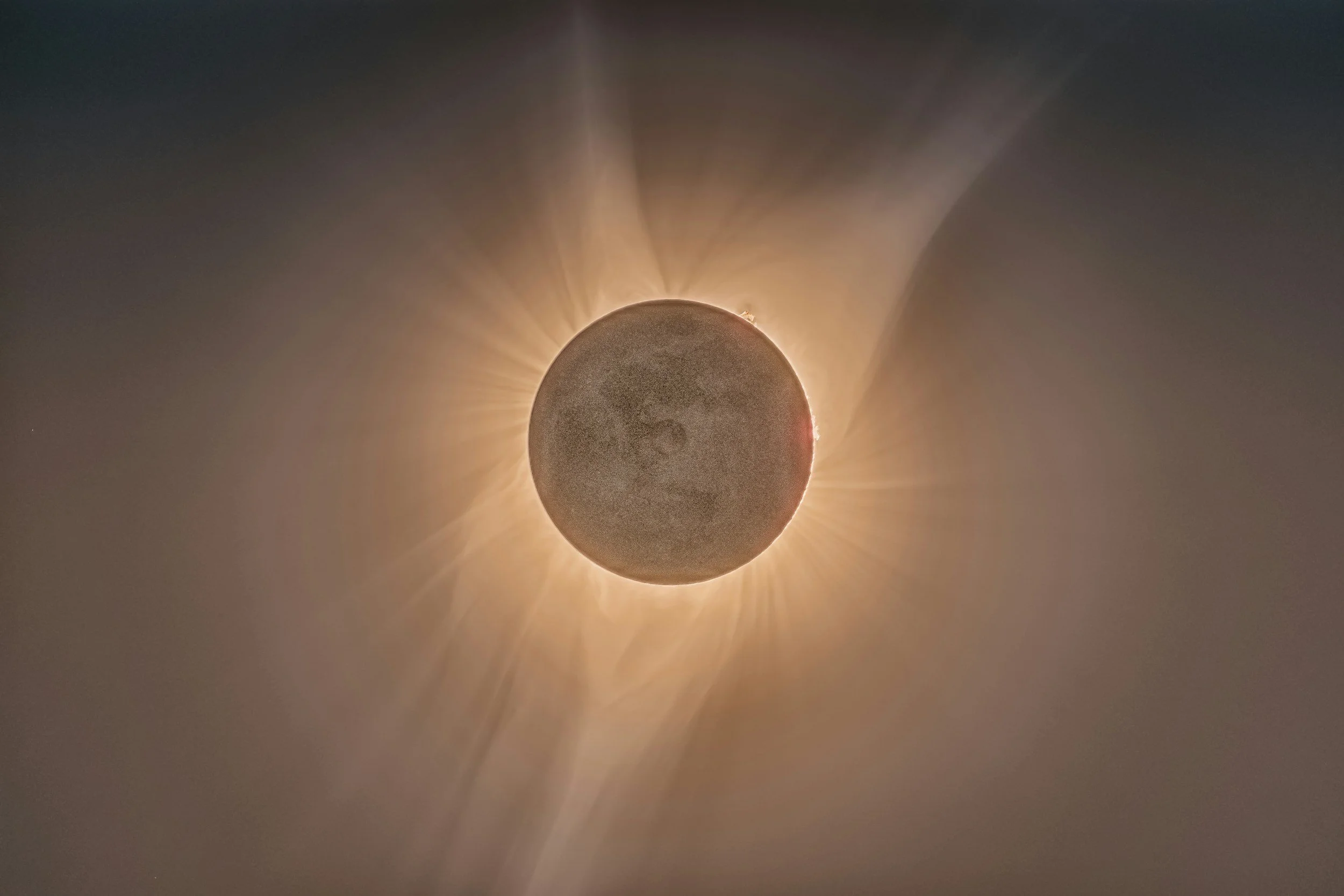
Image by Bryan Goff
On Wednesday, 12 August 2026, the Moon’s shadow will travel across the Arctic, Greenland, Iceland and the North Atlantic before reaching the Iberian Peninsula near sunset. For those standing within the narrow path of totality, daylight will briefly fade into an eerie twilight, the Sun’s outer atmosphere will appear around the silhouette of the Moon, and planets and bright stars may emerge in a sky that was blue only moments earlier.
Millions more across Europe, including the UK and Ireland, will experience a deep partial solar eclipse. Although that is fundamentally different from totality, it will still produce a remarkable transformation of the Sun and, as the eclipse deepens, subtle changes in the surrounding landscape.
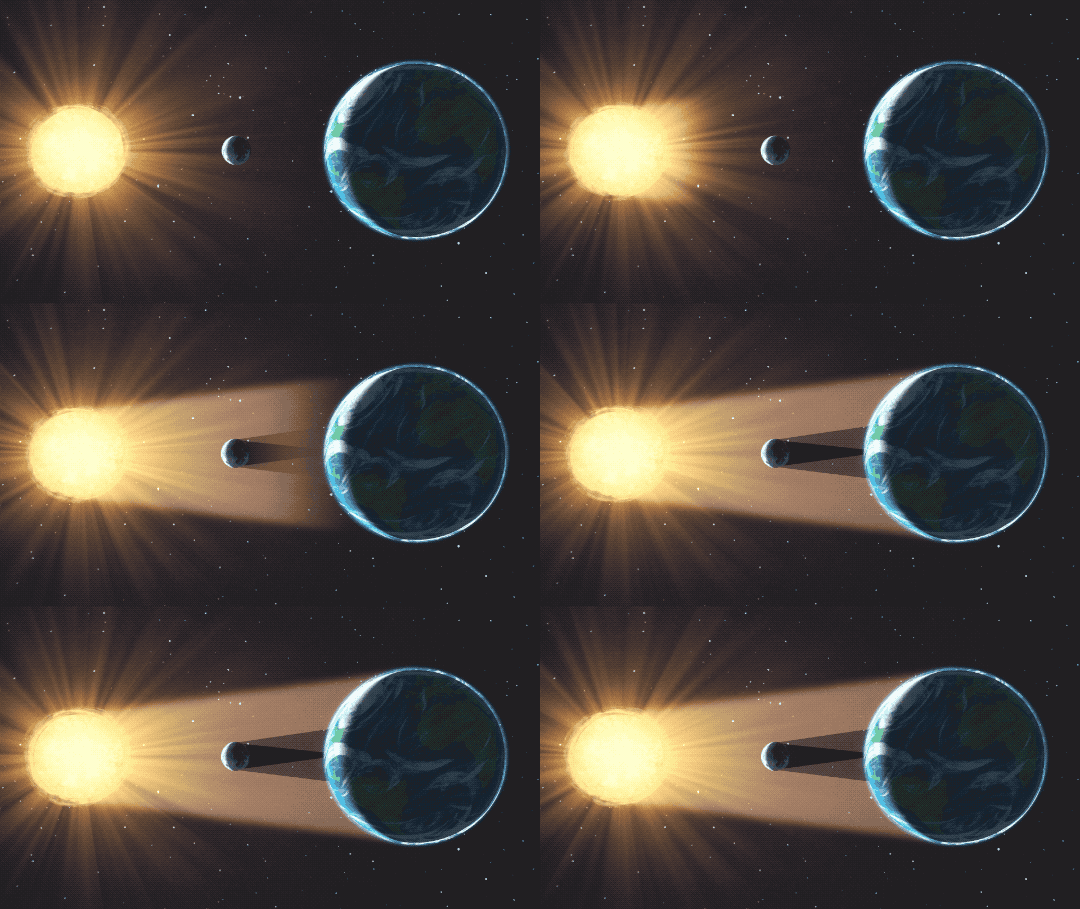
Credit: NASA's Goddard Space Flight Center
A solar eclipse occurs when the Moon passes between Earth and the Sun, causing its shadow to fall across part of our planet. Although the Moon passes between Earth and the Sun at every new Moon, eclipses do not happen every month because the Moon’s orbit is tilted by approximately five degrees relative to Earth’s orbit around the Sun. Most of the time, the Moon therefore passes slightly above or below the Sun from our perspective. An eclipse occurs when the timing and geometry of these orbits bring the three bodies into sufficiently close alignment.
During a total solar eclipse, observers inside the darkest part of the Moon’s shadow, known as the umbra, see the Moon completely cover the Sun’s bright visible surface, or photosphere. Those farther away, but still within the much larger penumbra, see only part of the Sun covered and experience a partial eclipse.
There is also a remarkable coincidence of scale behind what we see. The Sun is roughly 400 times wider than the Moon, but it is also approximately 400 times farther from Earth, making the two appear almost the same size in our sky. This allows the Moon to cover the brilliant solar surface while revealing the much fainter corona surrounding it.
It is not a permanent arrangement. The Moon is gradually receding from Earth, so on sufficiently long astronomical timescales it will eventually appear too small to produce total solar eclipses. We happen to live during a period in Earth's history when this extraordinary alignment is possible.
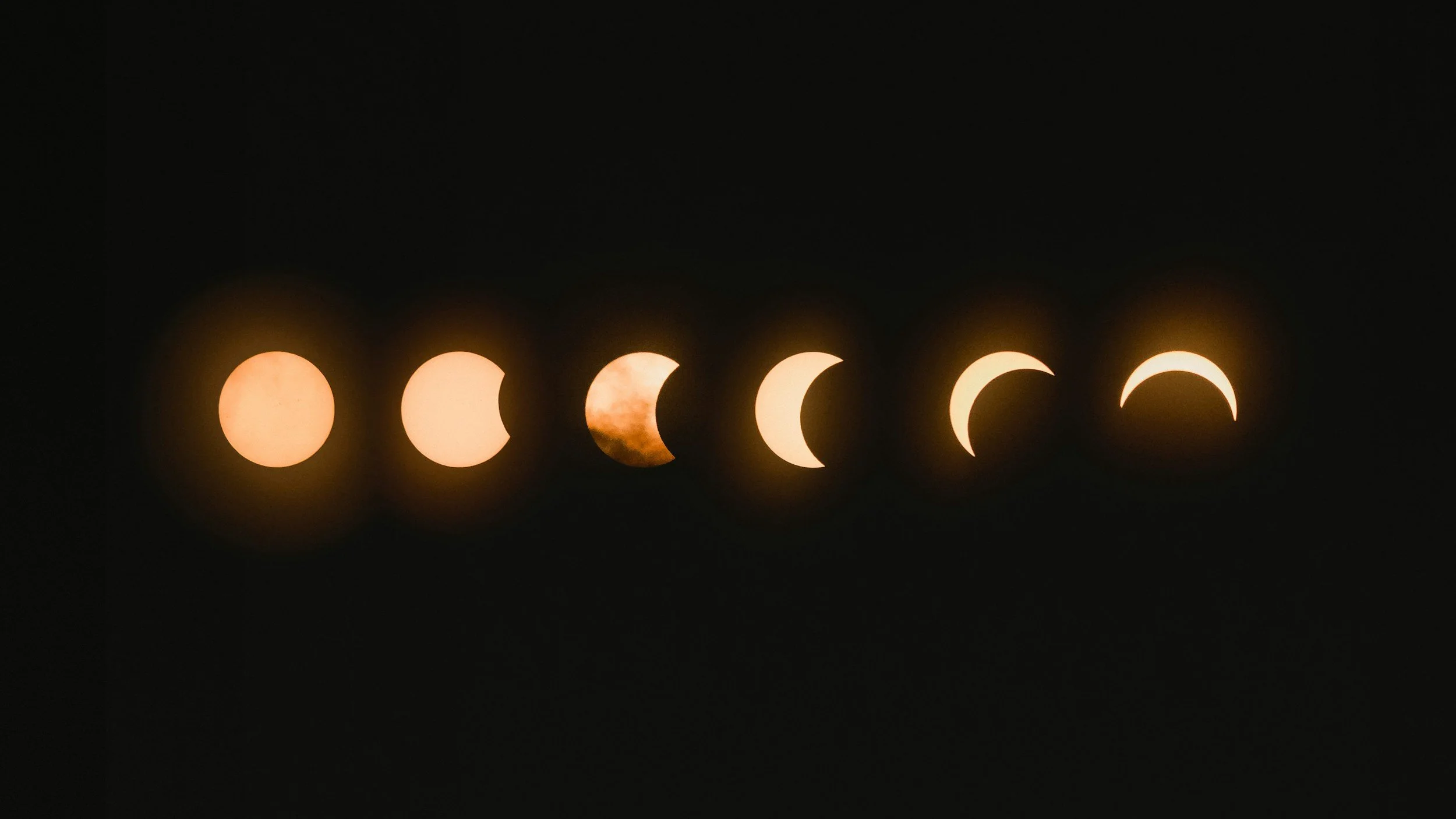
Image by Mark Tegethoff
What makes the 2026 eclipse special?
At its greatest extent, totality on 12 August will last approximately 2 minutes and 18 seconds. The path of totality crosses parts of northern Russia, Greenland, western Iceland and the North Atlantic before reaching northern Spain and continuing towards the Balearic Islands, with a very small portion of Portugal also falling within the path.
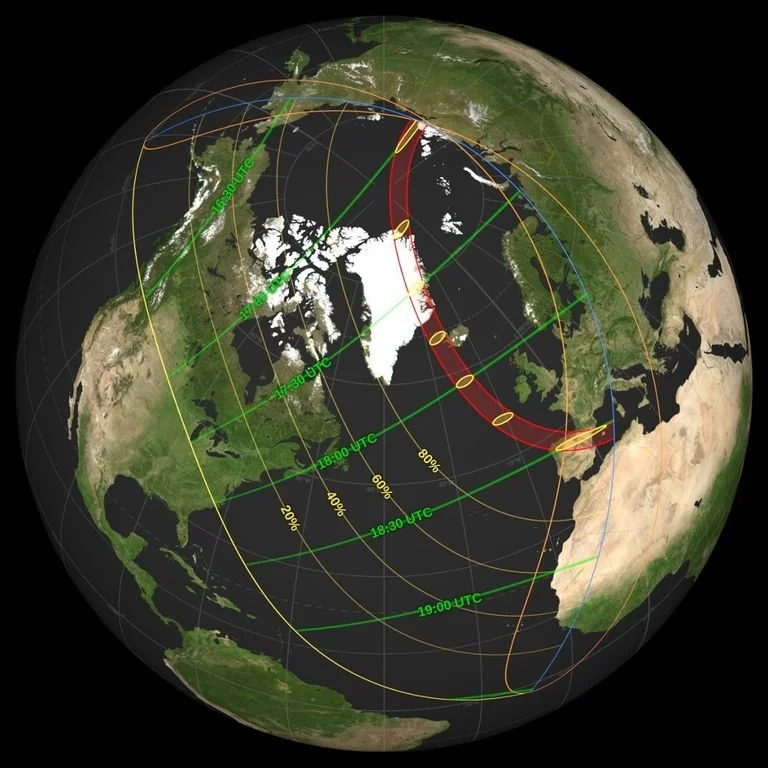
A map shows where a solar eclipse will be visible on Aug. 12, 2026. (NASA's Scientific Visualization Studio).
For mainland Europe, this eclipse is particularly significant because it will be the first total solar eclipse visible from mainland Europe since 1999. Spain occupies the final major land section of the path, placing cities including A Coruña, Oviedo, Burgos, Bilbao, Zaragoza and Valencia within totality, along with parts of the Balearic Islands.
The timing, however, makes Spain an unusual eclipse destination. Totality takes place during the evening, when the Sun is already descending towards the western horizon. In A Coruña, for example, totality lasts around 76 seconds with the Sun approximately 12 degrees above the horizon. Around Burgos, the duration increases to roughly 104 seconds while the Sun sits only about eight degrees high. By the time the shadow reaches the Balearic Islands, the Sun is extremely close to the horizon.
That low altitude introduces an additional challenge because distant mountains, buildings, trees or even subtle changes in terrain could obscure the Sun. At the same time, it creates the possibility of some extraordinary views and photographs, with the eclipsed Sun appearing close to the landscape rather than high overhead.
Why eclipses often come in pairs
Solar and lunar eclipses tend to arrive in clusters because they can only occur during brief periods known as eclipse seasons. The Moon’s orbit is tilted by about five degrees relative to Earth’s orbital plane around the Sun, so at most new and full Moons the three bodies are not aligned closely enough for an eclipse. Twice a year, however, the Sun appears close to one of the two points where the Moon’s orbit crosses that plane, known as the lunar nodes. For roughly five weeks, the geometry becomes favourable enough for eclipses to occur. These eclipse seasons recur about every 173 days, a little less than six months apart.
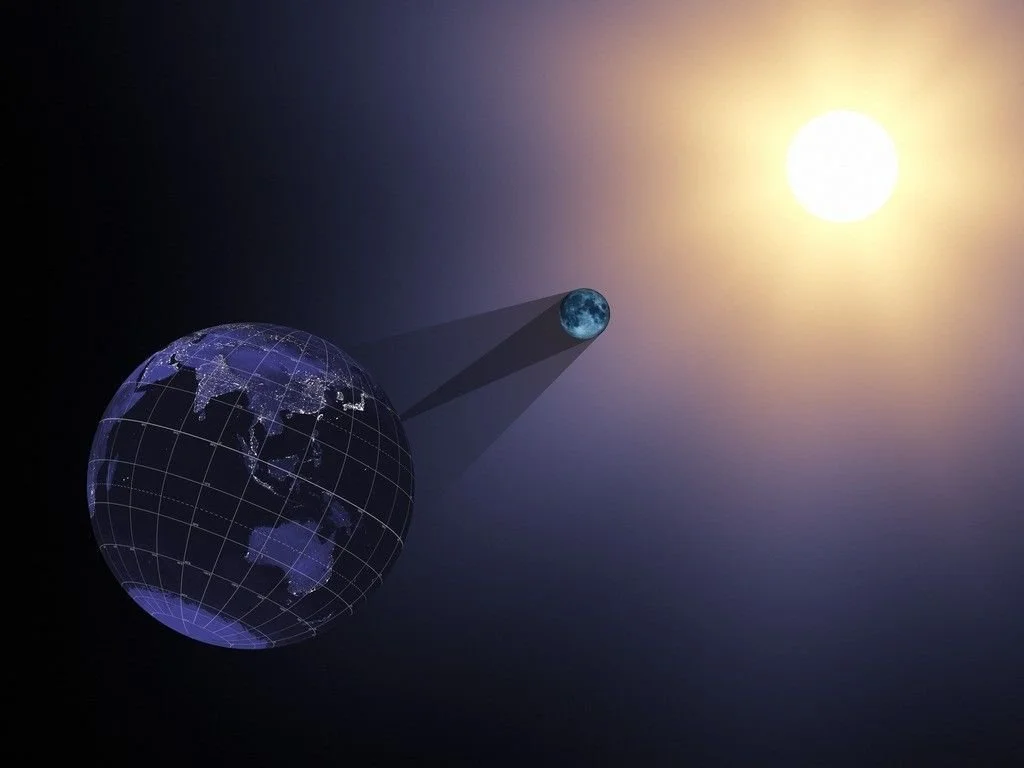
A solar eclipse occurs when the Moon passes between the Sun and Earth, casting its shadow on Earth. The shadow comprises two concentric cones, a dark inner shadow called the umbra and a lighter outer shadow called the penumbra.
Credit: NASA
Because a new Moon and the following full Moon are separated by about two weeks, one eclipse during an eclipse season is commonly followed by another of the opposite kind. A solar eclipse occurs at new Moon, when the Moon passes between Earth and the Sun, while a lunar eclipse occurs at full Moon, when Earth lies between the Sun and Moon. This is exactly what happens in August 2026: the total solar eclipse on 12 August is followed just over two weeks later by a partial lunar eclipse on 28 August. Most eclipse seasons contain two eclipses, although occasionally the timing allows three to fit within the same season.
This pairing does not mean that the same places on Earth will necessarily see both events. Solar eclipses are visible only from the comparatively narrow region swept by the Moon’s shadow, whereas a lunar eclipse can be seen from much of the entire night side of Earth at once. The two events are therefore closely related by orbital geometry even when their viewing maps look completely different.
Choosing where to see the eclipse
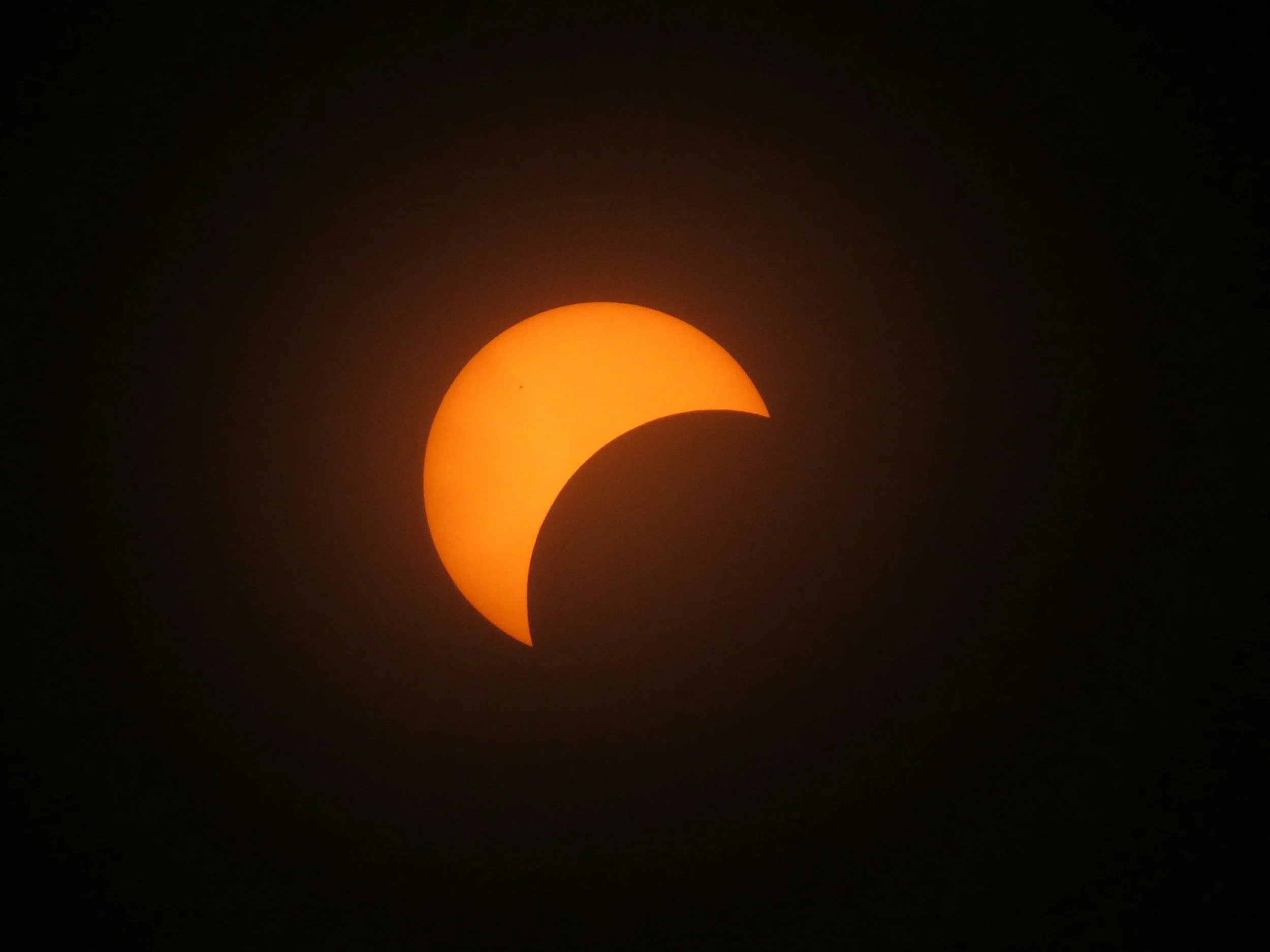
Image by Tony Rodriguez
The centre line of an eclipse naturally attracts attention because it generally provides the longest period of totality, but duration is only one consideration. For the 2026 eclipse, cloud cover, the western horizon and the ability to relocate as weather forecasts develop may ultimately be more important than gaining another few seconds beneath the shadow.
Spain generally offers encouraging August weather prospects, although conditions vary significantly across the eclipse path. Historical climatology suggests that some inland and eastern areas tend to have better prospects for clear skies than the cloudier Bay of Biscay coast. These figures describe long-term patterns rather than what will happen on one particular evening, so increasingly accurate short-range forecasts will become much more useful as 12 August approaches.
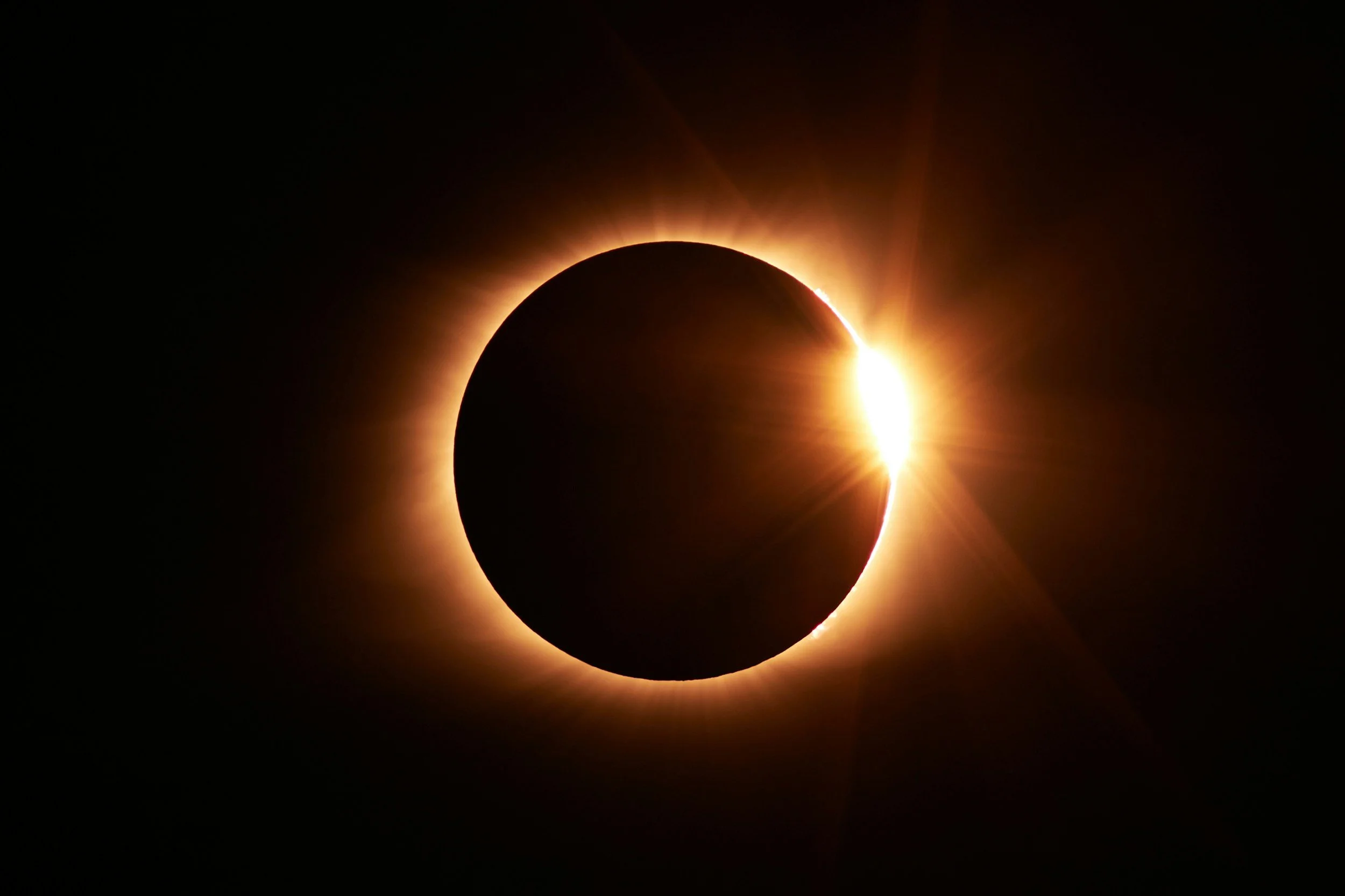
Image by Jongsun Lee, captured from Kentucky, United States
For anyone travelling specifically for the eclipse, it may therefore be worth choosing a wider region rather than committing too rigidly to a single viewing point. Having several possible locations within driving distance provides some flexibility if local cloud develops.
The low Sun also makes advance location scouting unusually valuable. Planning applications can establish the Sun’s expected position and altitude, but visiting a location provides information that maps cannot always reveal. A distant ridge, line of trees or building that appears insignificant during the middle of the day may become important when the Sun is less than ten degrees above the horizon.
Iceland presents a different balance of advantages and risks. Reykjavík lies within the path of totality and experiences roughly a minute of total eclipse, with the Sun considerably higher in the sky than it will be across much of Spain. Iceland's weather is more challenging, however, so the choice between destinations ultimately becomes a balance between solar altitude, duration, accessibility and the probability of clear skies.
For most eclipse chasers, a shorter period of unobstructed totality is likely to be considerably more memorable than a theoretically longer eclipse hidden behind cloud.
What will we see from the UK?
The UK lies outside the path of totality but will experience an exceptionally deep partial solar eclipse, with the degree of coverage increasing generally towards western parts of the country.
In London, the eclipse begins at approximately 18:17 BST, reaches maximum at around 19:13, and finishes close to 20:06. More than 90% of the Sun’s visible area will be obscured across much of Britain, creating an impressive crescent Sun during the deepest phase. As with Spain, the evening timing means that an open view towards the west will provide the best chance of following the event from beginning to end.
It is worth understanding that even a very deep partial eclipse remains visually different from totality. The small portion of photosphere that remains exposed is intensely bright, preventing the solar corona from becoming visible and maintaining considerably more daylight than many first-time observers expect. The transformation that occurs when the final part of the photosphere disappears is one of the reasons eclipse observers travel such extraordinary distances to reach the path of totality.
Nevertheless, the 2026 event will offer UK observers an unusually dramatic partial eclipse and an excellent opportunity to observe how the Sun, shadows and surrounding light change over the course of almost two hours.
Watching the eclipse safely
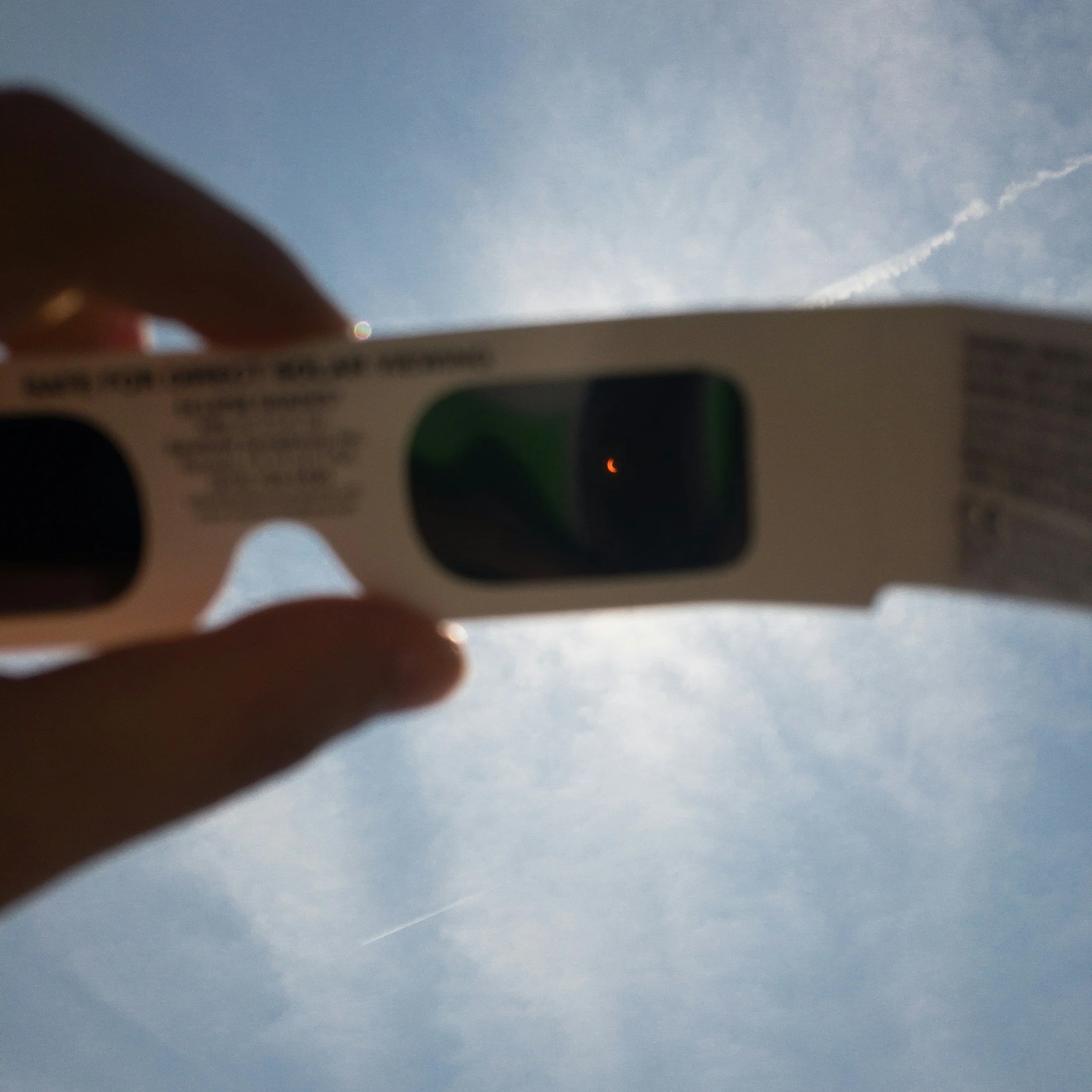
Image by Jason Howell, The Solar Eclipse of 2017 in North America.
Safe solar observing is straightforward once the distinction between direct viewing and optical equipment is understood. During every partial phase, direct observation of the Sun requires suitable solar protection. Standard sunglasses, smoked glass and improvised filters do not provide the necessary protection, so viewers should use genuine eclipse glasses or handheld solar viewers that meet the ISO 12312-2 international safety standard and come from a reputable source. Certified eclipse glasses, such as the Baader Solar Eclipse Observing Glasses, are one great option available for direct viewing.
Before the eclipse, it is worth checking glasses for scratches, tears or other damage, particularly if they have been stored since a previous event.
Cameras, telescopes and binoculars require a different approach. Eclipse glasses are designed for direct naked-eye viewing and should not be used as a substitute for a filter on optical equipment. A telescope or telephoto lens concentrates sunlight, so an appropriate solar filter needs to be securely fitted over the front aperture, allowing the sunlight to be filtered before entering the optical system.
For anyone who would rather not look towards the Sun directly, projection offers a simple and engaging alternative. A pinhole projector can create a safe projected image of the eclipsed Sun, while nature provides its own version beneath trees: small gaps between leaves act as hundreds of pinhole cameras, scattering tiny crescent-shaped images of the Sun across the ground.
There is one important distinction for people inside the path of totality. Once the bright photosphere has been completely covered, and only during that brief period of complete totality, the corona can be viewed without eclipse glasses. Solar protection needs to be used again as soon as the bright surface of the Sun begins to reappear. For everyone outside the path of totality, including observers throughout the UK, suitable solar protection remains necessary throughout the entire eclipse.
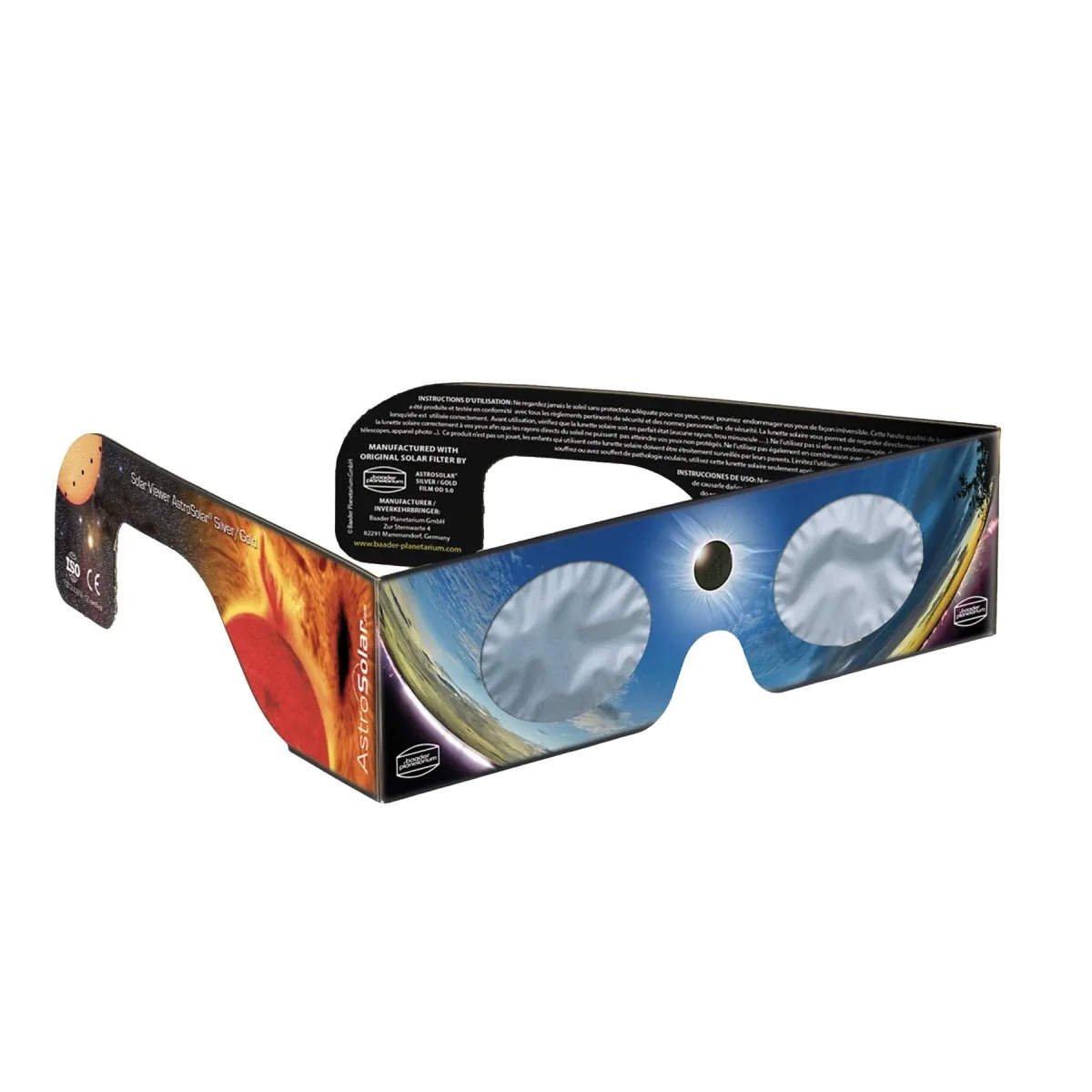
Baader Solar Eclipse Observing Glasses reduce sunlights intesity by by 99.999%.
Look beyond the Sun
Some of the most fascinating aspects of an eclipse are easily missed if attention remains fixed exclusively on the solar disc.
During the partial phases, changing shadows are worth watching, particularly the crescent projections appearing beneath trees. As progressively less sunlight reaches the ground, the character of the landscape can also change. The illumination becomes increasingly unfamiliar, colours can appear different and temperatures may noticeably fall as the amount of incoming solar radiation decreases.
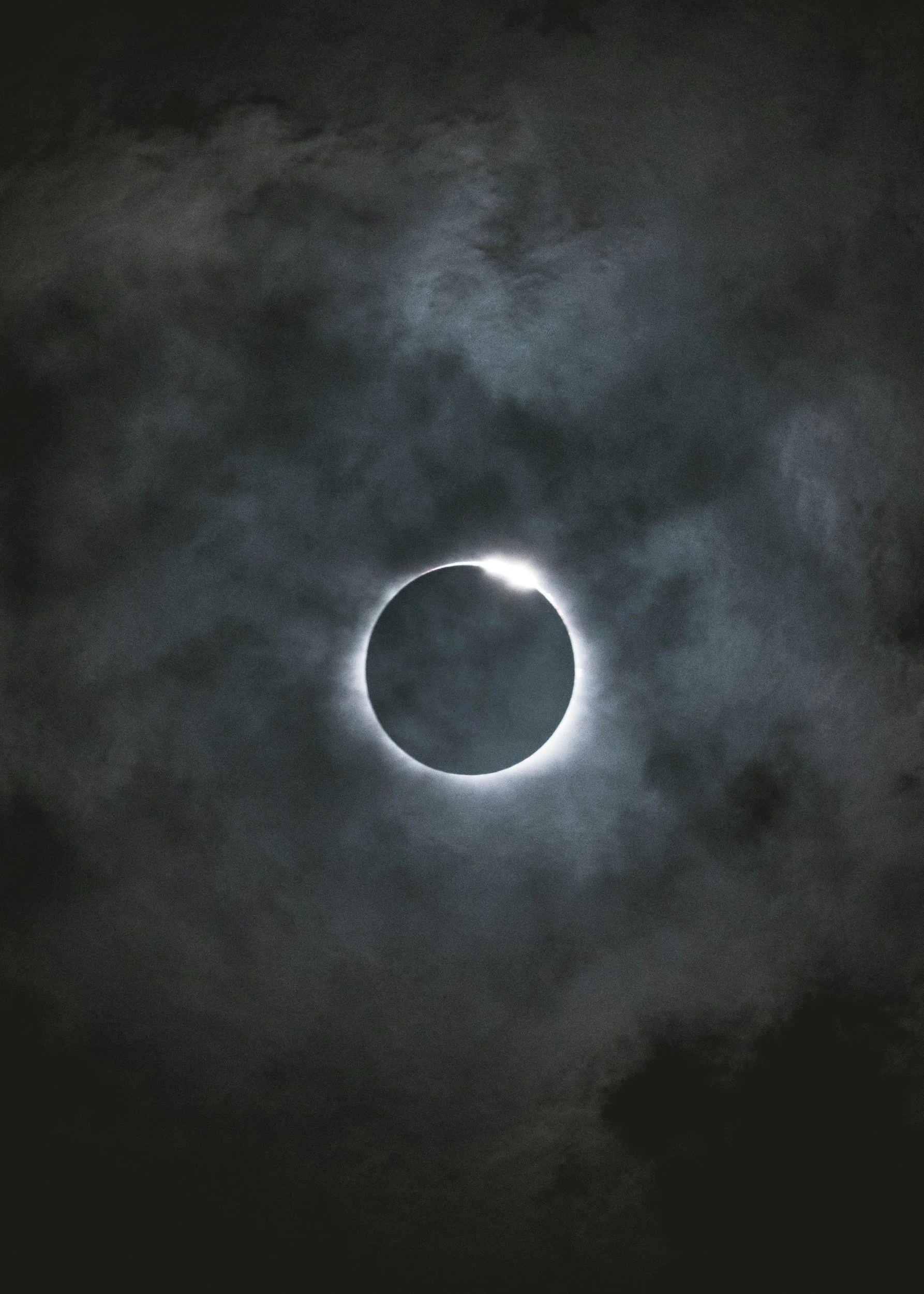
Image by Jordon Conner
For observers within the path of totality, the final moments before complete coverage bring a rapid sequence of phenomena. Baily’s beads can appear as points of sunlight shine through valleys along the Moon’s irregular edge, followed by the celebrated diamond-ring effect as the final brilliant portion of the photosphere disappears.
Once totality begins, the corona becomes visible around the black lunar silhouette. Its appearance varies with solar activity, often revealing delicate structures extending away from the Sun, while reddish prominences may be visible around the lunar edge.
The wider sky is part of the experience too. Bright planets and stars can emerge, while the horizon may retain an unusual glow because locations beyond the Moon’s relatively narrow shadow remain illuminated. Changes in temperature, wind and the behaviour of animals have also been reported during eclipses, although these vary considerably with location and conditions.
Taking a few moments to look around rather than exclusively upwards can reveal just how localised and extraordinary the passage of the Moon’s shadow really is.
Photographing the eclipse
The unusual geometry of the 2026 eclipse gives photographers several very different possibilities. A long telephoto lens can reveal the eclipsed Sun, corona, Baily's beads and diamond-ring phases in detail, while a wider composition could take advantage of the low evening Sun to incorporate mountains, architecture, coastlines or other elements of the Spanish landscape.
Whichever approach is chosen, familiarity with the equipment beforehand is far more valuable than adding complexity on the day. Practising focus, exposure changes and filter removal in advance reduces the amount of attention the camera demands during the eclipse. A tripod can help maintain composition, while remote triggering or a programmed sequence can allow the camera to continue working without constant intervention.
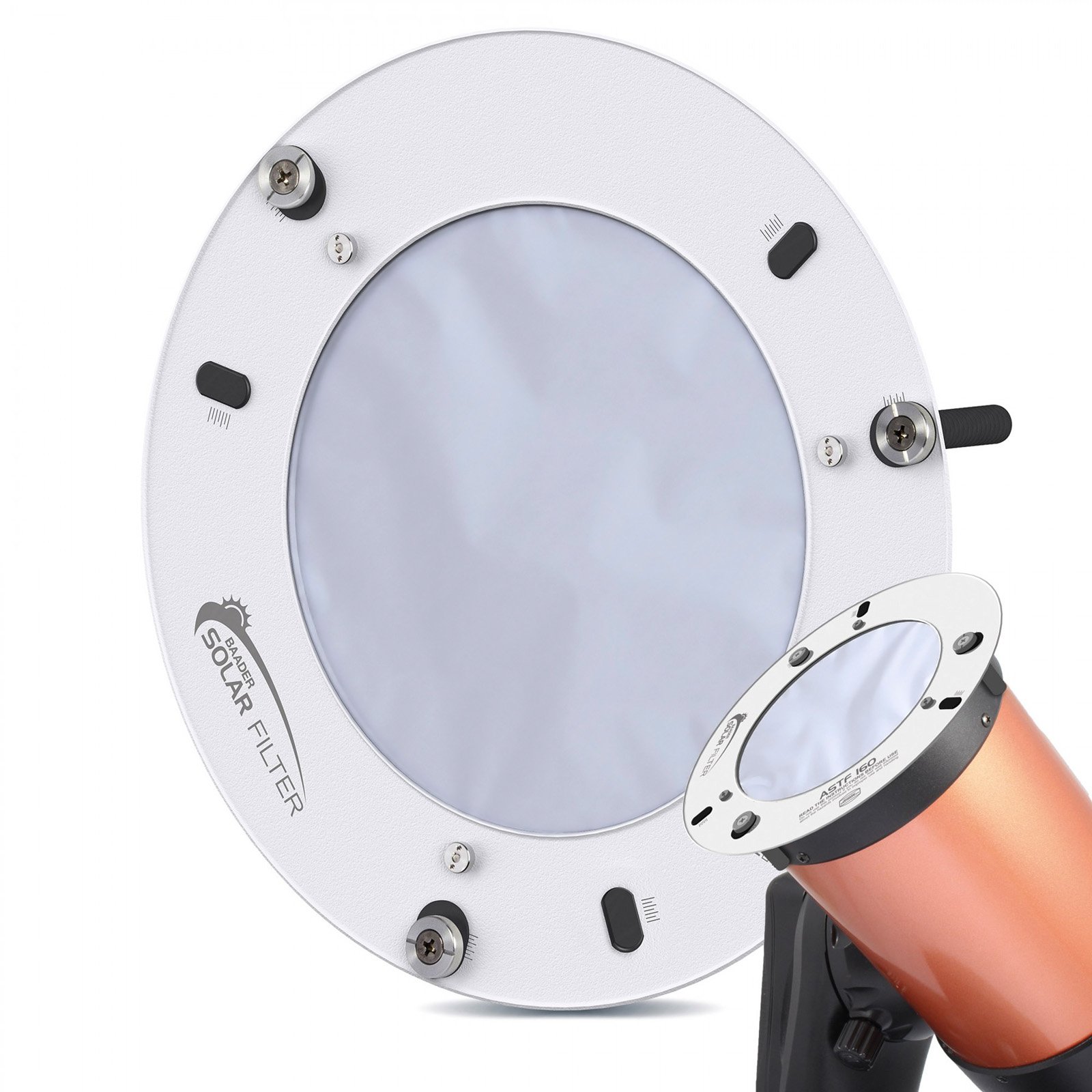
Baader Solar Filter
During the partial phases, an appropriate solar filter must remain securely fitted to the lens. Using an appropriate telescope solar filter like the Baader ASTF: AstroSolar is essential. Photographers inside the path of totality can remove that filter once the photosphere is completely covered to photograph the corona (only when the Moon completely covers the Sun's bright face), replacing it before direct sunlight returns. Because the corona contains an enormous range of brightness, capturing a sequence of bracketed exposures can reveal considerably more structure than relying on a single exposure.
There is, however, a balance worth considering between documenting an eclipse and experiencing one. Totality in 2026 will last less than two and a half minutes everywhere along the path and considerably less in many popular locations. A camera can capture hundreds of frames during that interval, whereas the person operating it only gets one opportunity to experience those particular minutes.
For photographers comfortable with automation, programming as much of the sequence as possible beforehand can provide the best of both worlds: photographs of the event alongside enough time to experience it away from the viewfinder.
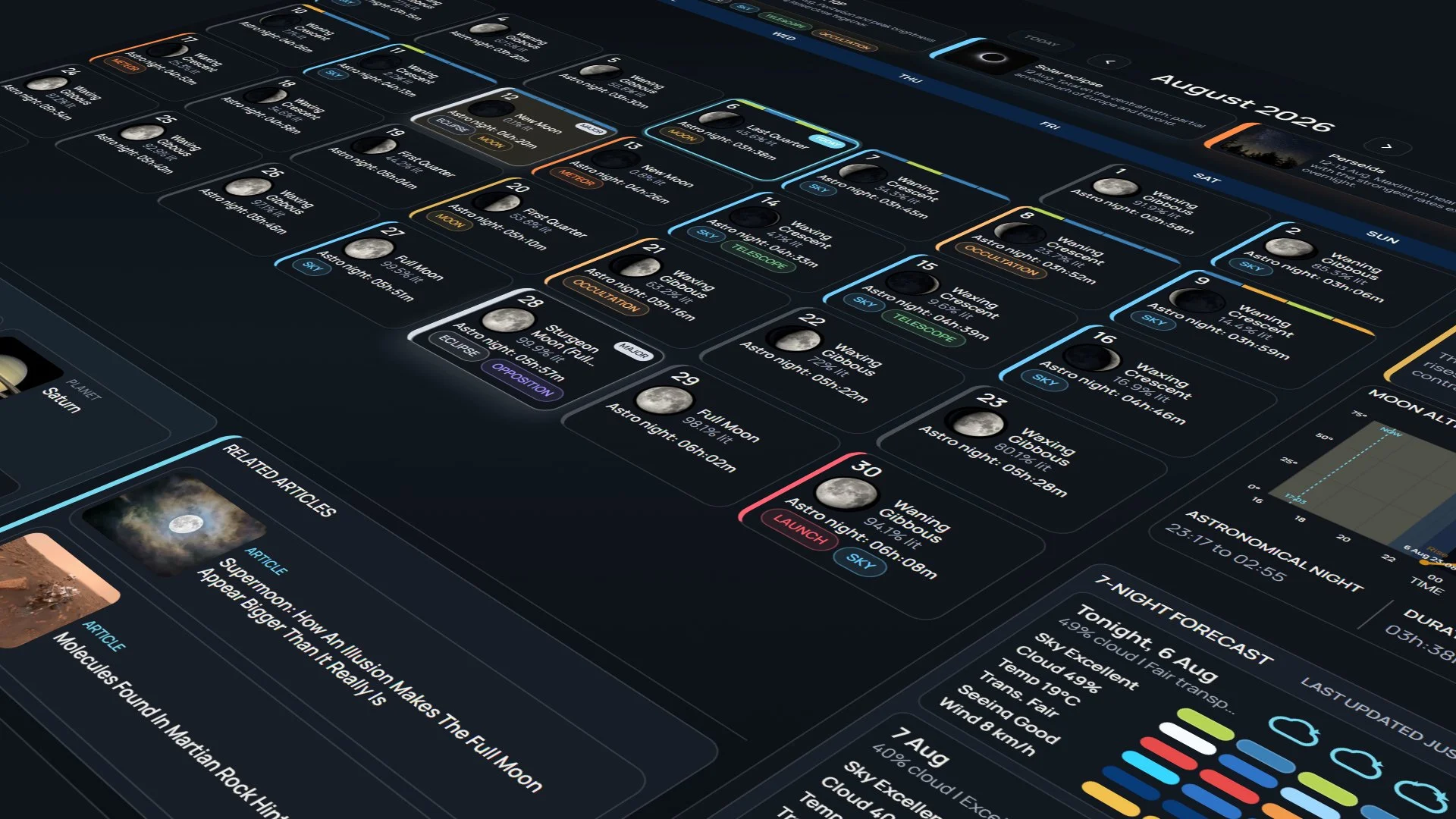
After Dark Calendar is a sky planner that allows you to keep track of major astronomical events.
Preparing for 12 August
Preparation need not be complicated, but several practical details are easier to solve before eclipse day. Solar filters and eclipse glasses can be tested and inspected in advance, while batteries, memory cards, tripods and camera settings can all be prepared before travelling to the viewing location. Offline maps can also be useful in areas where mobile networks become congested.
Popular eclipse destinations are likely to experience considerably more visitors than usual, particularly within the path across Spain and Iceland. Allowing extra travelling time and arriving early can make the afternoon much more relaxed, while carrying water, suitable clothing and sun protection is sensible for anyone expecting to remain outdoors for several hours.
Weather will inevitably remain the largest uncertainty. Rather than relying entirely on one forecast, comparing several reputable forecasts and satellite imagery during the final days can help identify where clearer conditions are developing. Those with transport and flexible accommodation will naturally have more options if the forecast changes.
Perhaps most importantly, anyone travelling into the path of totality should know the predicted contact times for their specific location. Times can vary across the eclipse path, and relying on figures quoted for the nearest major city is unnecessary when modern eclipse maps and planning tools can calculate them accurately for individual coordinates. Astromaniac Magazine’s After Dark Calendar can also help keep track of major astronomical events and short-range weather conditions.
| Date | Type | Visibility |
|---|---|---|
| 12 August 2026 | Total Solar | Total eclipse visible from Greenland, Iceland, Spain, Russia and a small area of Portugal. A partial eclipse will be visible across parts of Europe, Africa and North America. |
| 27–28 August 2026 | Partial Lunar | Visible from the Americas, Europe, Africa and western Asia. |
| 06 February 2027 | Annular Solar | Annularity visible across parts of South America and Africa, including Chile, Argentina, Uruguay, Brazil and parts of West Africa. |
| 20–21 February 2027 | Penumbral Lunar | Visible from the Americas, Europe, Africa, Asia, Australia and Antarctica. |
| 02 August 2027 | Total Solar | Total eclipse visible from southern Spain, North Africa, Saudi Arabia and Yemen, with a partial eclipse visible across much of Europe, Africa and the Middle East. |
An astronomical event on a human scale
One of the remarkable things about a solar eclipse is the contrast between how precisely it can be predicted and how extraordinary it still feels when it happens.
Astronomers can calculate the movement of the Moon’s shadow across a rotating Earth years in advance, predicting when a particular coastline, village or field will briefly fall into darkness. The underlying mechanics are well understood, yet that knowledge does little to diminish the experience of watching the familiar daytime sky change so dramatically.
A total solar eclipse also requires remarkably little astronomical knowledge to appreciate. There is no telescope necessary, no constellation to locate and no distant object that appears as a faint smudge through an eyepiece. Instead, the Sun, Moon and Earth create something enormous and immediately visible around us.
For those travelling to Spain, Iceland or elsewhere within the path, careful preparation will improve the chances of experiencing those fleeting minutes at their best. For everyone watching the deep partial eclipse from Britain and elsewhere in Europe, there will still be plenty to observe beyond the changing shape of the Sun itself.
Photographs will preserve what the eclipse looked like. The more difficult task, particularly during totality, may simply be remembering to look away from the camera long enough to experience what it felt like.
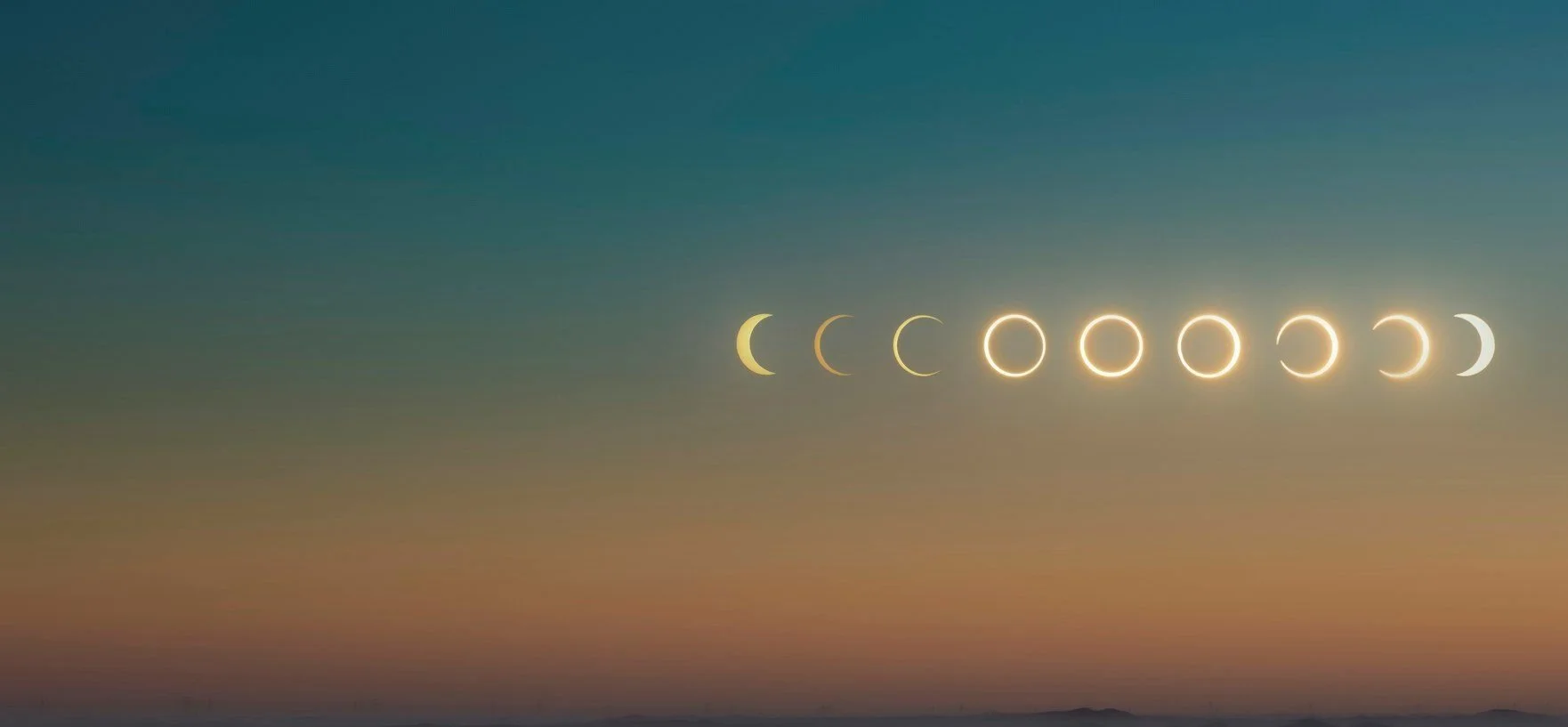
Image by Abed Ismail
The Solar Eclipse on the 26th of December 2019. Composite image of the eclipse phases.
And a final thought…
Remember to experience the eclipse for yourself. It is easy to become so absorbed in cameras, telescopes, exposure settings and tracking that the event passes almost entirely through a screen or viewfinder. Get your equipment ready beforehand, get the right lens filters, automate what you can, then give yourself time to simply look up, take in the changing light and atmosphere, and experience the spectacle with your own eyes, using appropriate eclipse glasses whenever the Sun is not completely covered.