Astromaniac Magazine presents
James Webb Space Telescope
Inside The Mission
Humanity’s deepest gaze into the universe.

Webb mission overture
One observatory. A new way of seeing.
A brief map of the journey ahead: invisible light, engineering at the edge of possibility, and the images that changed our view of the universe.
How did the first light become galaxies, stars and worlds?
Webb reads the universe in infrared. It follows faint ancient light, looks through stellar dust and studies the chemistry of distant worlds. This feature follows the ideas, engineering and images behind that new view.

A golden eye built to hide from heat.
An 18-segment mirror gathers faint infrared light. A five-layer sunshield keeps the instruments cold. Webb works near Sun-Earth L2, about 1.5 million kilometres from Earth, where that carefully controlled view can remain stable.

Light is a message. Webb learns how to read it.
Astronomers study light from planets, stars and galaxies by spreading it into a detailed rainbow spectrum. Learn to read that rainbow, and light reveals distance, chemistry, temperature and motion across space.
Human eyes stop here. Webb keeps going.
Visible light is only a narrow slice of the electromagnetic spectrum. Webb is tuned to near- and mid-infrared wavelengths beyond the red edge of the rainbow. Cooler objects emit infrared light too, which is why infrared is often associated with heat.

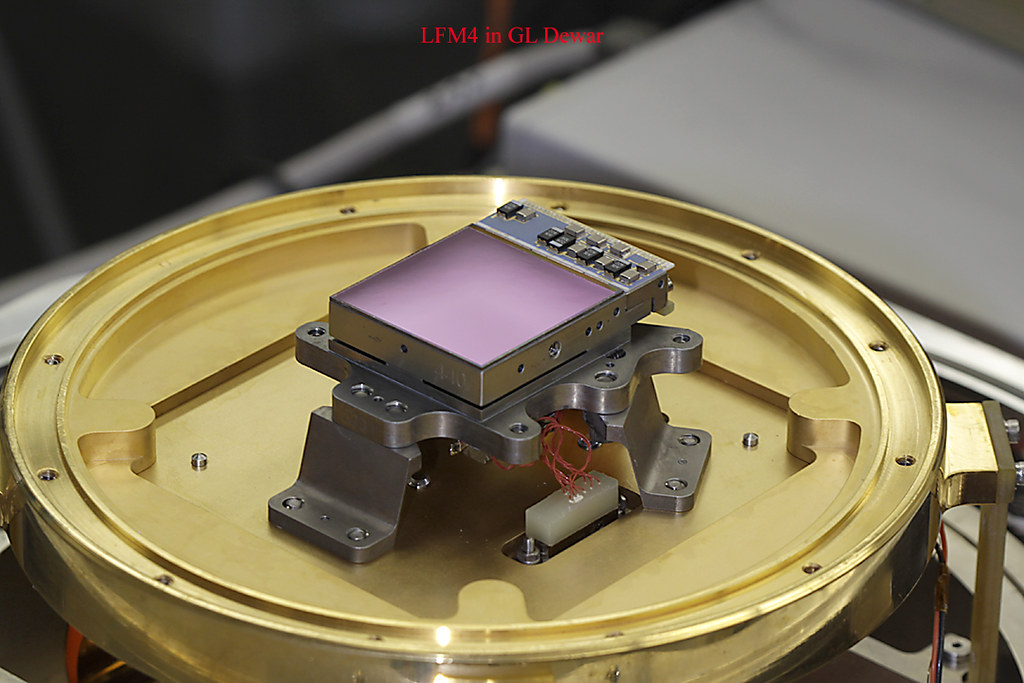
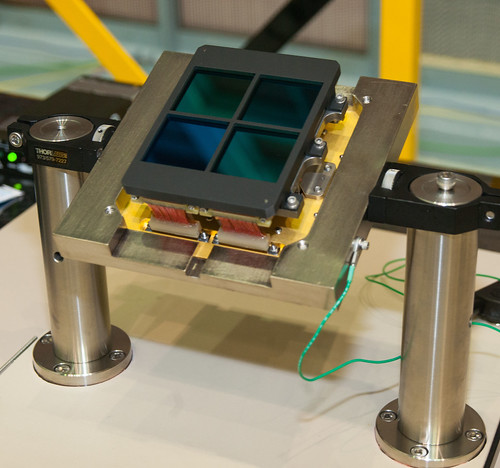
Infrared vision
How Webb Sees the Invisible
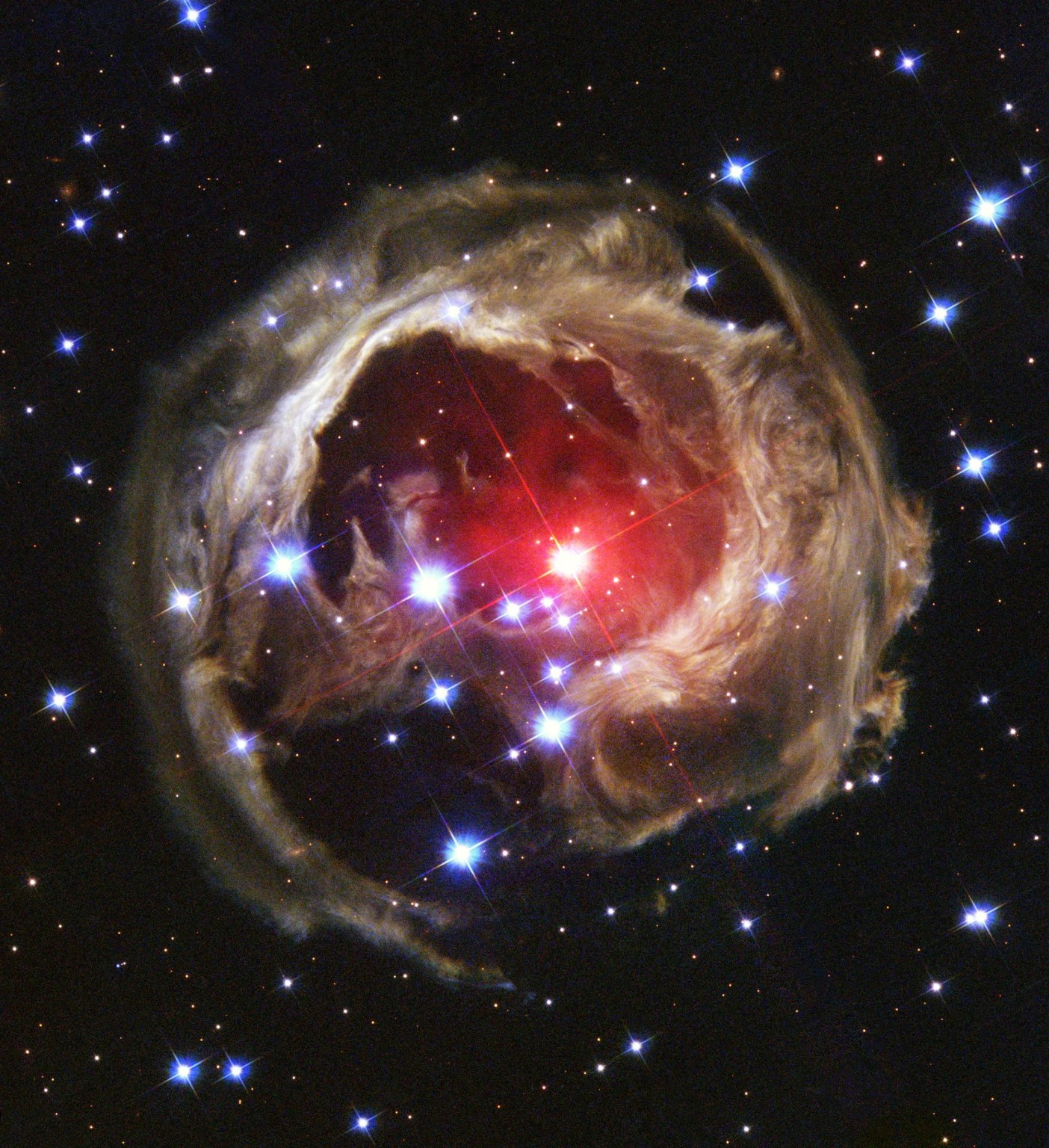
Webb does not simply look farther. It looks differently. It catches infrared light: heat, hidden stars, dust-veiled structures, and ancient light stretched by the expansion of the universe.



A compact timeline tree through Webb’s long road to launch.
Scroll into the branches. The overview opens inside the tree, then the story moves through idea, naming, construction, testing, launch, deployment, and science.
Before the gold mirrors opened in space, Webb had already survived decades of argument, invention, budget pressure, cold tests, folding rehearsals, redesigns, and one of the most complex deployments ever attempted.
The question after Hubble.
While Hubble was still the next revolution, astronomers were already asking what should come after it. The idea that became Webb began as the Next Generation Space Telescope: larger, colder, farther from Earth, and built to see infrared light from the early universe.
The infrared gamble.
A major 1990s recommendation pushed the future telescope toward the infrared: the wavelength range where ancient galaxy light, cool dust, and hidden star formation become visible. This choice drove almost every hard engineering decision that followed.
James E. Webb enters the story.
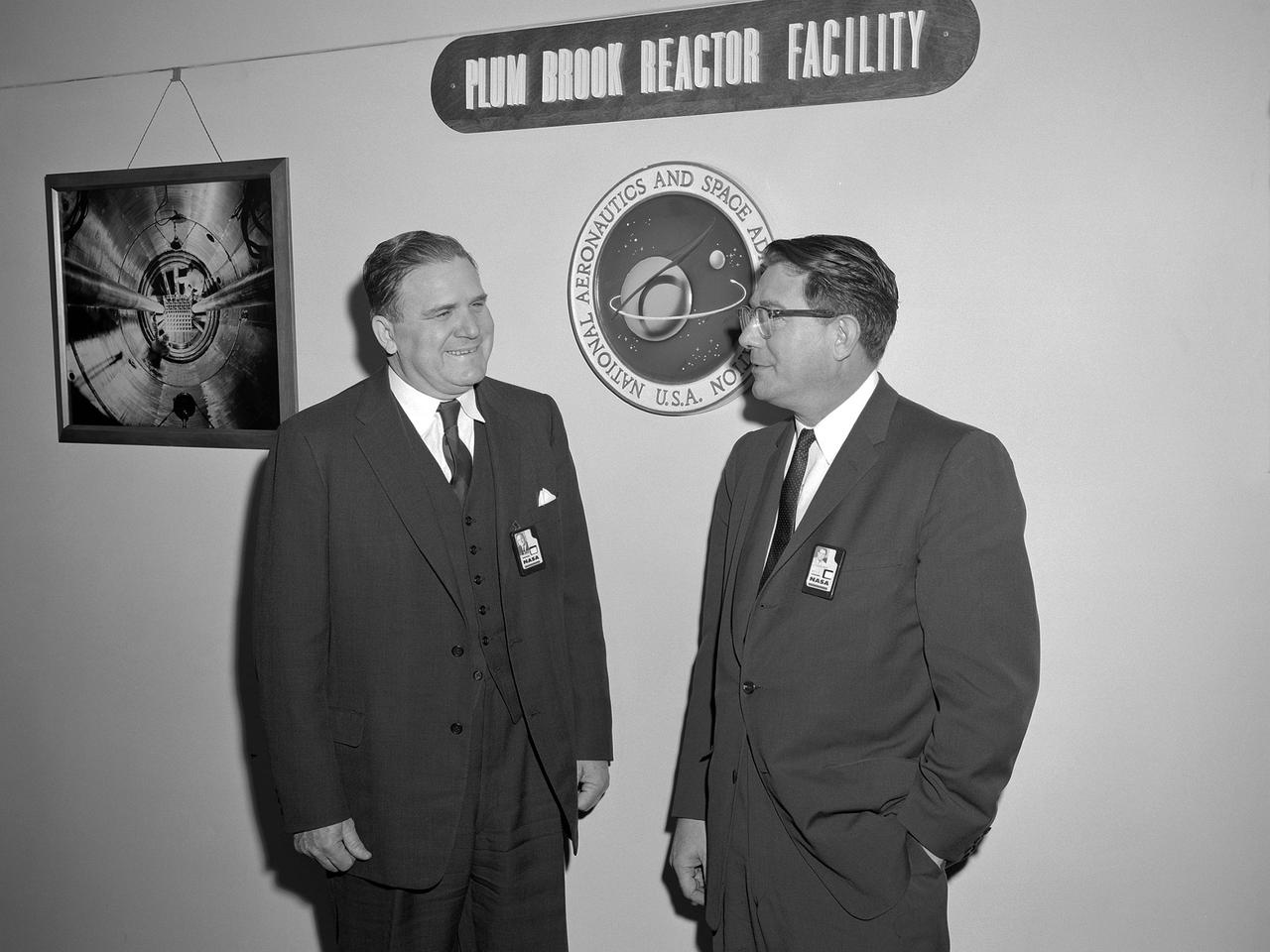
NASA named the observatory after James E. Webb, the agency’s administrator from 1961 to 1968. Webb led NASA through the build-up of Mercury, Gemini, and Apollo, but his legacy also includes strengthening NASA as a science organisation.
Build a mirror too large for the rocket.
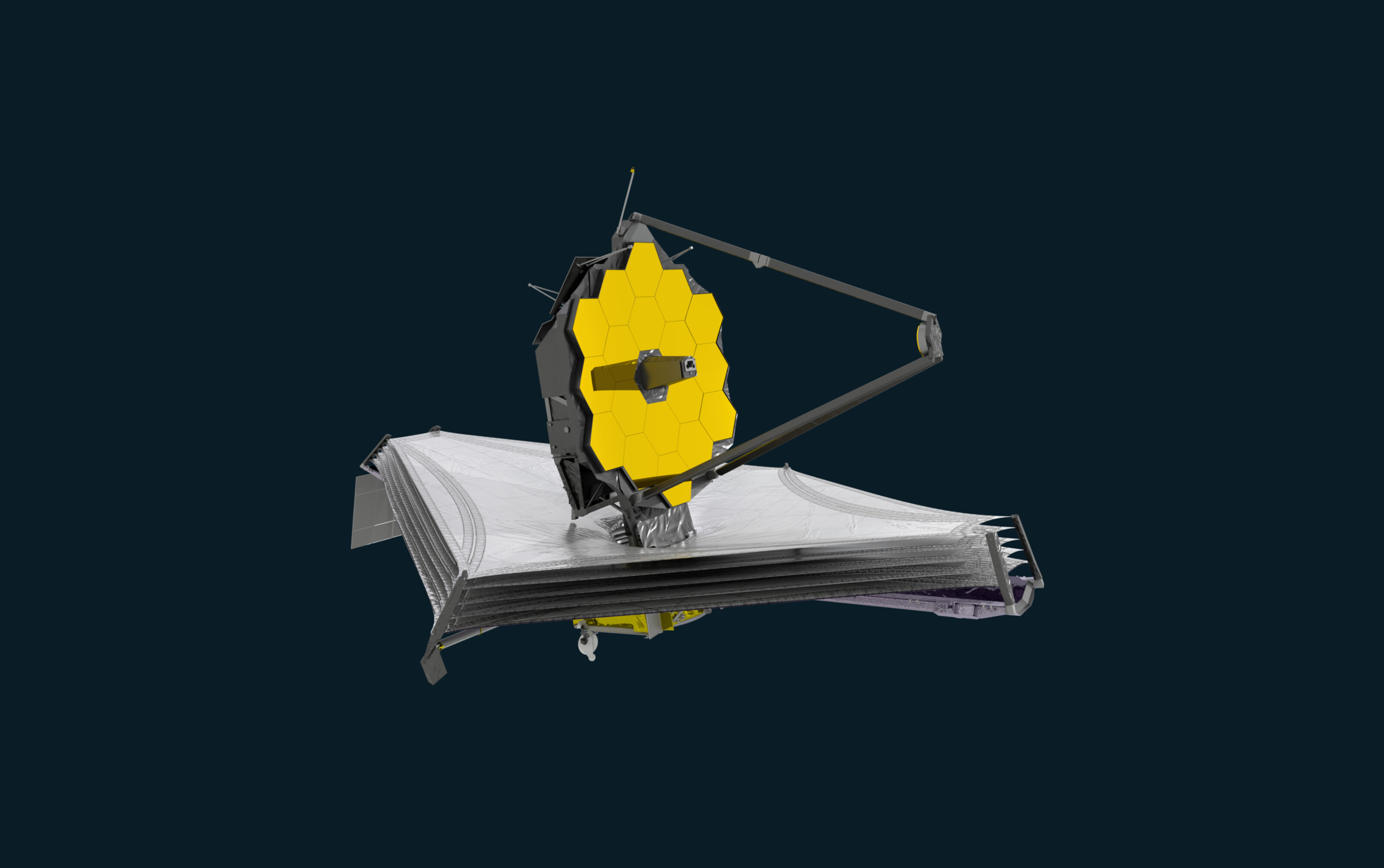
Construction forced the defining Webb trick: a 6.5-metre primary mirror made from 18 gold-coated beryllium hexagons, folded for launch, then aligned in space until the pieces behaved like one mirror.
The observatory becomes a machine.
Webb was not one instrument. It was a cold optical system, a spacecraft bus, a tennis-court-sized five-layer sunshield, and a suite of science instruments: NIRCam, NIRSpec, MIRI, and FGS/NIRISS.
Prove it in the cold.
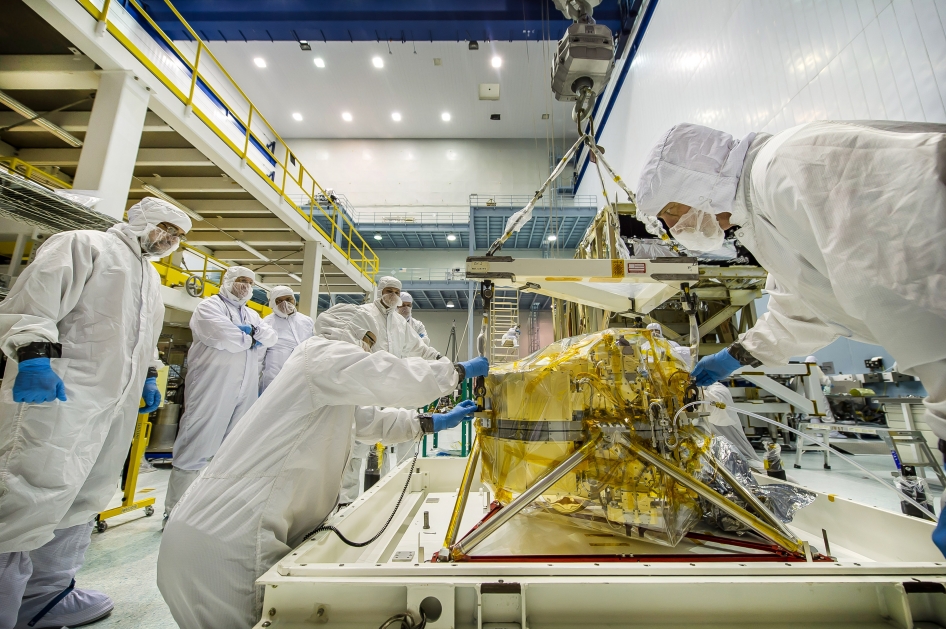
Webb entered cryogenic testing at NASA Johnson Space Center, where the telescope had to prove its optics and instruments could perform inside a giant vacuum chamber at temperatures close to the conditions of deep space.
The costly part nobody could fake.
Webb’s schedule and cost grew because the telescope was doing something unforgiving: folding a huge cold observatory into a rocket fairing, then making it unfold by itself more than a million kilometres from home.
From cleanroom to coast.
In 2021 Webb travelled by ship to Europe’s Spaceport in Kourou, French Guiana. The journey mattered because the telescope was already the full observatory: folded, protected, and close to its final form.
The folded observatory leaves Earth.
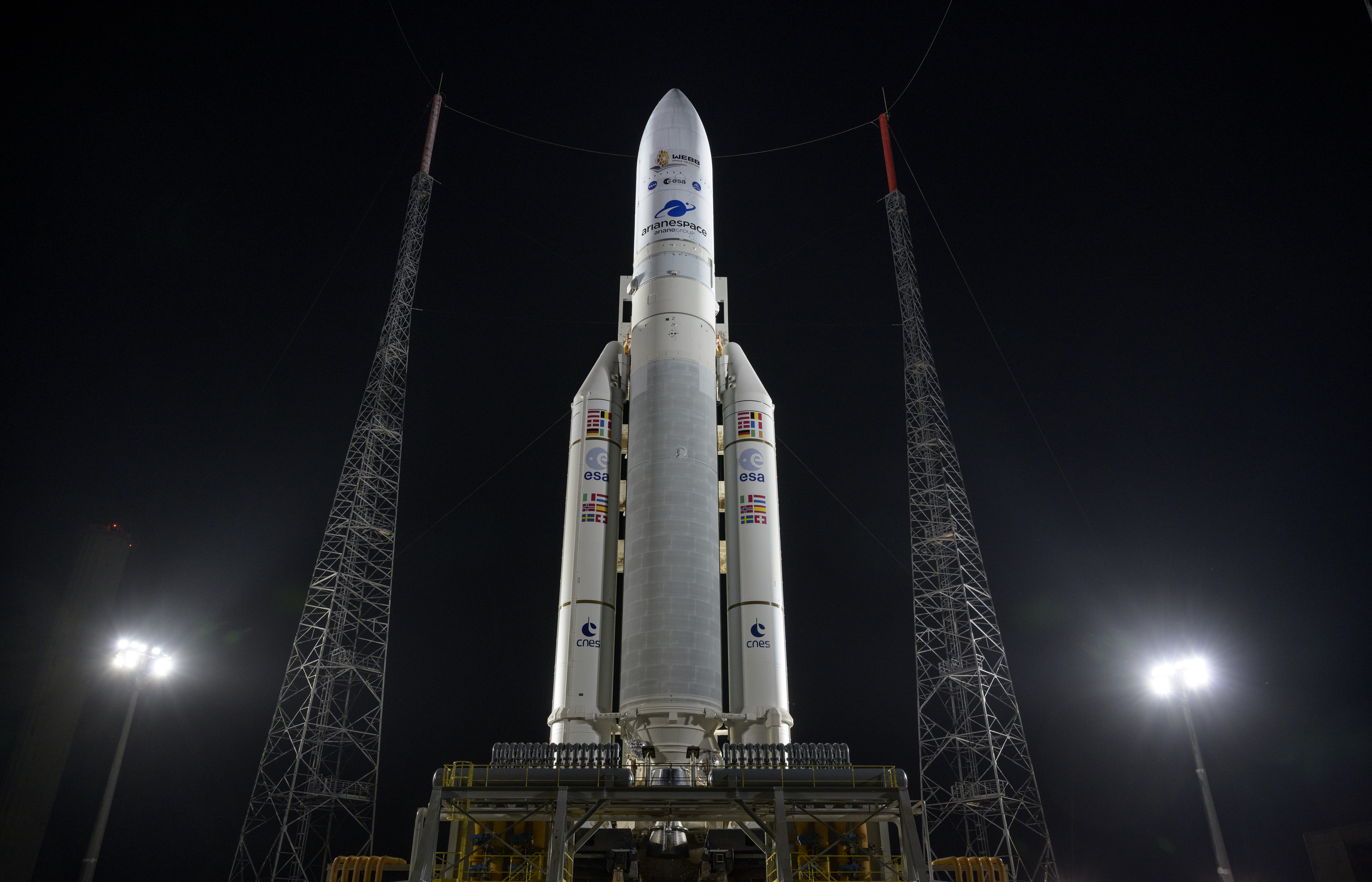
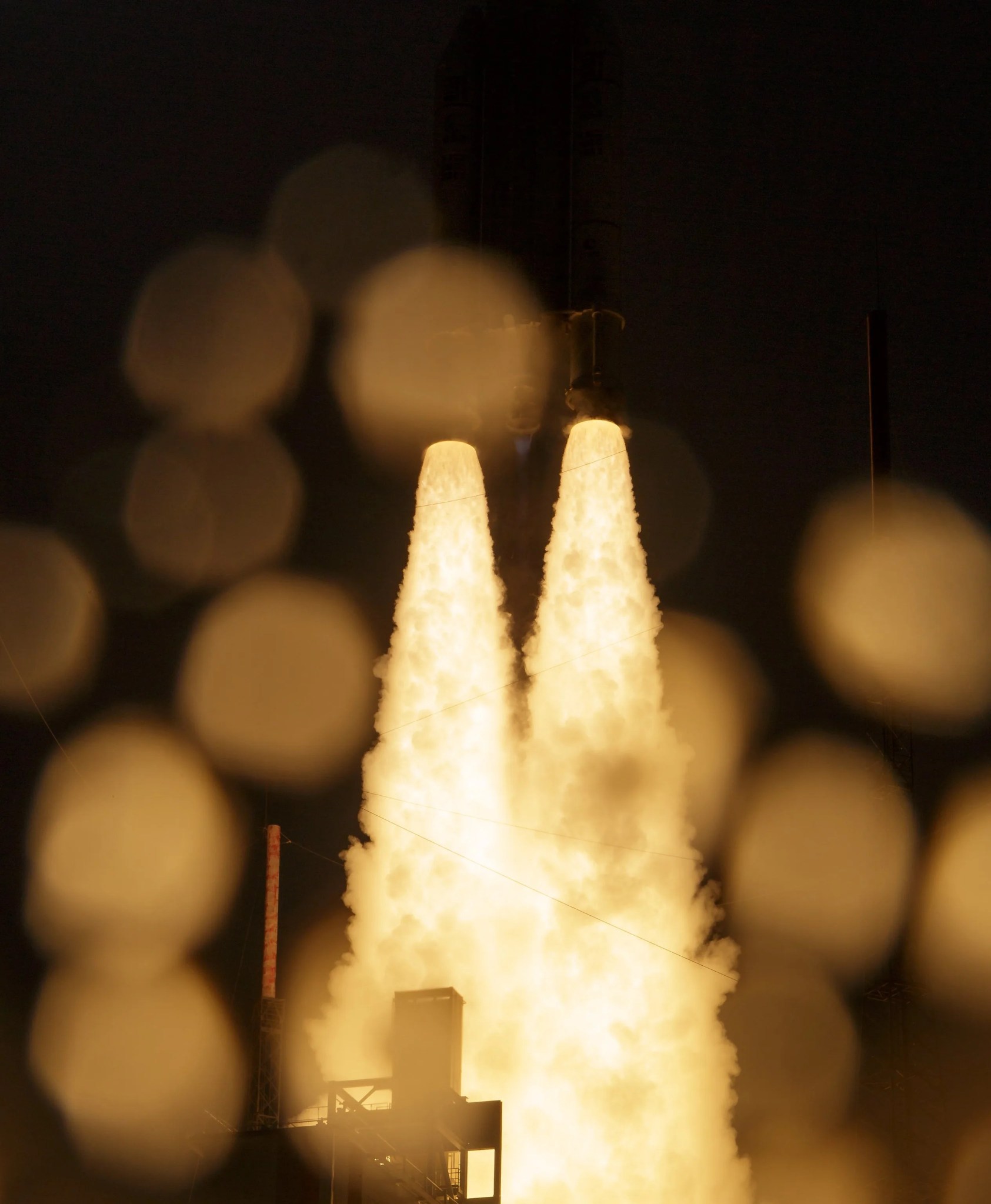
Webb launched aboard Ariane 5 on 25 December 2021. The rocket gave it an exceptionally accurate push, preserving fuel for station-keeping and helping extend Webb’s expected science lifetime.
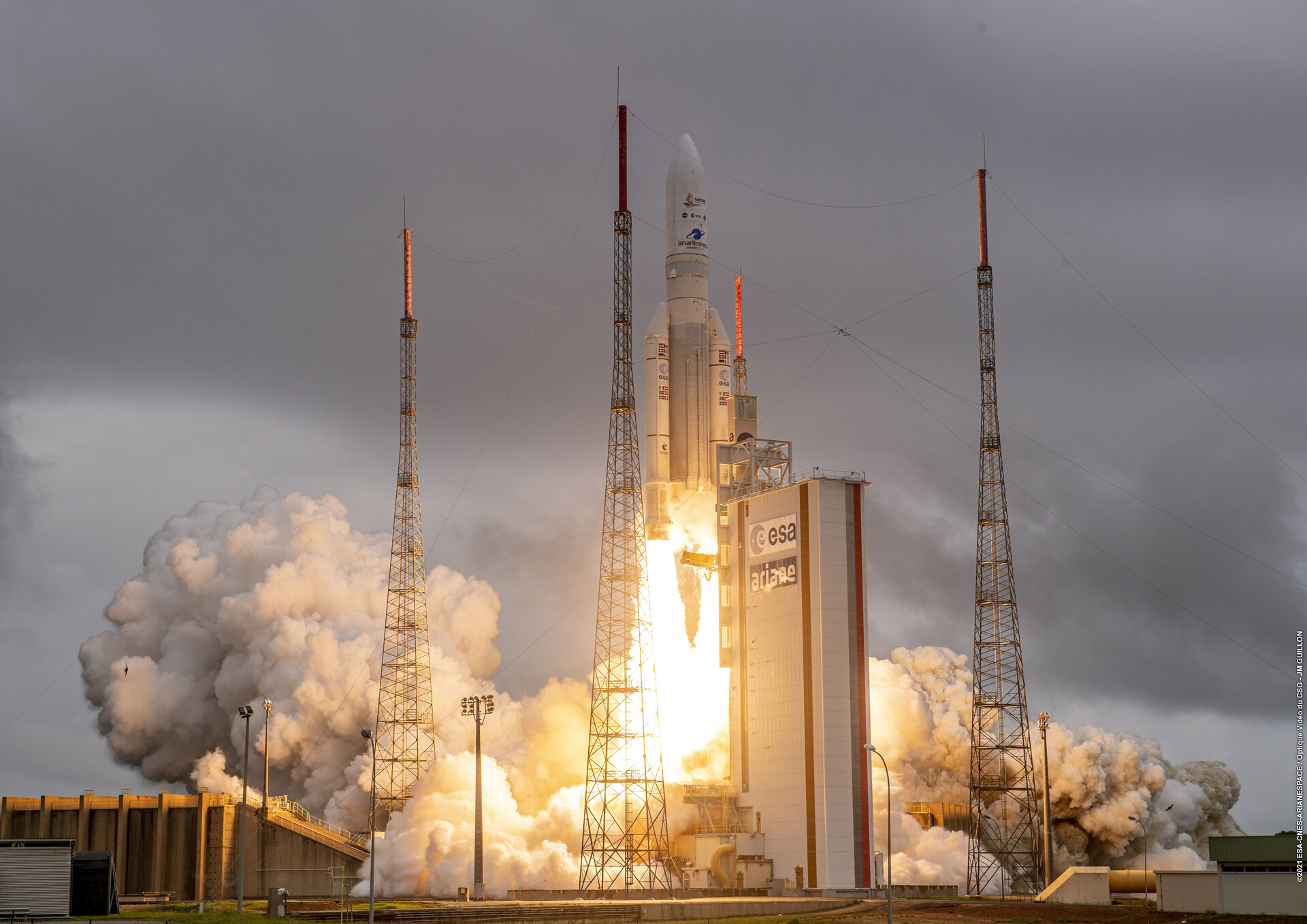
A telescope unfolds itself.
The post-launch plan moved through solar array, antenna, sunshield pallets, sunshield tensioning, secondary mirror deployment, primary mirror wings, trajectory correction burns, and insertion around Sun-Earth L2.
From machine to observatory.
After deployment came cooling, mirror alignment, instrument checks, calibration, and commissioning. By July 2022, Webb’s first full-colour images showed the public what the engineering had been protecting all along.
The long mission is the point.
Webb now works as a transformational infrared observatory. Its real value is not one image or one press release, but a long stream of data that lets scientists compare galaxies, stars, planets, dust, chemistry, and deep time with new precision.
Mirrors Like No Other
The most famous mirror on Earth and in Space
Webb’s mirror system is a folded, gold-coated, cryogenic machine: 18 beryllium hexagons, three smaller partner mirrors, and a choreography of actuators tuned until separate pieces behave like one 6.5-metre infrared eye.

Swipe sideways to reveal all nine mirror chapters.


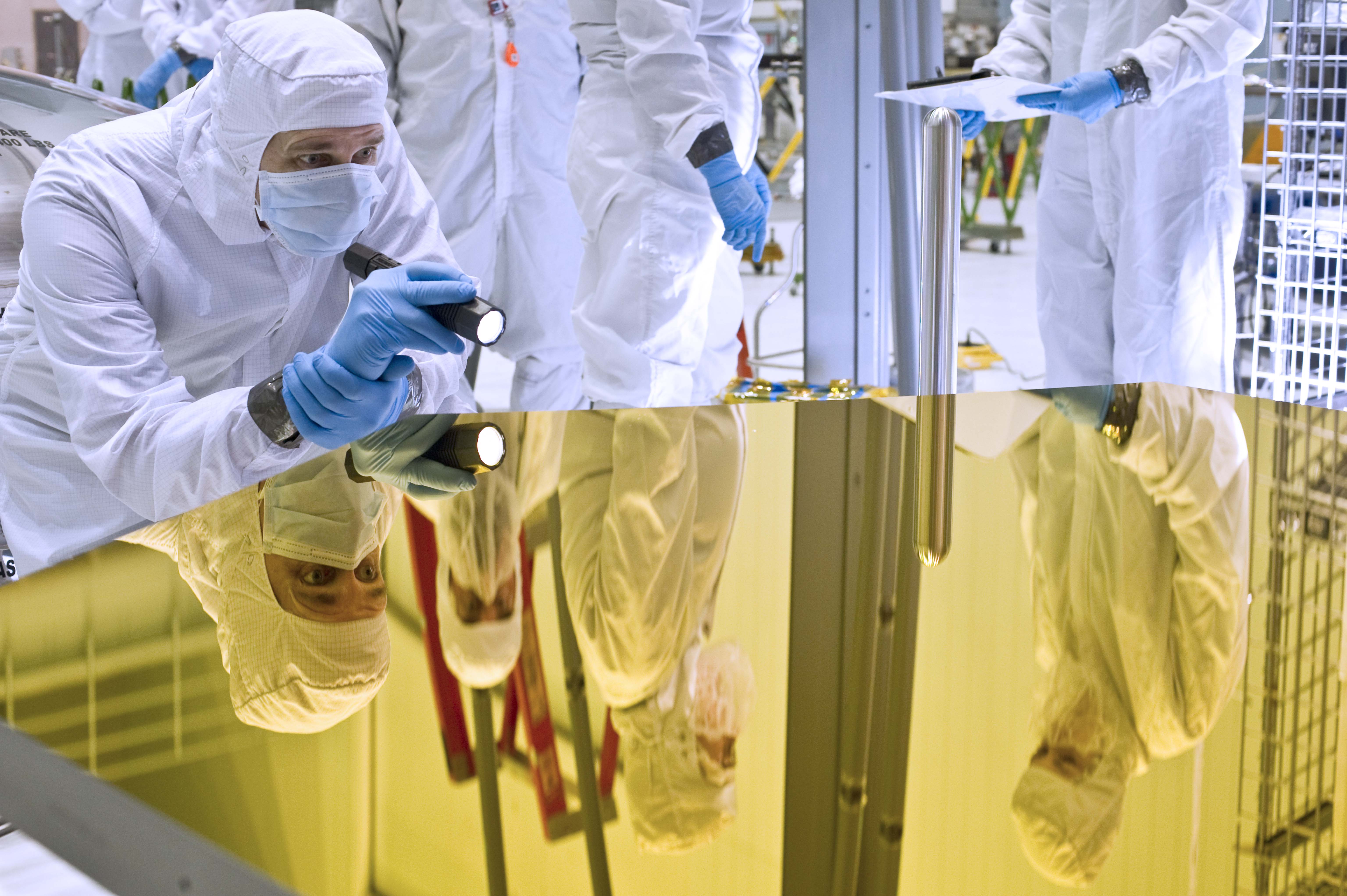
A larger mirror is a larger bucket for ancient light.
NASA explains Webb needed a 6.5-metre primary mirror to measure light from galaxies more than 13 billion light-years away. Sensitivity rises with collecting area: more mirror means more photons from fainter, older targets.
The famous gold honeycomb is only the first act.
Webb has four mirrors: the 18-segment primary, a round secondary mirror on folding booms, a tertiary mirror, and a fine steering mirror. Together they gather, redirect, correct, and stabilise light before it reaches the instruments.

The small round mirror makes the giant honeycomb usable.
Webb had to fold for launch, then rebuild its optical shape in space. After deployment, the 0.74-metre secondary mirror sits out in front of the 18 gold primary segments, receives their reflected light, focuses the beam and sends it back through the optical path toward Webb’s instruments.


The mirror had to fold because the rocket was smaller than the science.
Webb’s primary mirror was too wide for the launch vehicle, so the team segmented it and folded two mirror wings. Each wing carried three primary mirror segments and deployed after launch.

Hexagons pack tightly, point cleanly, and keep the mirror nearly circular.
The hexagonal shape gives Webb a high filling factor with no big gaps, six-fold symmetry, and only three optical prescriptions for all 18 segments. A rounder overall mirror focuses light more compactly onto detectors.
The mirror became sharp by moving in nanometres.
Each primary segment and the secondary mirror use six actuators. The primary segments also have a central actuator that adjusts curvature. NASA says aligning the segments as one mirror required precision around 1/10,000th the thickness of a human hair.
Infrared astronomy only works if the mirror does not glow.
Warm objects emit infrared light. If Webb’s mirror were warm like Hubble’s, its own heat would drown out the faint infrared signals from early galaxies. Webb’s mirrors operate at roughly -220C, protected by deep space and the sunshield.

The mirror was not built in one place. It travelled like a relay baton.
The 18 beryllium mirrors made 14 stops across 11 places in the United States, passing through eight states before launch. The beryllium began in Utah, was purified in Ohio, shaped in Alabama, polished in California, and cryo-tested in Alabama.
The gold is thinner than it looks, and protected by glass.
The mirror coating was applied by vacuum vapour deposition. NASA lists the gold layer at about 100 nanometres thick, with a thin amorphous silicon dioxide layer above it to protect the soft gold surface from scratches and particles.
To see infrared light, Webb first has to disappear from its own view.
Infrared astronomy depends on detecting extremely faint heat signals. Webb’s mirror and sensors must remain cold enough that warmth from the observatory itself does not swamp the science.


Thermal architecture
Jack of All Sunshields
The golden mirror gets the attention. The quiet engineering triumph is the heat shield beneath it: a layered machine for holding one side of Webb in sunlight and the other in deep-space cold.
An atlas written in infrared.
A year-by-year gallery of Webb's public image releases, from first light to the newest deep-space portraits.
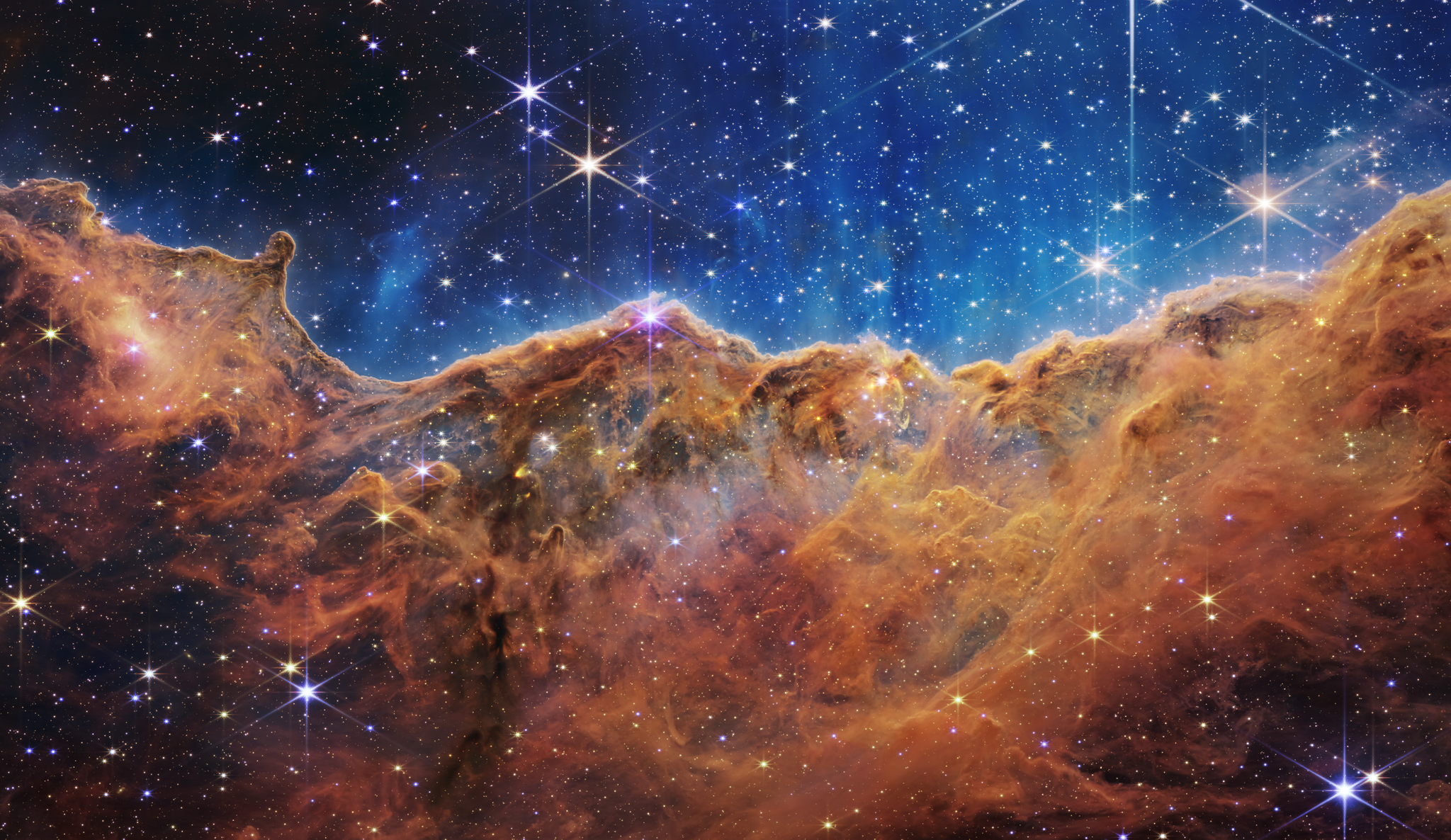
- First Light: Cosmic Cliffs in the Carina Nebula.
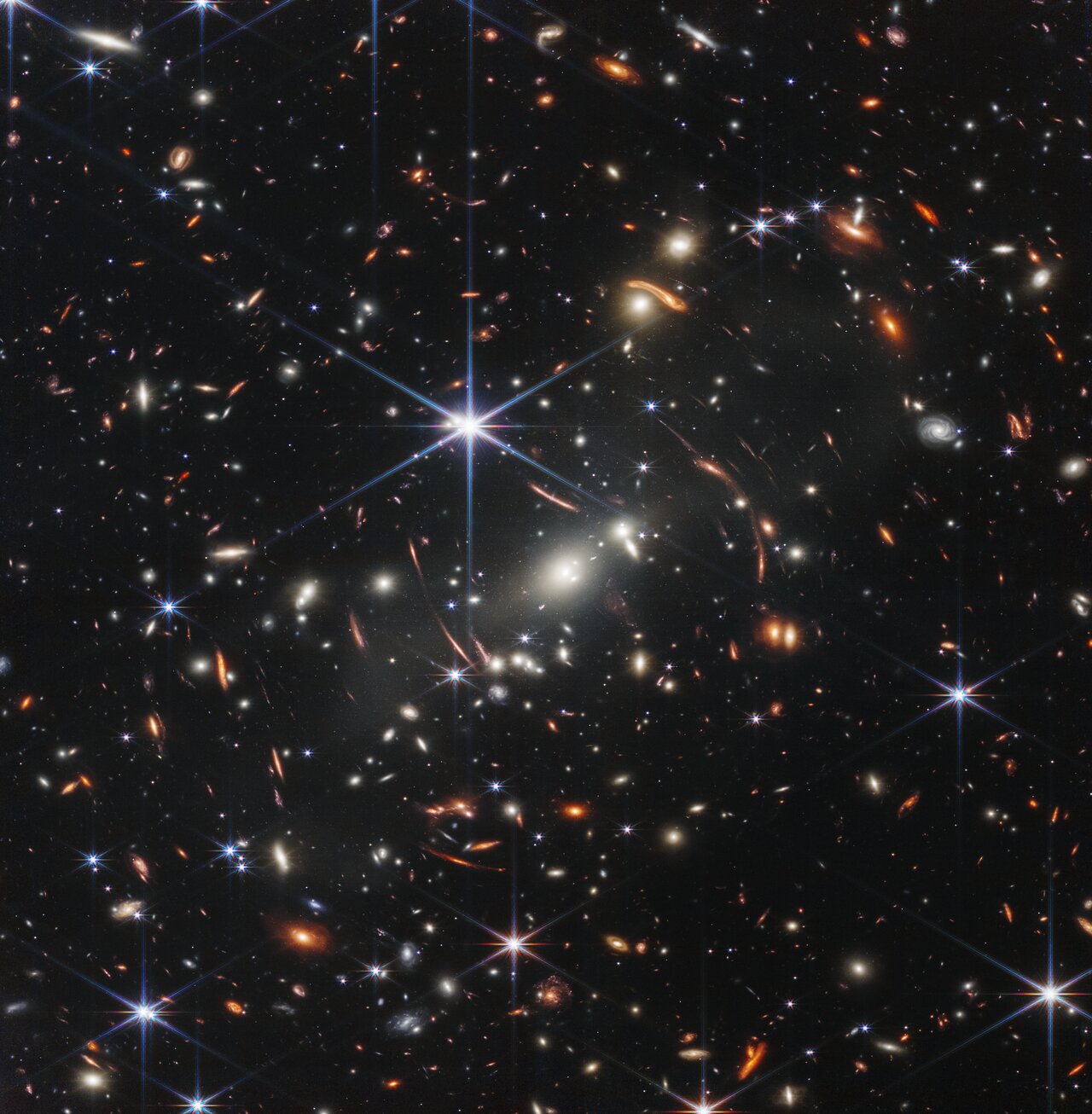
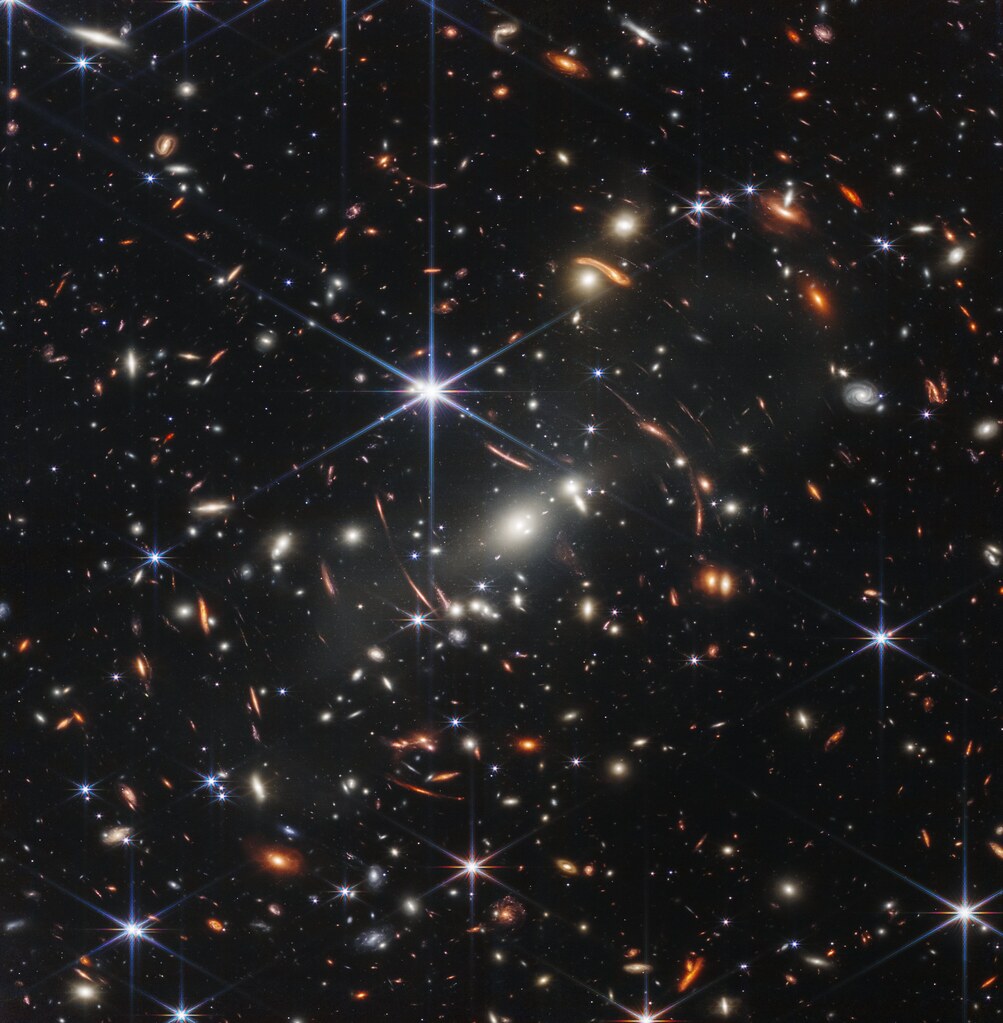
- First Light: Webb First Deep Field.
- First Light: Southern Ring Nebula.
- First Light: Stephan's Quintet.
- 2022: Jupiter in infrared.
- 2022: Phantom Galaxy.
- 2022: Tarantula Nebula.
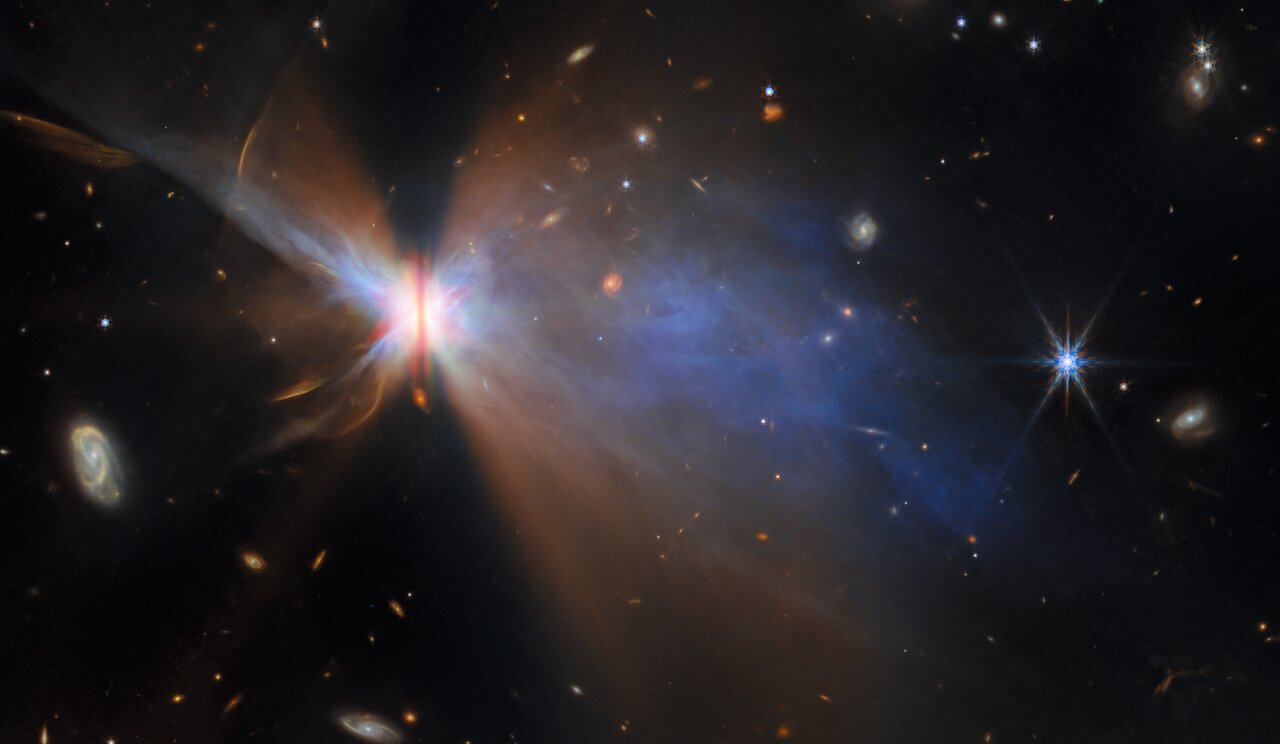
- 2022: Fiery hourglass protostar.
- 2022: Pillars of Creation composite.
- 2022: NGC 7469 star formation.
- 2022: Neptune's rings.
- 2022: Merging galaxies.
- 2023: Orion Bar chemistry.
- 2023: Sun-like stars forming.
- 2023: Dying star in MIRI.
- 2023: M51 in NIRCam.
- 2023: Free-floating brown dwarf field.
- 2023: Uranus and rings.
- 2023: Galactic gathering.
- 2023: Crab Nebula in new light.
- 2024: Horsehead Nebula.
- 2024: Crab Nebula composite.
- 2024: Rho Ophiuchi composite.
- 2024: Brown dwarf candidates.
- 2024: Webb and Hubble galaxy pair.
- 2024: Cosmic wreath.
- 2024: Arp 107.
- 2024: Peeking into Perseus.
- 2025: Bullet Cluster.
- 2025: Cat's Paw Nebula.
- 2025: NGC 1068 composite.
- 2025: Dusty disc and wisps.
- 2025: Glittering star birth.
- 2025: Red Spider Nebula.
- 2025: Apep dust shells.
- 2025: Galactic cornucopia.
- 2026: Helix Nebula.
- 2026: Uranus upper atmosphere.
- 2026: Cranium Nebula.
- 2026: Cat's Paw composite.
- 2026: Saturn with Webb and Hubble.
- 2026: Dust swirls in MIRI.
- 2026: Messier 77.
- 2026: Westerlund 2.
- 2026: Young stars across formation stages.
NASA's Webb Reveals Cosmic Cliffs, Glittering Landscape of Star Birth
Webb's first public images proved the observatory had arrived.

Astrophotography lab
How Webb images become colour.
Webb’s full-colour views are not instant snapshots. They are careful translations of infrared measurements into visible form, built from filtered data, calibration and human-centred image processing.
Data arrives before beauty.
Webb sends digital measurements back to Earth. At the Mikulski Archive for Space Telescopes, those bits become science files that can be calibrated and inspected.
The first view can look almost black.
Many raw frames hold faint signal in a narrow range. Processing stretches the data so dim structure becomes visible without changing where the real light was measured.
Filters separate the physics.
Each exposure records selected infrared wavelengths. Different filters can emphasise dust, stars, gas, molecules and temperature, so a composite carries scientific meaning.
Colour becomes a readable language.
Shorter infrared wavelengths are commonly mapped toward blue or cyan; longer wavelengths toward orange or red. The result is representative colour: accurate data, translated for human eyes.
Yes. The structures, brightness and relationships are measured data. The colours are assigned because Webb sees infrared light beyond human vision.
Hubble and Webb
Two eyes on the universe.
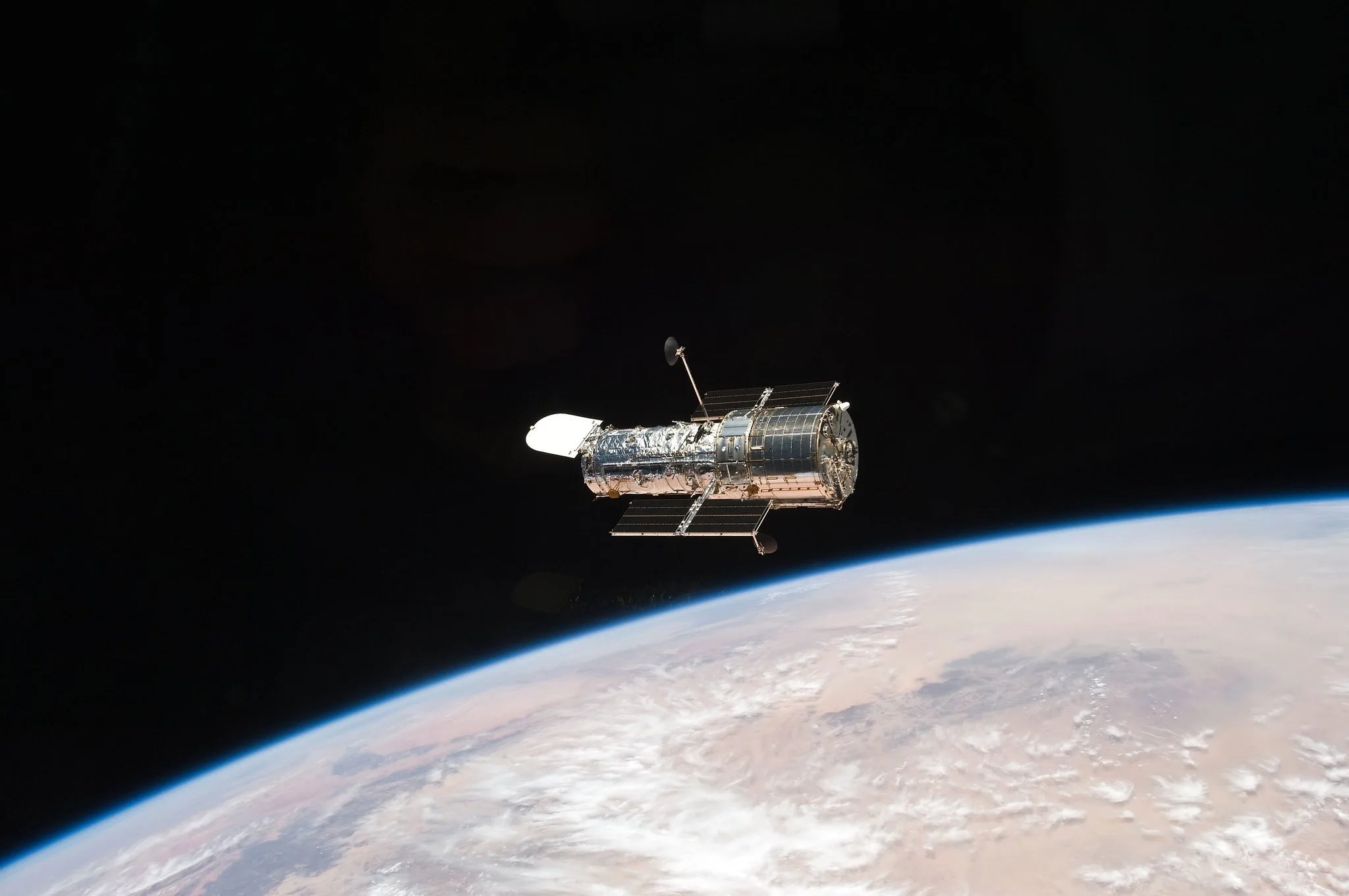
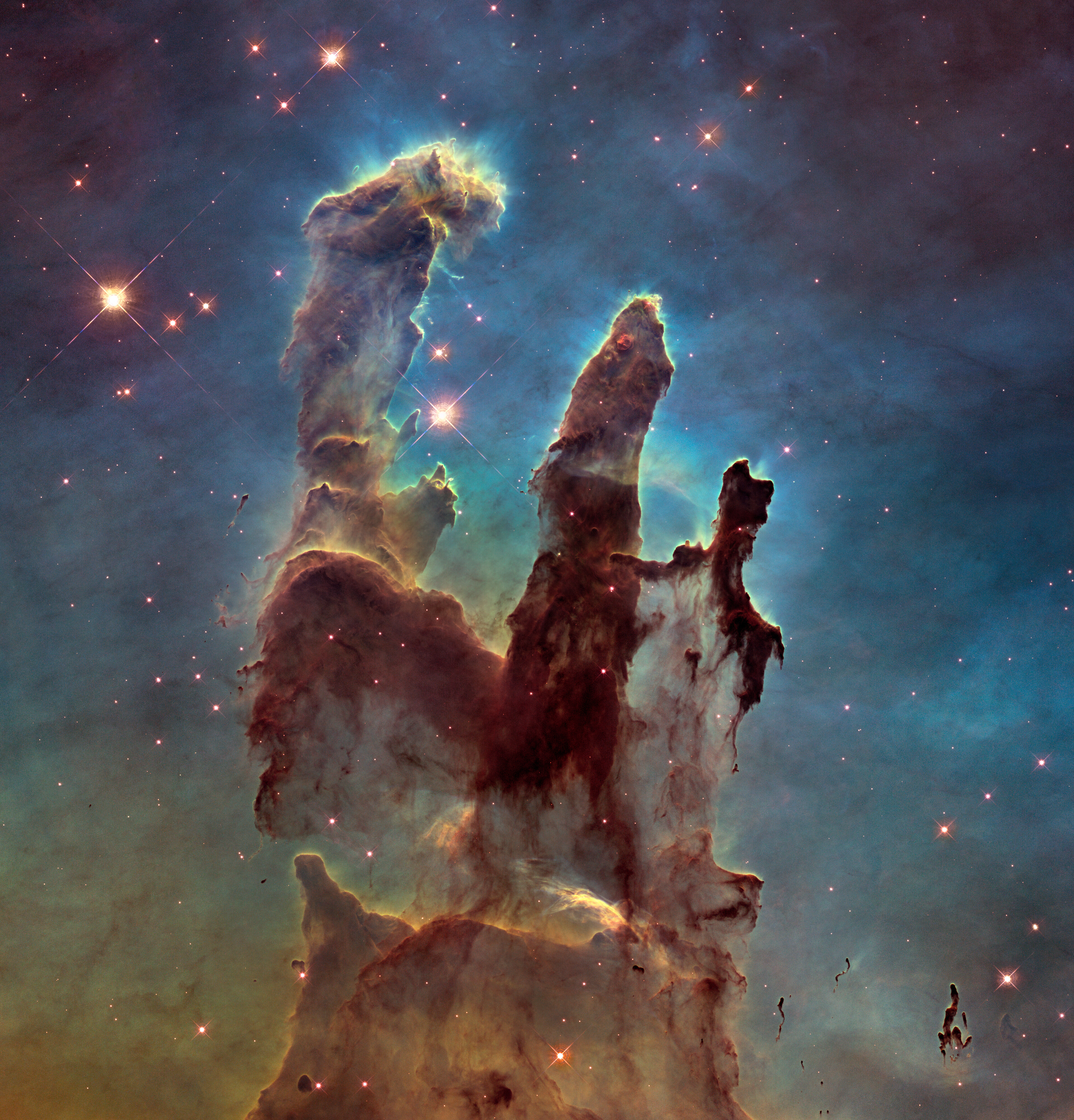
Hubble made the universe vivid. Webb sees through dust and deeper into infrared time. Together they are not a rivalry, but a wider way of seeing.
 Webb infrared
Hubble visible
Webb infrared
Hubble visible

Pillars of Creation
Two languages of light.
Move the divider. Hubble shows the sculpted visible-light icon; Webb's infrared view pushes deeper through dust and reveals young stars.
Switch the lens
Different wavelengths. Different truths.
Sharp visible-light structure, ultraviolet clues and some near-infrared reach from low Earth orbit.
Infrared vision designed to reveal dusty star birth, cooler targets and light stretched by cosmic expansion.
Hubble is strongest in ultraviolet, visible and near-infrared light. Webb is optimised for infrared, so it can study cooler objects, dust-hidden star birth and very distant galaxies.
One universe. More than one way to read it.

Hubble gives the shape. Webb adds the hidden depth.
Astromaniac's Webb feature frames this as a handover, not a replacement. Hubble's ultraviolet and visible-light legacy gives structure, colour and context. Webb extends the story in infrared, pushing through dust and distance so the same target becomes a layered physical portrait.
Sonification: Webb first, then Hubble
Sonification is data translated into sound, not literal noise from space. Webb and Hubble imagery can both be mapped into audio so colour, brightness, position and texture become something visitors can hear.
Little Red Dot Abell2744-QSO1
Velocity measurements of hydrogen gas around an early supermassive black hole become pitch: faster gas toward Webb sounds higher, gas moving away sounds lower.
Hubble Sonification
What does a galaxy collision sound like?
A colliding pair about 300 million light-years away. NASA maps brightness to volume and pitch; the galaxy cores swell into cymbal-like sound.
Astromaniac Magazine
Keep looking up.

BibliographySources and media credits
- (n.d.) Early universe. Available at: science.nasa.gov.
- (n.d.) Galaxies over time. Available at: science.nasa.gov.
- (n.d.) Star lifecycle. Available at: science.nasa.gov.
- (n.d.) Other worlds. Available at: science.nasa.gov.
- (n.d.) Webb sunshield fully deployed. Available at: esa.int.
- (n.d.) Webb science overview. Available at: science.nasa.gov.
- (n.d.) Webb mission timeline. Available at: science.nasa.gov.
- (n.d.) Webb history timeline. Available at: stsci.edu.
- (n.d.) Who is James Webb?. Available at: science.nasa.gov.
- (n.d.) Webb history essay. Available at: pas.va.
- (n.d.) Webb’s mirrors. Available at: science.nasa.gov.
- (n.d.) Webb’s sunshield. Available at: science.nasa.gov.
- (2010) The James Webb Space Telescope’s Sunshield Test Article. Available at: flickr.com.
- (2021) Webb at the Sun-Earth L2 point illustration. Available at: assets.science.nasa.gov.
- (n.d.) Sun shield. Available at: esawebb.org.
- (n.d.) Where is Webb?. Available at: webb.nasa.gov.
- (n.d.) Webb launch. Available at: science.nasa.gov.
- (n.d.) Post-launch deployment timeline. Available at: science.nasa.gov.
- (n.d.) Infrared astronomy. Available at: science.nasa.gov.
- (n.d.) Infrared detectors. Available at: science.nasa.gov.
- (n.d.) Webb’s scientific instruments. Available at: science.nasa.gov.
- (n.d.) Webb’s instruments. Available at: esa.int.
- (n.d.) Webb instrument literature. Available at: aanda.org.
- (n.d.) How Webb’s full-colour images are made. Available at: science.nasa.gov.
- (n.d.) Image processing. Available at: esawebb.org.
- (n.d.) Hubble vs Webb. Available at: science.nasa.gov.
- (n.d.) Pillars comparison. Available at: esawebb.org.
- (n.d.) Hubble and Webb combined view. Available at: science.nasa.gov.
- (n.d.) Webb sonifications. Available at: science.nasa.gov.
- (n.d.) Hubble sonifications. Available at: science.nasa.gov.
- (n.d.) Hearing Hubble. Available at: science.nasa.gov.
- (2022) Stephan’s Quintet sonification collection. Available at: chandra.harvard.edu.
- (2024) M74 / Phantom Galaxy sonification collection. Available at: chandra.harvard.edu.
- (n.d.) Mice Galaxies image detail. Available at: science.nasa.gov.
- (n.d.) Webb cinematic mission video. Available at: youtube.com.
- (n.d.) Webb mirrors glamour trailer. Available at: images-assets.nasa.gov.
- (2019) The Webb Telescope’s Unfolding Secondary Mirror. Available at: images.nasa.gov.
- (n.d.) James Webb Secondary Mirror Assembly: test version. Available at: flickr.com.
- (2015) Engineers Clean Mirror with Carbon Dioxide Snow. Available at: images.nasa.gov.
- (2017) James Webb Space Telescope cleanroom archive image. Available at: images-assets.nasa.gov.
- (2017) James Webb Space Telescope cold-test thumbnail image. Available at: images-assets.nasa.gov.
- (n.d.) Webb Telescope Mirror Beauty Shot Resource Reel. Available at: images-assets.nasa.gov.
- (n.d.) Webb mirror video resource. Available at: youtube.com.
- (n.d.) Webb folded mirror wing video resource. Available at: youtube.com.
- (n.d.) Webb hexagonal mirror video resource. Available at: youtube.com.
- (n.d.) Webb actuator video resource. Available at: youtube.com.
- (n.d.) Webb cold-test video resource. Available at: youtube.com.
- (n.d.) Webb Telescope: How Did We Get Here?. Available at: images-assets.nasa.gov.
- (n.d.) Webb orbit animation. Available at: youtube.com.
- (n.d.) Jack of All Sunshields. Available at: youtube.com.
- (n.d.) The Webb Telescope Sunshield. Available at: youtube.com.
- (n.d.) Elements of Webb: Kapton. Available at: youtube.com.
- (n.d.) MAC panels plenum contamination video. Available at: images-assets.nasa.gov.
- (n.d.) Webb Beauty: Last Sunshield Deploy on Earth. Available at: images-assets.nasa.gov.
- (n.d.) Webb’s First Deep Field. Available at: esawebb.org.
- (n.d.) PDS 70 planet-forming disc. Available at: esawebb.org.
- (n.d.) Red Spider Nebula. Available at: esawebb.org.
- (n.d.) Reading the Rainbow: Distance. Available at: assets.science.nasa.gov.
- (n.d.) Webb multimedia images. Available at: science.nasa.gov.
- (n.d.) First images. Available at: flickr.com.
- (n.d.) 2022 releases. Available at: flickr.com.
- (n.d.) 2023 releases. Available at: flickr.com.
- (n.d.) 2024 releases. Available at: flickr.com.
- (n.d.) 2025 releases. Available at: flickr.com.
- (n.d.) Latest 2026 releases. Available at: flickr.com.
- (n.d.) Mirror archive. Available at: flickr.com.
- (n.d.) Webb blog. Available at: science.nasa.gov.
References use an author-date academic format. Online sources accessed 4 June 2026. Webb imagery is credited to NASA, ESA, CSA and STScI unless the linked archive identifies additional partners.
