Seestar S50 Pro Smart Telescope: Let’s Get Serious.
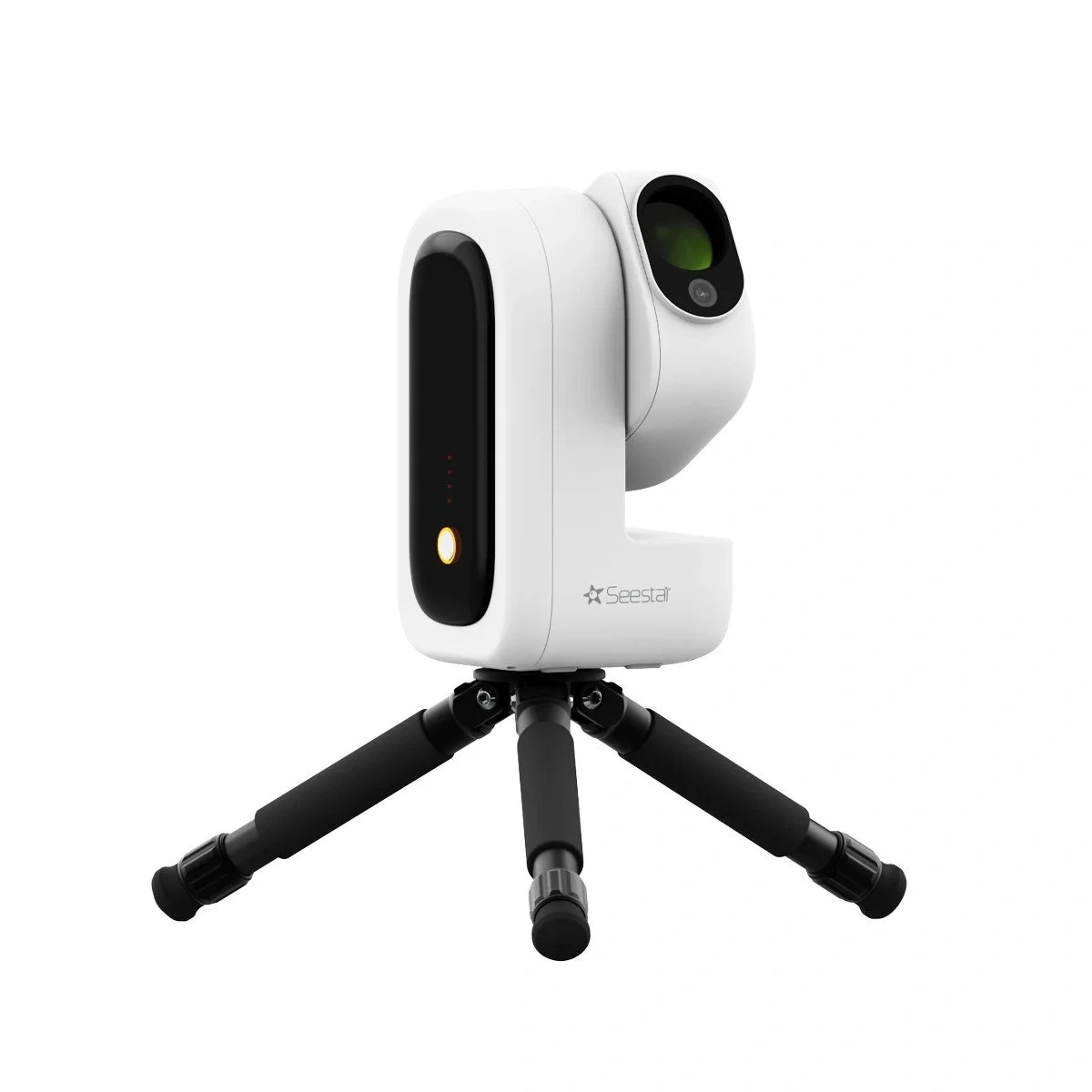
The new Seestar S50 Pro covers a lot of ground, from deep space and Milky Way, to landscape and solar imaging.
ZWO’s Seestar S50 Pro brings 50mm optics, dual 4K imaging, a wider field, a redesigned drive system and substantially longer battery life to the Seestar family. But the more interesting story is bigger than one telescope:
Smart telescopes are beginning to blur the boundary between automated imaging and traditional astrophotography.
Astrophotography has traditionally been a hobby of components: A telescope sits on a mount ➜ a camera attaches to the telescope ➜ a guide camera corrects the mount ➜ an electronic focuser maintains focus ➜ the right filter is loaded in your filter wheel ➜ a computer coordinates the system ➜ a web of power and USB cables keeps everything communicating. The flexibility is enormous, but so is the complexity and the possibility of things going wrong.
The smart telescope approaches the problem from the opposite direction. Instead of asking which components an astrophotographer should assemble, it asks how many of them can be designed as a single system and largely disappear from the user's attention. The S50 Pro reduces the process to: Turn it on ➜ Choose the mode and target ➜ Enjoy the final outcome.
That philosophy has driven ZWO's Seestar family since the original S50 appeared in 2023. The new Seestar S50 Pro is its most ambitious expression yet.
At $999/€999 ($899 until 15 September 2026), this is no longer simply the inexpensive smart telescope that disrupted the market three years ago. The latest addition to the Seestar lineup is here to challenge our understanding of traditional astrophotography.
Smart telescopes have already proved that they can make astrophotography dramatically easier. The S50 Pro is trying to answer the harder question: how much more capable can they become without losing the simplicity that made them successful in the first place?

Seestar S50 Pro is capable of wide-Field Astrophotography, all at the press of a button.
What exactly is the Seestar S50 Pro?
The S50 Pro is the new 50mm flagship of ZWO's Seestar range. Its main imaging system uses a 50mm aperture, 260mm focal length and four-element apochromatic optical design, paired with a 1/1.2-inch 8.29MP camera producing 3840 × 2160 images. Beside it sits a second 4K camera with a 63-degree field of view. This handles much wider subjects including the Milky Way, constellations, star trails, nightscapes and terrestrial scenery, while also helping the telescope locate and track objects.
That dual-camera approach fundamentally changes the S50 concept. The original S50 was primarily a compact deep-sky imaging telescope. The S50 Pro can move between a relatively narrow 260mm astronomical view and a genuinely wide view of the sky without changing equipment.
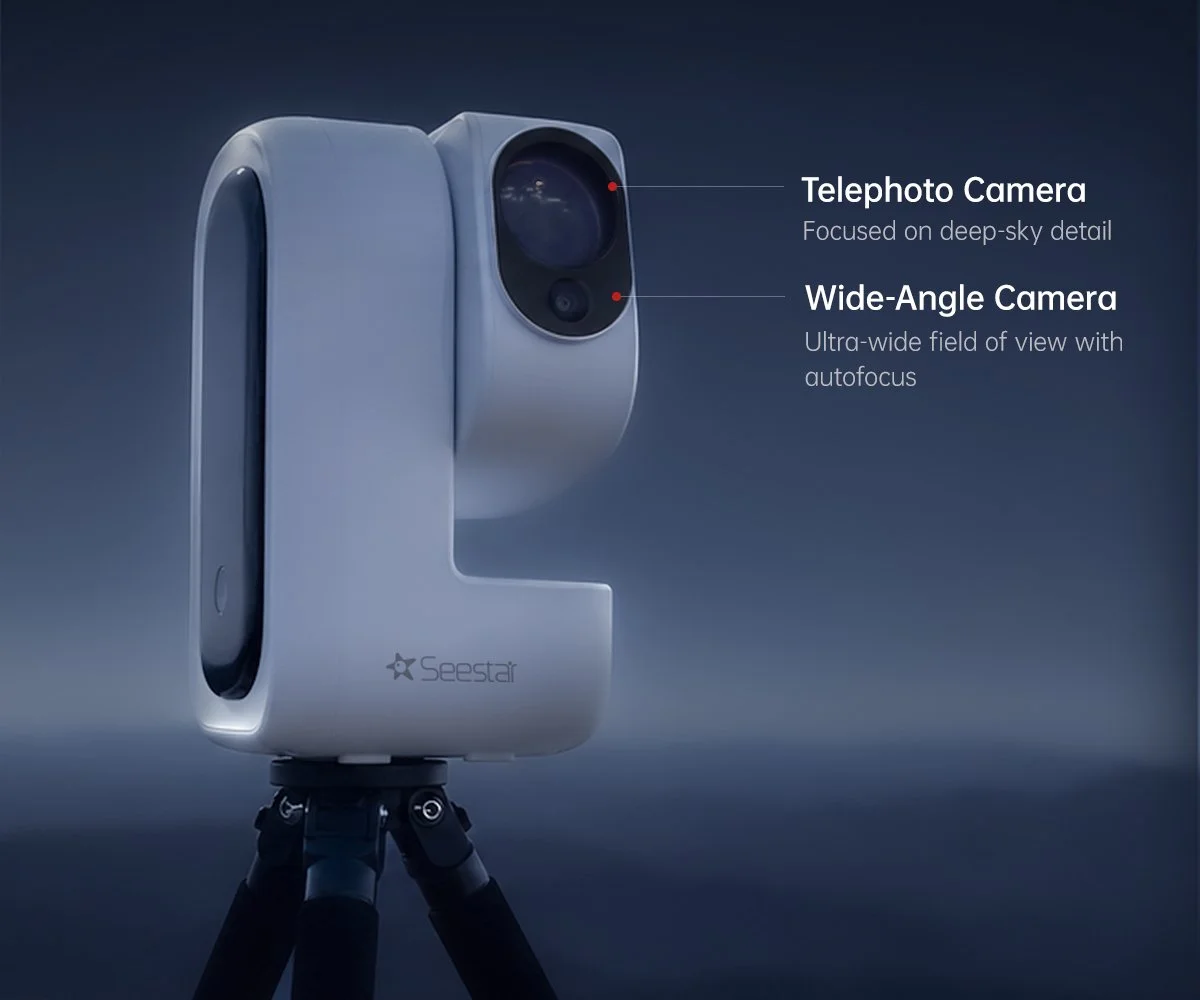
S50 Pro’s telephoto and wide-angle cameras both support 4K UHD resolution.
ZWO has also redesigned the mechanical drive, with reduced backlash precision system intended to improve tracking stability and wind resistance, particularly during equatorial operation. Its battery capacity rises to 10,000mAh, with ZWO claiming up to nine hours of operation under its specified laboratory conditions, while storage doubles to 128GB.
Other Seestar features include automatic target location, GoTo, centring, tracking, live stacking, automated imaging plans, mosaics, built-in dew prevention, NFC pairing and increasingly sophisticated processing tools within the Seestar software ecosystem. The new two-section tripod with two adjustable leg angles supports a wider adjustment range, is more flexible on various surfaces, and provides a more stable shooting experience overall.
The specifications make the S50 Pro more capable than the original S50, but they also place it in much closer competition with conventional astrophotography equipment than its predecessor ever faced, and of course with a price hike that is hard to ignore. Although, the S50 Pro is still a long way from a fully modular high-end astrophotography setup, it was never designed to compete with that category of setups.
The filter system is also fairly comprehensive for an integrated telescope. Both cameras in S50 Pro include UV/IR-cut filtration, while the telephoto system adds a dual-band light-pollution filter centred on OIII (30nm) and Hα (20nm), plus an internal dark-frame filter. A magnetic solar filter is supplied for safe solar imaging, and still images can be saved as JPEG or FITS files.
What is actually new?
Larger 50mm Aperture
More light-gathering power and resolving potential than the 30mm models.
50mm · 260mm · 4-element APOReduced Backlash Precision Drive
Designed for more stable tracking, particularly in equatorial mode.
Precision drive · improved stabilityDual 4K Imaging
Telephoto and wide-angle 4K cameras in the same telescope.
2.8° tele · 63° wide10,000mAh Battery
A substantial increase in capacity for longer imaging sessions.
Up to 9 hoursWide-Field Astrophotography
Milky Way, star trails, timelapse and night-sky annotation.
63° wide-angle cameraNFC Instant Pairing
Tap-to-connect setup for faster pairing with the Seestar app.
Automated Imaging Plans
Plan targets and let Seestar automate the imaging session.
Photometry & Processing
Photometric workflows plus built-in noise, star and background tools.
DBE · noise reduction · star toolsSmart Telescopes Did Not Begin with Seestar
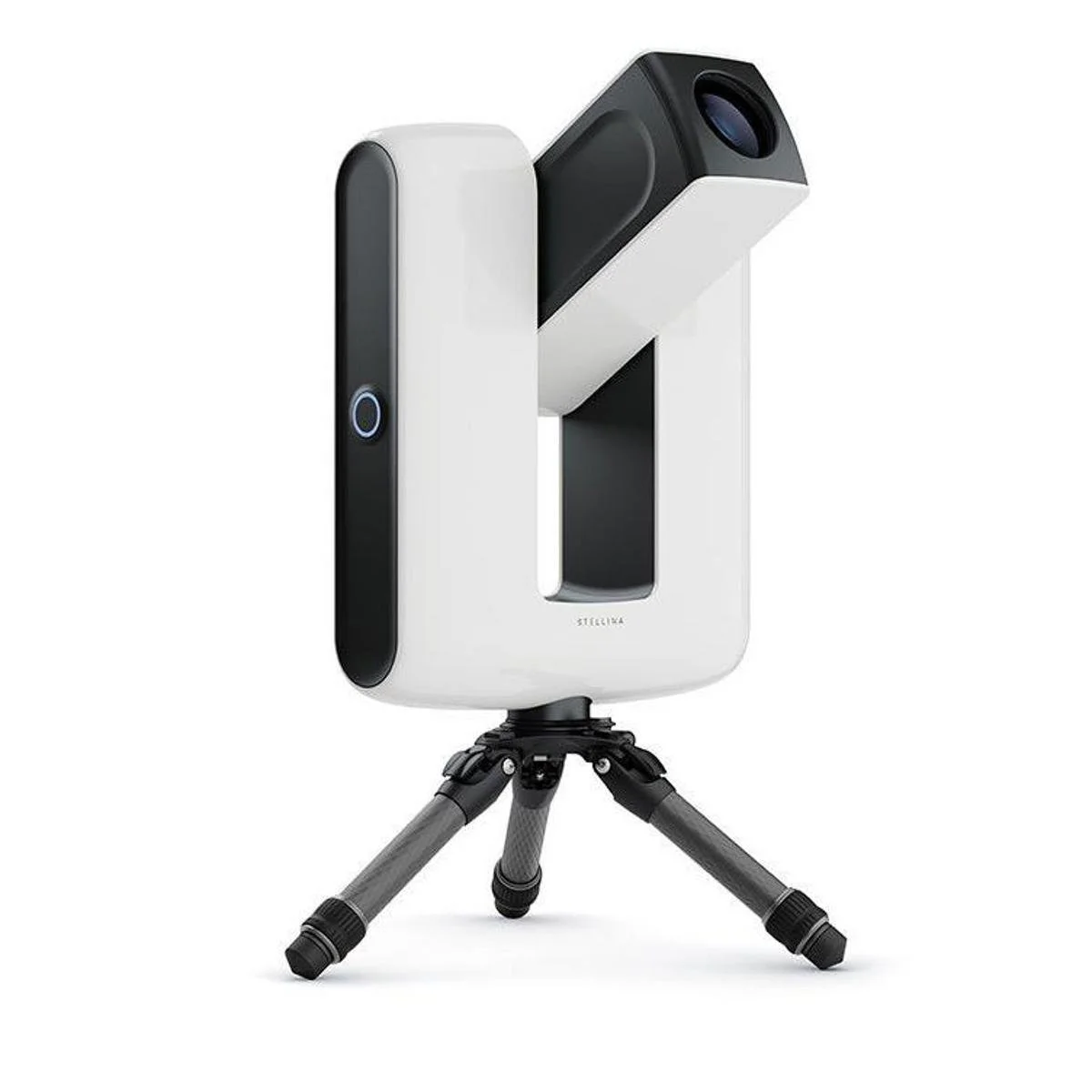
Vaonis Stellina was launched in 2018
Seestar may have popularised the smart telescope at a much lower price, but ZWO did not invent the idea.
Vaonis was developing Stellina well before Seestar existed. By 2018, Stellina had won a CES Innovation Award and was offering an unusually integrated approach to astronomy: no traditional eyepiece, automated pointing and tracking, a built-in imaging system and images delivered directly to a phone or tablet.
At roughly the same time, Unistellar was developing the eVscope. Its 2017 Kickstarter campaign attracted more than 2,100 backers and raised over $2.2 million, demonstrating considerable demand for an easier form of electronically assisted astronomy.
Those early systems established many of the principles now associated with smart telescopes. The instrument could identify where it was pointing, locate an object automatically, track it, accumulate light with an electronic sensor and build an increasingly detailed image while the observer watched.
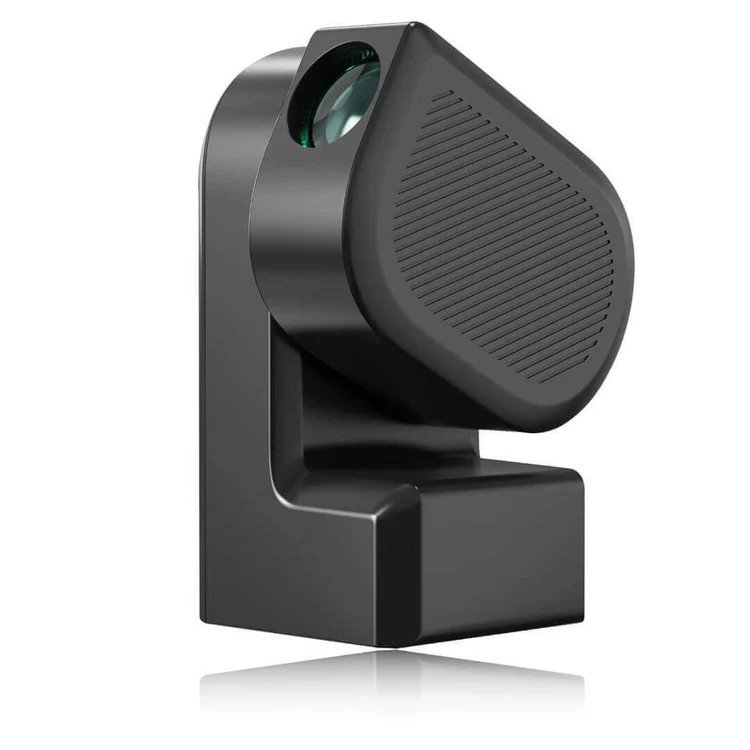
The original Seestar S50 arrived in 2023.
What ZWO changed was largely the economics. When the Seestar S50 arrived in 2023 at around $500, the smart telescope stopped looking like an exotic premium category and became accessible to a much broader part of the astronomy market. ZWO also approached the idea with years of experience in dedicated astronomy cameras, ASIAIR controllers, focusers, filter wheels and mounts. Seestar condensed many of those technologies into a consumer product.
The attraction was obvious. A beginner could select the Orion Nebula or Andromeda Galaxy, allow the telescope to find it and begin producing a recognisable image without first learning polar alignment, guiding, plate solving, backfocus and image calibration.
That did not suddenly make the S50 equivalent to a sophisticated conventional imaging rig. It did something arguably more important for the growth of astronomy: it shortened the distance between curiosity and a meaningful result and lifted the steep learning curve barrier for many.
How the Seestar family has evolved
ZWO has since expanded Seestar in two directions. The S30, introduced in 2024, prioritised portability and price, reducing the main aperture to 30mm while adding a separate wide-angle camera. The S30 Pro, released earlier in 2026, kept the compact 30mm format but moved to dual 4K cameras, a larger telephoto sensor, a four-element APO and considerably more ambitious wide-field imaging.
The S50 Pro now takes many of those Pro-generation ideas back into the larger 50mm format.
How the Seestar family compares
The four models are not simply a good-better-best progression. Each places a different emphasis on portability, aperture, field of view and deep-sky imaging.
| Feature |

|

|

|

|
|---|---|---|---|---|
| Aperture | 30mm | 30mm | 50mm | 50mm Around 2.8× the collecting area of a 30mm aperture |
| Optics | 30mm / 150mm f/5 · 3-element APO | 30mm / 160mm 4-element APO | 50mm / 250mm f/5 · 3-element APO | 50mm / 260mm Folded 4-element APO |
| Main imaging | 1920 × 1080 | 3840 × 2160 1/1.2-inch format | 1920 × 1080 Sony IMX462 | 3840 × 2160 1/1.2-inch · 8.29MP |
| Telephoto FOV | Approx. 2.46° | 4.6° Widest telephoto view | 1.46° | 2.8° Wider than S50, tighter than S30 Pro |
| Wide-field camera | Yes | 4K · 63° Milky Way, star trails & scenery | No | 4K · 63° Same wide-angle system as S30 Pro |
| Storage | 64GB | 128GB | 64GB | 128GB |
| Battery | 6000mAh | 6000mAh Approx. 6h quoted | 6000mAh Approx. 6h quoted | 10,000mAh Up to 9h* |
| Best suited to | Entry-level portability | Wide-field & travel Compact Pro-generation all-rounder | Affordable 50mm deep sky | Higher-detail deep sky Most capable 50mm Seestar |
| US price | $399 | $699 | $499† | $999 |
* ZWO's S50 Pro battery figure is based on laboratory testing above 25°C using the telephoto camera in Alt-Az mode during live stacking; real-world runtime varies with conditions and use. † S50 retail pricing can vary as the original model remains on sale.
The S50 Pro is aimed at users who want the newer Seestar architecture but place greater emphasis on deep-sky imaging, image scale and light gathering than on minimum size or price.
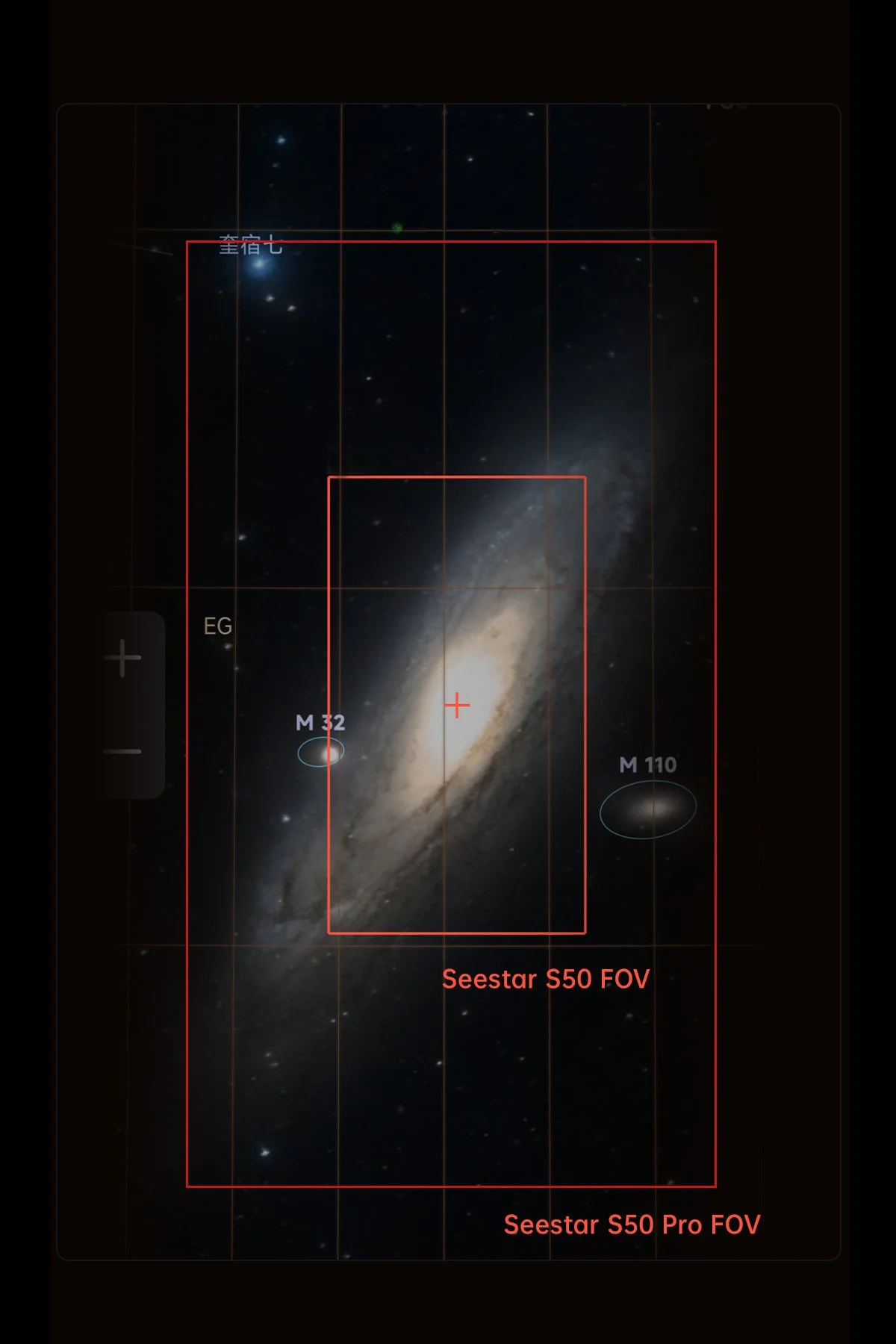
The new S50 Pro has a wider field of view.
The most obvious difference between the S50 Pro and S30 Pro is aperture. A 50mm circular aperture has approximately 2.8 times the collecting area of a 30mm aperture, assuming similar transmission.
That figure is useful, but it should not be turned into a simplistic claim that one telescope produces images 2.8 times better. Sensor characteristics, focal ratio, sampling, tracking, integration time, atmospheric conditions and processing all contribute to the final result.
The longer 260mm focal length of the S50 Pro is equally important. Compared with the S30 Pro's 160mm telephoto system, smaller objects occupy more of the frame and are recorded at a larger image scale.
ZWO suggests M16, the Eagle Nebula, as an example of where the difference becomes apparent. Its central Pillars of Creation are relatively small within the surrounding nebula, so the additional focal length can present those structures more prominently while the larger aperture collects more light.
The trade-off is field of view. The S30 Pro's main camera covers approximately 4.6 degrees, compared with 2.8 degrees on the S50 Pro. For very large nebulae, sprawling molecular clouds and broad star fields, the S30 Pro remains naturally attractive. This is less a question of one model defeating the other than of two optical systems favouring different subjects.
A bigger sensor forced ZWO to rethink the optics The original S50 used a three-element apochromatic design feeding a relatively small sensor. The S50 Pro moves to a folded four-element APO system and a much larger 1/1.2-inch imaging area which is the same size as ZWO’s ASI585MC/MM Pro cameras. ZWO’s published S50 Pro specifications identify the main camera by its 1/1.2-inch format, 8.3MP resolution and 2.9µm pixel size, but do not currently name the sensor manufacturer or model.
Just as importantly, the jump from the original S50’s roughly 2MP IMX462 to 8.3MP doesn’t necessarily mean four times the quality. Both use 2.9µm pixels and the focal length has only increased from 250mm to 260mm, changing native sampling from about 2.39 to 2.30 arcseconds per pixel. Much of the extra resolution therefore comes from recording a substantially larger area of sky (2.8° versus 1.46°) rather than dramatically increasing the detail recorded on a small target.
This is one of the more credible directions for an upgrade because increasing sensor size exposes more of an optical system's corrected image circle. A telescope that produces excellent stars near the optical axis can reveal astigmatism, curvature or other aberrations farther towards the corners when asked to illuminate a larger sensor.
We explored the same principle from the opposite end of the market in our ZWO ASI6200MC Pro review. Large sensors are valuable because they capture more sky, but they also expose weaknesses in optics and mechanical alignment that a smaller sensor may never see. The S50 Pro avoids the challenges of full frame by a comfortable margin, but the underlying engineering problem is similar. A meaningful sensor upgrade requires optics capable of taking advantage of it.
Seestar S50 Pro Launch Video by ZWO
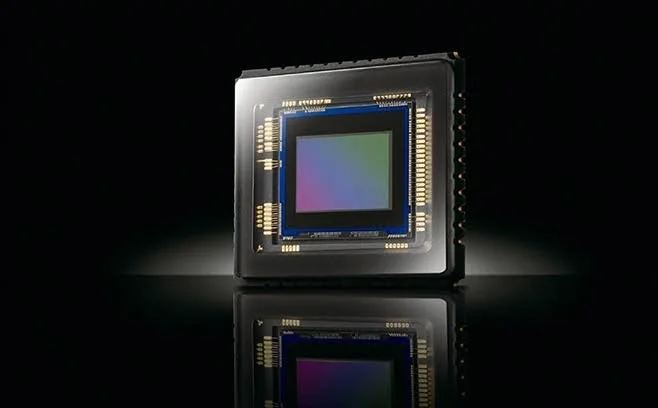
The Sony IMX585 uses STARVIS 2 back-illuminated technology, but is not used in the S50 Pro.
The camera sensor inside the S50 Pro
The S50 Pro’s main imaging sensor has become one of the more intriguing unanswered questions around the telescope. ZWO has confirmed that it is not the Sony IMX585, even though the specifications are very similar: roughly 1/1.2-inch format, 8.3MP and 2.9µm pixels. the Seestar team have mentioned that they evaluated several sensor options over a period of months before settling on the final choice, but they have not disclosed either the manufacturer or the exact model.

The OS08B10 is a CMOS sensor, designed for the high-end security cameras.
Seestar have confirmed that the telephoto sensor is OmniVision OS08B10. This sensor is mostly used in action cameras and high-end security cameras, so unsurprisingly, it performs well in low light conditions. The sensor behind the wide angle lens however is the IMX586, a 1/2 inch, 8.3 MP.
ZWO has, however, stated that production units will continue to use the same sensor model and supplier rather than changing between batches.
“The sensor used in the Seestar S50 Pro is not the Sony IMX585. Instead, it is OmniVision OS08B10.”
Interestingly, ZWO chose the same 1/1.2-inch, 8.29MP format used by the S30 Pro rather than moving to an even larger sensor. Whilst this may be a little disappointing, the explanation is pragmatic: Seestar has to balance optical correction, physical size, processing demands and cost as an integrated system. More sensor is not automatically more telescope, particularly when the camera cannot later be replaced by the owner.
Dual 4K imaging gives the S50 Pro two personalities: The second camera may be one of the biggest practical differences between the original S50 and the new model. The wide system has a 63-degree field of view and 3840 × 2160 resolution, and ZWO has confirmed that it uses the same sensor and lens arrangement as the S30 Pro. It supports Milky Way imaging, star trails, night-sky time-lapse, constellation identification and conventional scenery. This is one of the areas that allow the S50 Pro to edge forward and offer versatility.
The wide camera also assists the telescope in locating objects. For experienced users this may sound like a small convenience, but it is a good example of how automation can improve the instrument rather than simply remove controls. A broad view gives the system much more context when identifying where it is pointing and trying to place the Sun, Moon or another object inside the narrower telephoto field.
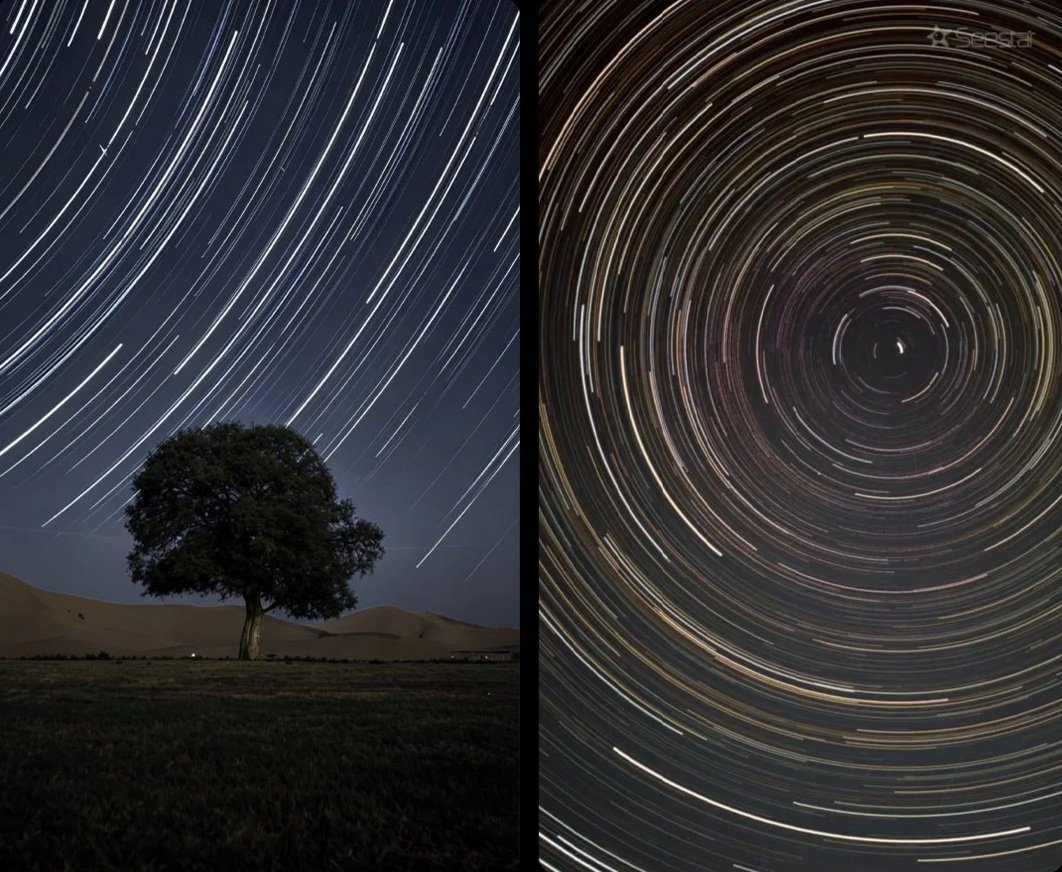
S50 Pro is capable of capturing star trails.
The wider Seestar software platform has also become considerably more ambitious. Telephoto mosaics can produce images up to 8K, while the wide camera supports stitched 8K Milky Way arches alongside star trails and night-sky imaging. The current ecosystem adds an AI Assistant for finding targets and guiding operation, Telescope Network for remotely connecting to Seestar devices, automated Plan Mode and increasingly capable built-in processing including noise reduction, star reduction and removal, cropping and background correction. At this point the software is not an accessory to the telescope; it is part of the telescope’s capability and one of the main ways the platform can continue evolving after purchase.
Equatorial Mode
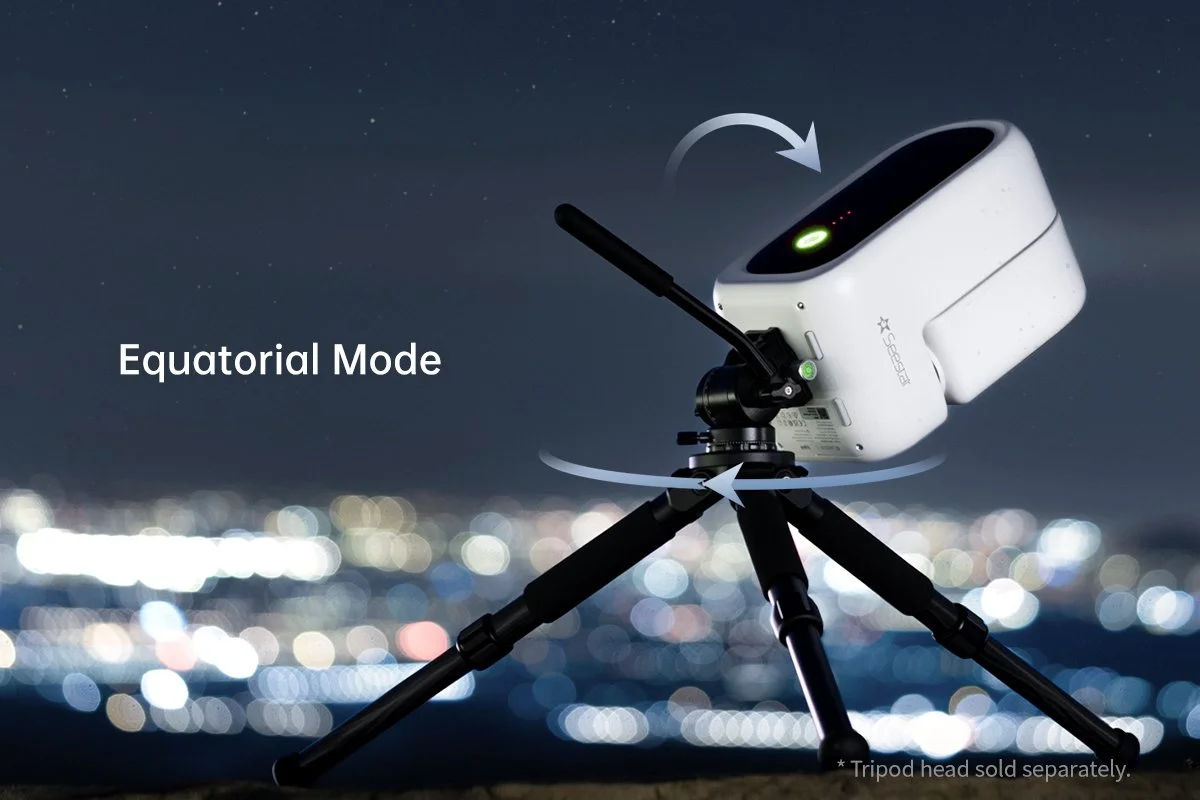
S50 Pro delivers faster, smoother tracking and fine adjustments for a significant boost in imaging efficiency.
ZWO says the new precision drive reduces backlash and improves tracking stability, particularly in equatorial mode. That potentially has more significance than the raw megapixel increase because a higher-resolution imaging system is less forgiving of tracking error.
Smart telescopes traditionally favour Alt-Az mounts because they are mechanically simple, compact and easy to deploy. The compromise is field rotation: the telescope may keep an object centred while the orientation of the field slowly changes during tracking. Short exposures can be aligned and stacked successfully, but long individual exposures become more difficult.
Equatorial operation changes that geometry by aligning an axis of the mount with Earth's rotation. The newer Seestar software ecosystem increasingly supports this approach, allowing users to push the equipment towards more conventional deep-sky imaging. Having reduced backlash, the S50 Pro edges ever so slightly towards a more conventional astrophotography workflow while still concealing the complications of setting up an equatorial mount. In Alt/Az mode the S50 Pro offers exposures up to 30 seconds, while Equatorial Mode, after accurate polar alignment, extends this to 60 seconds.

S50 Pro Intelligently detects and locks the foreground landscape, processing it separately from the sky.
Why no active cooling?
The absence of active sensor cooling is one of the clearest differences between the S50 Pro and a dedicated deep-sky camera.
Thermoelectric cooling reduces dark current and, equally importantly, allows the sensor temperature to be held at a repeatable value. That helps long-exposure imaging and calibration, particularly during warm conditions.
ZWO says cooling was considered but rejected because it would increase mechanical complexity, power consumption and the demands placed on a system intended to operate as an integrated, low-maintenance product.
There is logic to that decision, but there is still a compromise. Software noise reduction, stacking and modern sensor performance can mitigate thermal noise; they do not make sensor temperature irrelevant.
This illustrates the broader design philosophy of the S50 Pro. It is moving closer to conventional astrophotography performance in some areas without trying to reproduce every part of a modular imaging rig. At some point additional capability begins to undermine the simplicity that defines the product. So it is hard to see the lack of active cooling as a deal-breaker.
Is this still “real” astrophotography?
There are so many debates and even arguments about the merits behind astrophotography with a smart telescope.
At the technical level, a Seestar is unquestionably doing astrophotography. Photons from an astronomical object pass through an optical system and reach an image sensor. Exposures are recorded, aligned and stacked. Signal accumulates while random noise becomes less dominant. The process has much in common with a conventional electronically controlled imaging rig.
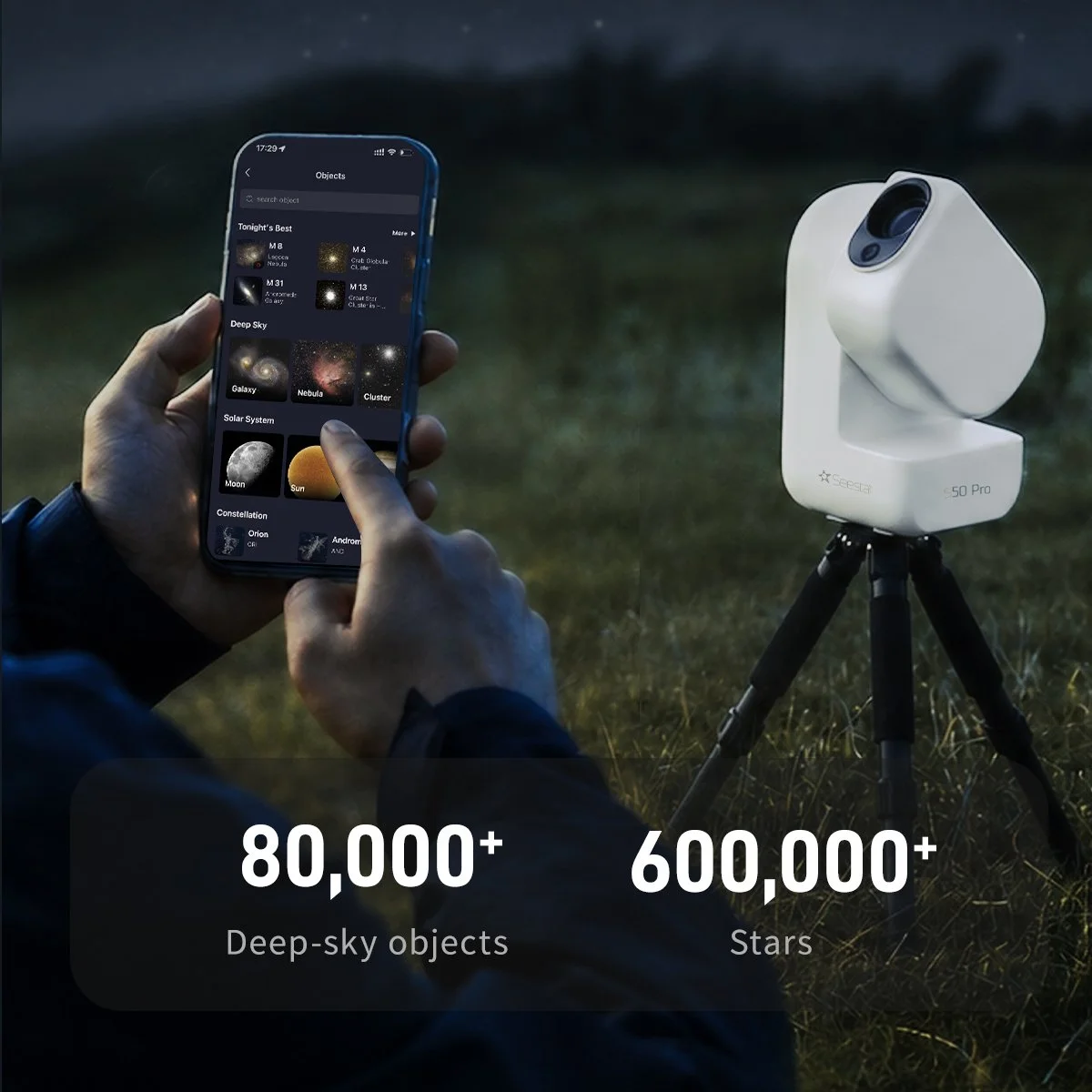
Seestar’s dedicated app contains more than 80,000 deep space targets.
Yet astrophotography is not defined only by photons hitting silicon. For many astrophotographers, part of the craft lies in making decisions: choosing an optical system, matching a camera, polar alignment, setting an exposure strategy, managing guiding, deciding how to calibrate the data and determining how far to take the processing.
A smart telescope relocates many of those decisions from the photographer to the manufacturer and its software. That changes authorship to some degree.
The same argument already exists throughout photography. A modern smartphone can select several exposures, merge them, reduce noise, protect highlights, sharpen detail and render an HDR image before the photographer has consciously considered any of those operations. Few people would argue that the result is not real photography, but it would also be strange to claim that using the phone and manually exposing large-format film require the same craft.
Smart-telescope astrophotography sits somewhere within that spectrum. The image is real. The experience is real. The skill set is different.
There is also considerable variation within smart-telescope use itself. Someone who selects M42, accepts the automatic output and shares the JPEG is having a different astrophotography experience from someone who gathers FITS data over several nights and processes it independently.
The sensible conclusion is not to police the title “real astrophotography”, but to recognise that the category now contains more ways of practising it.
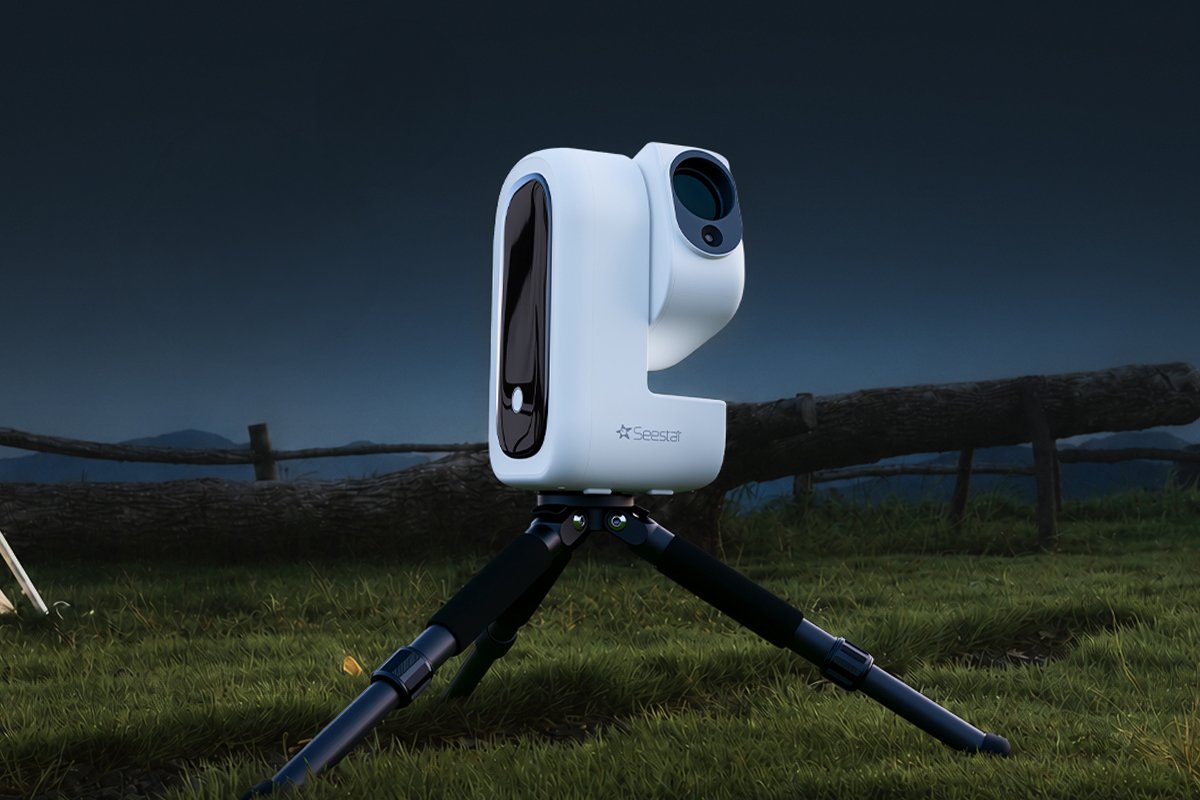
The S50 Pro sits between modular astrophotography and one-tap astronomy.
What about the eyepiece?
The absence of a conventional eyepiece is more philosophically important than it first appears.
Visual astronomy and smart-telescope observing are not interchangeable experiences. Through an eyepiece, the relationship with the object is immediate: the telescope gathers light and delivers it to your eye in real time. A faint galaxy may be difficult, colour may be almost absent and patience is often required, but the act of seeing it directly has a quality that a processed display does not reproduce.
A smart telescope trades that immediacy for sensitivity. A digital sensor can accumulate photons for minutes or hours, revealing structure and colour far beyond what a small aperture can show the human eye instantaneously.
Neither experience invalidates the other. For some observers, seeing Saturn directly through a telescope will always be more emotionally powerful than seeing a much more detailed electronic image. For others, watching the spiral structure of a galaxy emerge from an urban garden is considerably more compelling than locating a barely perceptible grey patch at the eyepiece.
The smart telescope is therefore not simply an easier visual telescope. In many respects it belongs closer to electronically assisted observing and astrophotography than to conventional visual astronomy.
You should look away if…
The S50 Pro's increased capability should not obscure its limitations. Astrophotographers seeking maximum image quality, complete control or a system that can evolve over many years will still find a modular rig more attractive. Larger refractors and reflectors, cooled cameras, mono sensors, narrowband filters, guide systems and precision equatorial mounts offer a performance ceiling that a 50mm integrated telescope cannot realistically match.
Upgradeability is another distinction. A good conventional telescope can remain in service for decades while cameras, mounts and control systems around it change. In a smart telescope, the optics, sensor, electronics, battery, mount and control computer form one product. That makes software support and electronic longevity part of telescope ownership in a way that historically mattered far less.
Planetary imagers also have little reason to abandon large-aperture, long-focal-length instruments capable of high-frame-rate imaging. A 50mm, 260mm telescope is not designed to replace that equipment.
The S50 Pro makes considerably more sense when judged against the problems it is actually trying to solve: portability, rapid deployment, integration and reliable automation.
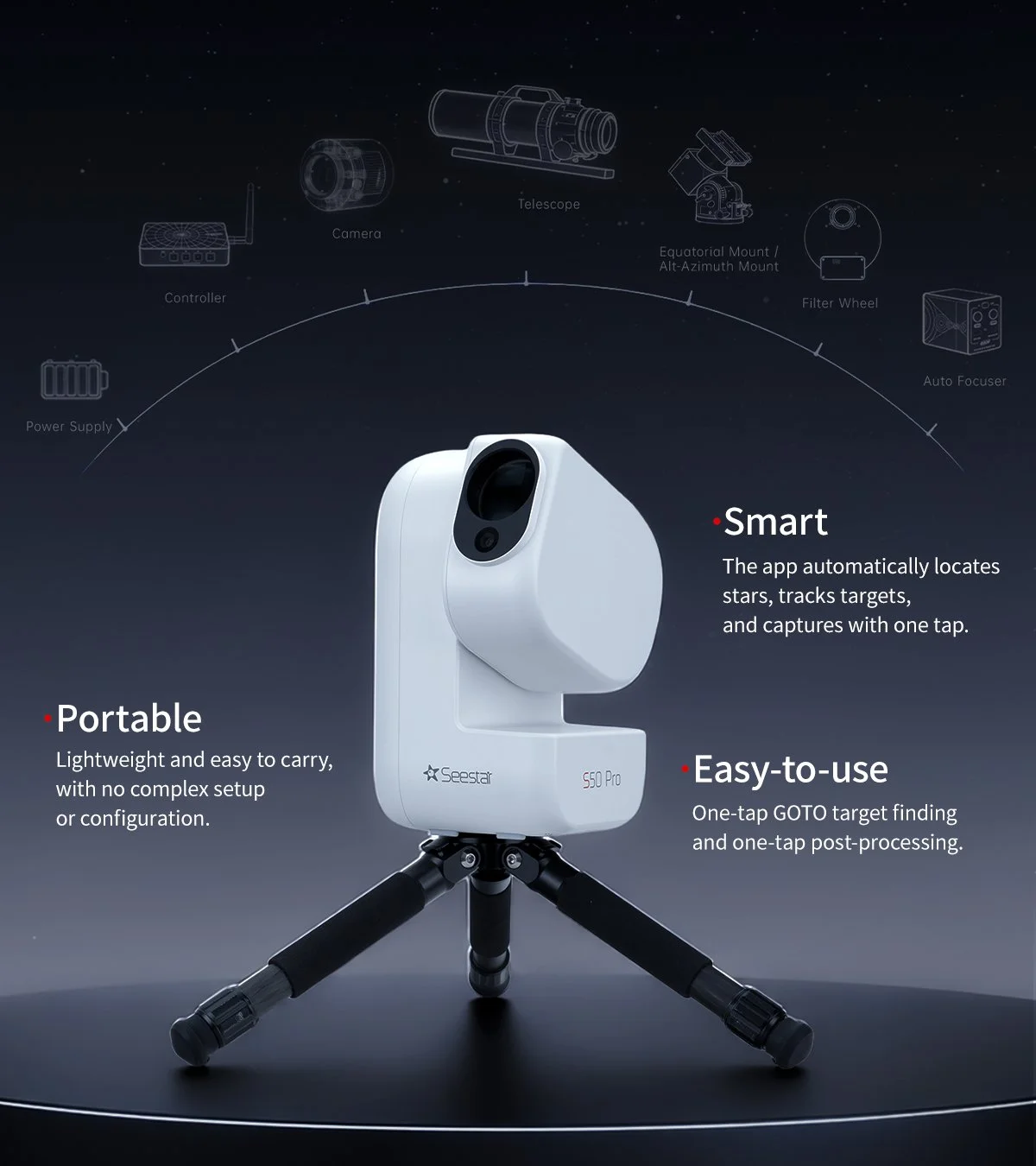
The trade-off of a capable smart telescope like S50 Pro is lack of upgradability and customisation.
What traditional astrophotography should learn from Seestar
Experienced astrophotographers sometimes dismiss smart telescopes because of their limitations while overlooking what their success says about conventional equipment.
Traditional astrophotography still tolerates far too much avoidable friction. Drivers conflict, USB devices disconnect, power systems multiply, firmware behaves unpredictably and products from different manufacturers often require separate software ecosystems.
Some complexity is inherent to a modular high-performance system. Some is simply poor design. Seestar demonstrates the value of designing the telescope, camera, focuser, mount and software as one experience. The user does not need to know which COM port contains the focuser because there is no reason they should have to.
That does not mean conventional astrophotography should become closed or appliance-like. Its greatest advantage is flexibility. But there is no technical virtue in making powerful equipment harder to operate than necessary.
The best future systems may combine modular hardware with much better integration, allowing advanced users to retain control without forcing every user to become a systems engineer.
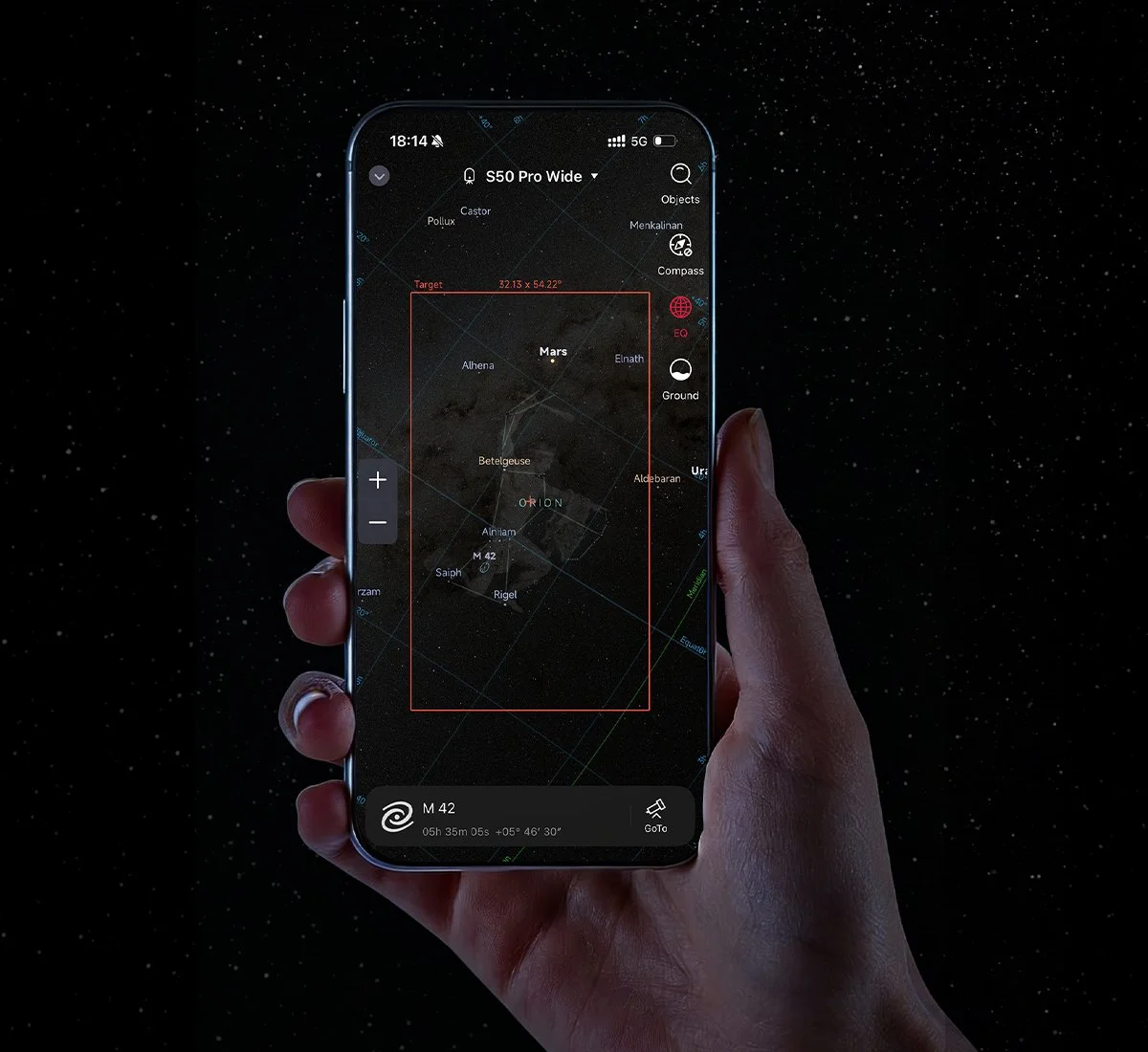
The dedicated app allows users to set up a session as easily as tapping a few buttons.
What smart telescopes should learn from traditional astrophotography
The opposite lesson is equally important. Convenience can become opacity. If too much processing happens invisibly, the photographer loses the ability to understand what the system has done to the data, correct it differently or develop their own technique.
Access to FITS files, sensible manual controls and transparent processing therefore become more important as smart telescopes become more capable.
There is also the question of longevity. Conventional astrophotography equipment can often be repaired, repurposed and upgraded component by component, while a highly integrated telescope inevitably depends more heavily on electronics and continued software support. ZWO deserves some credit here: the S50 Pro manual includes a documented procedure for removing and replacing the internal battery rather than treating it as permanently sealed into the telescope. That does not make the wider system modular, but it addresses one of the most predictable ageing points in a battery-powered device.
The most interesting smart telescope would not be one that removes advanced control. It would be one that does not require it.
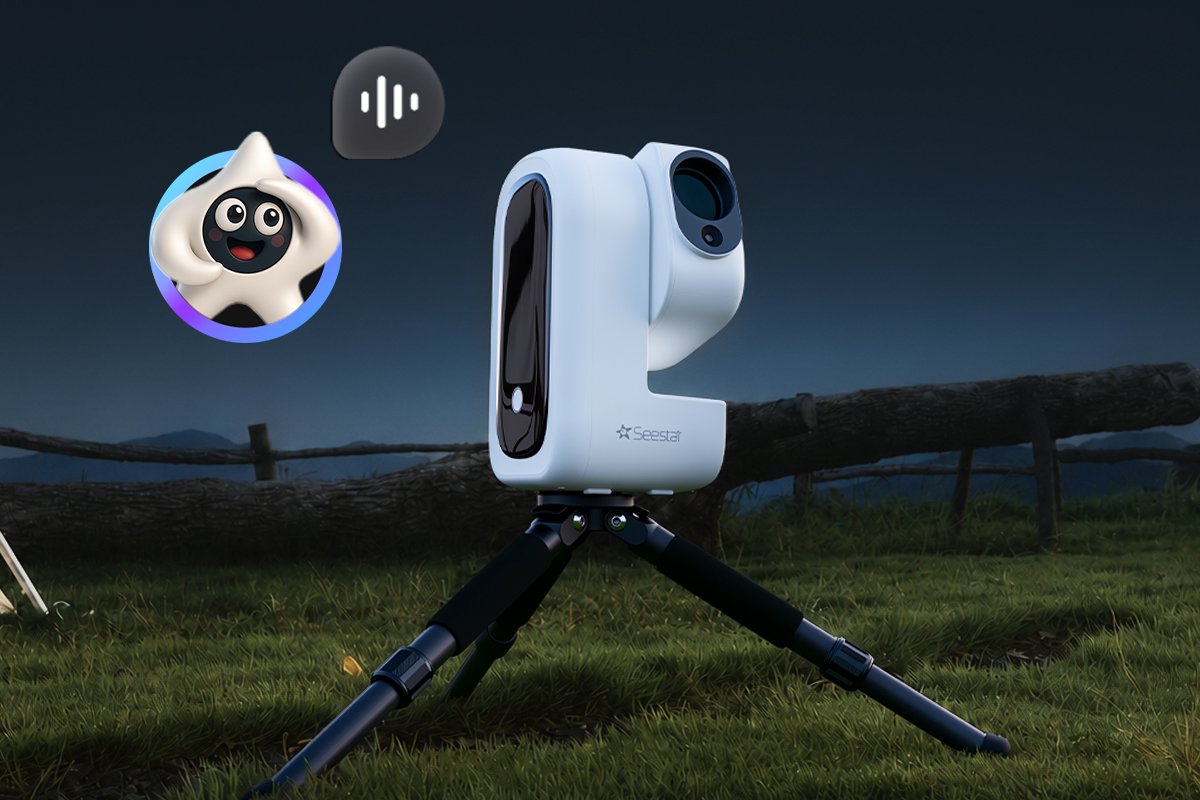
ASCOM Alpaca supports connection to third-party astronomy software such as N.I.N.A.
A beginner could use automation immediately, while an experienced owner could gradually access exposure strategy, raw data, calibration, multi-night imaging and more sophisticated processing without having to replace the telescope. That would preserve the accessibility that created the category without imposing an artificially low ceiling.
One thing the S50 Pro (as well as earlier Seestar models) has learned well from traditional astrophotography is support for ASCOM Alpaca. The S50 Pro can connect to third-party astronomy software including N.I.N.A., allowing it to become part of a more conventional automated imaging workflow rather than being controlled exclusively through the Seestar app. In practical terms, a power user can treat it much more like an integrated astrophotography rig inside N.I.N.A., with control over functions such as slewing and imaging sequences, while the captured raw data is also available as FITS files for processing outside the Seestar ecosystem.
The battle of Pros: The S50 Pro or S30 Pro?
For many buyers this is a more useful question than whether the S50 Pro is “better”. The S30 Pro makes the stronger case for portability, wider fields and a lower price. Its 160mm main focal length gives a 4.6-degree telephoto field and its 30mm body remains much smaller than the 50mm S50 Pro. The S50 Pro is better suited to smaller deep-sky targets, where its 260mm focal length provides a finer image scale and its 50mm aperture offers substantially greater light-gathering area. The S30 Pro, however, remains the more portable instrument and its wider 4.6° telephoto field can be preferable for large nebulae and extended targets.
The S50 Pro is more compelling if deep-sky imaging is the priority. Its 260mm focal length gives smaller targets greater image scale, while the 50mm aperture provides almost 2.8 times the collecting area of the 30mm system. It retains the same 63-degree wide-angle camera architecture, so choosing the longer astronomical system does not mean losing the ability to photograph the Milky Way or wide nightscapes.
The price difference is significant: $699 versus $999. The S50 Pro therefore needs to justify itself through the main telescope rather than through the shared Seestar software features.
For large nebulae and travel, the S30 Pro remains a very attractive proposition. For smaller deep-sky targets and users wanting the strongest dedicated astronomical system in the Seestar family, the S50 Pro is the logical model.
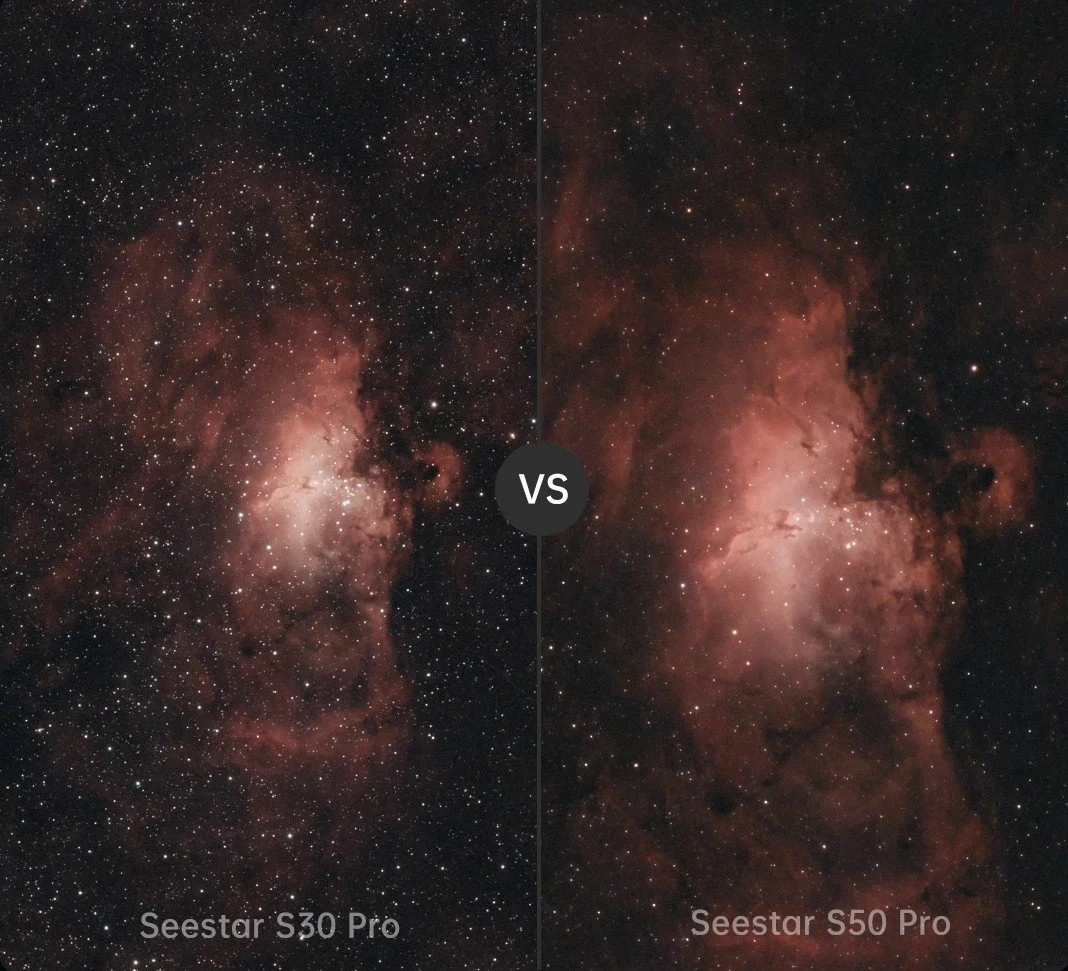
Thanks to its larger aperture, 4-Element Apochromatic Lens and better tracking system, the S50 Pro captures sharper images.
Seestar S50 Pro vs S50: is it worth upgrading?
For original S50 owners, the upgrade is broader than the jump from 1080p to 4K suggests. Both telescopes retain a 50mm aperture and almost identical focal lengths (250mm versus 260mm) while their 2.9µm pixels also produce very similar native image scales. The S50 Pro’s advantage is therefore not four times more fine detail on a galaxy. Instead, its larger sensor captures a much wider 2.8° field, the optical system has been redesigned around four elements, tracking moves to a near-zero-backlash drive, storage doubles, battery capacity rises to 10,000mAh and the second 63° camera adds an entirely new wide-field imaging system.
For users wanting a substantially more versatile Seestar, better tracking and the newer software and imaging architecture, the S50 Pro is a much more comprehensive step forward than the headline megapixel count alone suggests.
The $999 crossover
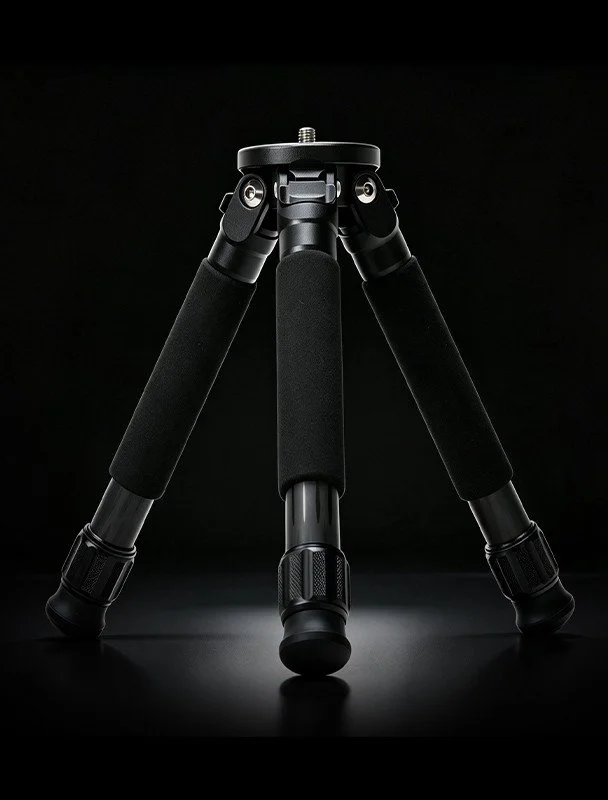
At a higher price point, the S50 Pro comes with an upgraded tripod. Though the tripod head is not included.
At $999, the S50 Pro also enters a more demanding part of the market. The original S50 was easy to evaluate because a complete conventional astrophotography system at roughly the same price was difficult to assemble without substantial compromises. At $999, the comparison becomes harder. Also, most buyers won’t be able to take advantage of the launch promotion that shaves $100 off the price as the promotion is for a limited time only.
A beginner can begin putting together a conventional small refractor, camera and mount in this territory, particularly by buying used equipment. That route offers greater long-term flexibility, but the final cost grows quickly once guiding, autofocus, filters, control hardware and power management are included. Not to mention that traditional modular equipment and smart telescopes fundamentally serve two different purposes.
The S50 Pro's value therefore depends on what the buyer is purchasing. If the goal is maximum performance per pound and a system that can evolve indefinitely, modular astrophotography remains compelling. If the goal is a complete telescope that can be carried outside and begin a sophisticated imaging sequence within minutes, comparing it with the price of an optical tube alone misses much of the point.
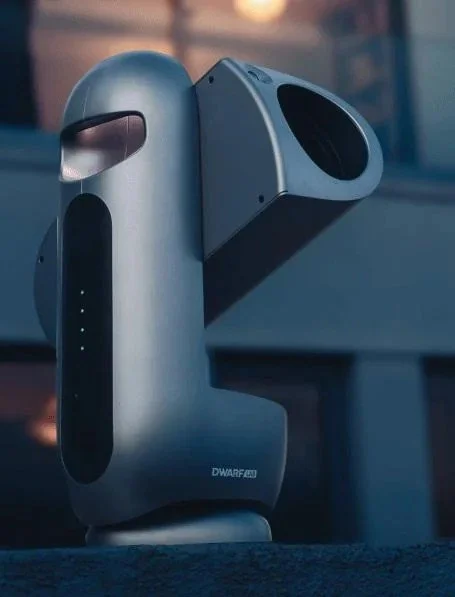
DWARFLAB Draco promises a 90 mm aperture and exposure time as long as 300 seconds.
In any case, the S50 Pro’s $999 regular price is beginning to raise a few eyebrows. The more interesting question is no longer simply whether the telescope itself is worth $999, but how it compares with an increasingly competitive generation of smart telescopes. DWARFLAB’s forthcoming Draco is a particularly important one to watch: its 90mm aperture is already confirmed, while recent reveals point towards sensor cooling, built-in guiding, field rotation through a rotating sensor and exposures of up to 300 seconds. If those features make it into the final production model at a competitive price, ZWO may eventually find itself under pressure to reconsider where the S50 Pro sits in the market.
Experienced astrophotographers may also view it differently from beginners. An S50 Pro does not necessarily replace a larger imaging rig. It could become the telescope that travels, attends outreach events or captures a second target while the primary system is committed elsewhere.
That complementary role may ultimately prove more interesting than the idea of smart telescopes replacing traditional equipment.
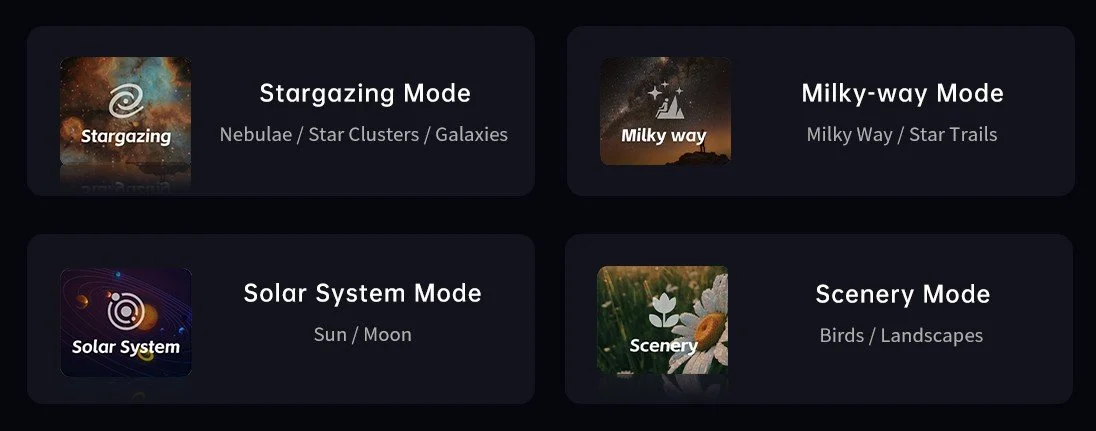
ZWO has produced a “Can Do It All” smart telescope, designed for beginners.
What are the alternatives to the Seestar S50 Pro?
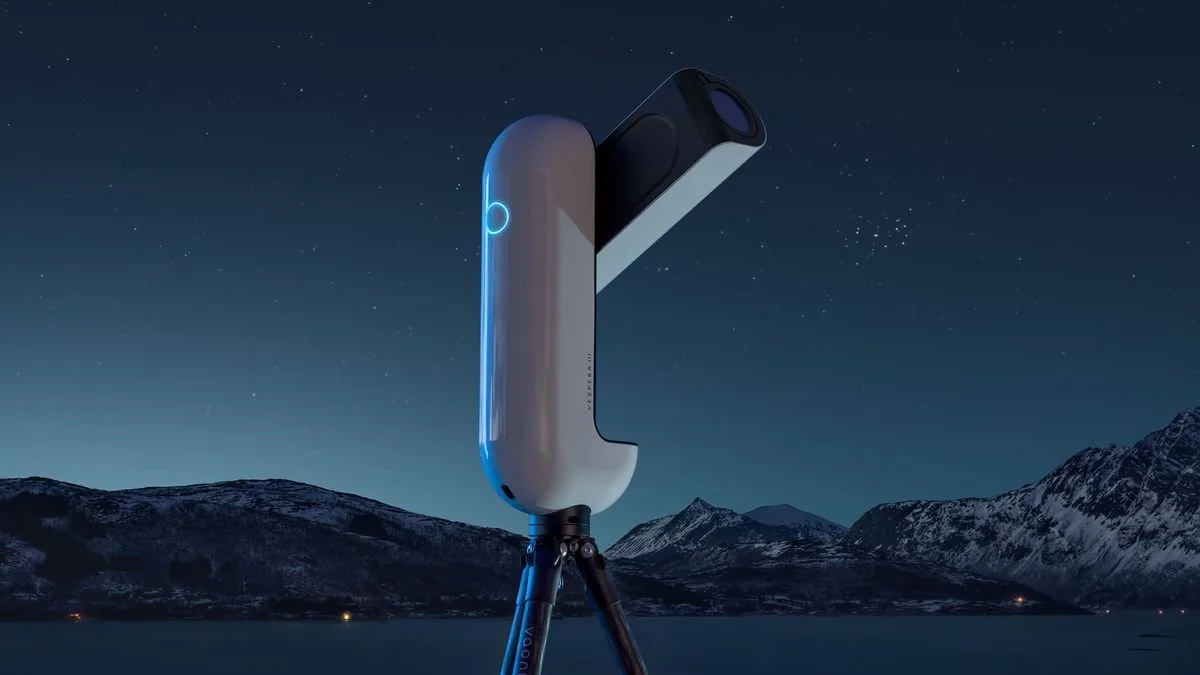
Vespera III has a battery life up to 11h, and uses a Sony IMX585 sensor, but costs $2500.
The most obvious alternative to the S50 Pro is the Vaonis Vespera 3, and on paper the two are remarkably close. Both use 50mm apertures, similar focal lengths (260mm and 245mm) and 8.3MP, 2.9µm-pixel sensors; unlike the S50 Pro, however, Vaonis explicitly identifies its sensor as the Sony IMX585. Vespera 3 also brings a flat-field apochromatic quadruplet design, 11-hour battery, 115GB of usable storage and Vaonis' particularly strong CovalENS mosaic system, which can build images up to 24MP and resume ambitious projects over multiple nights. What it does not have is the S50 Pro's second wide-angle 4K camera, and at around $2,490, it costs almost three times the S50 Pro's $899 launch price. That doesn't make the Vespera 3 poor value by definition. Vaonis is selling a more premium mechanical build, a mature imaging ecosystem and an unusually polished automated workflow, but it makes the similarities in their basic optical specification difficult to ignore. Vaonis
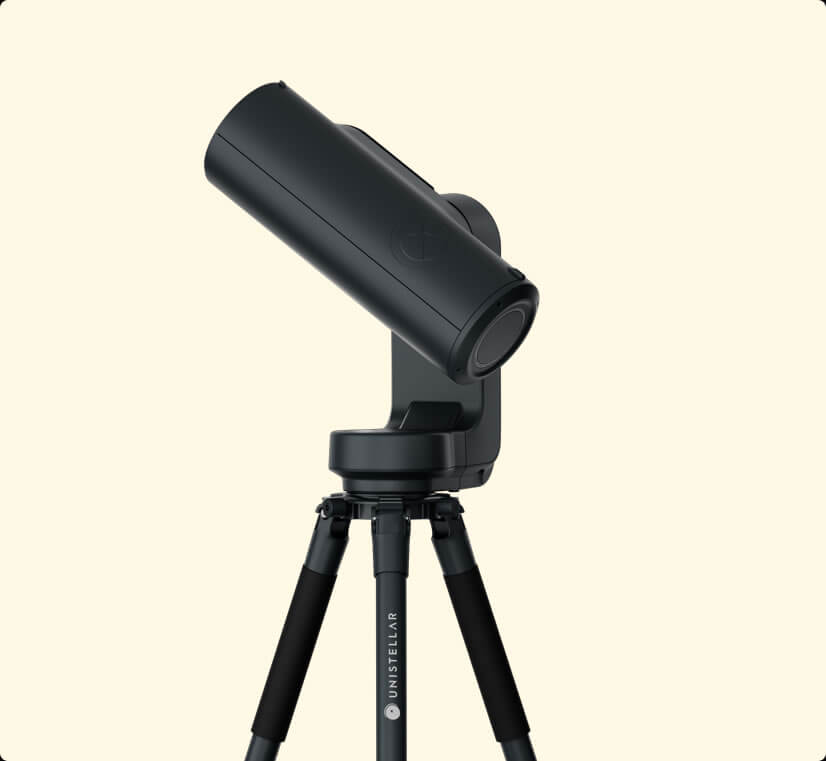
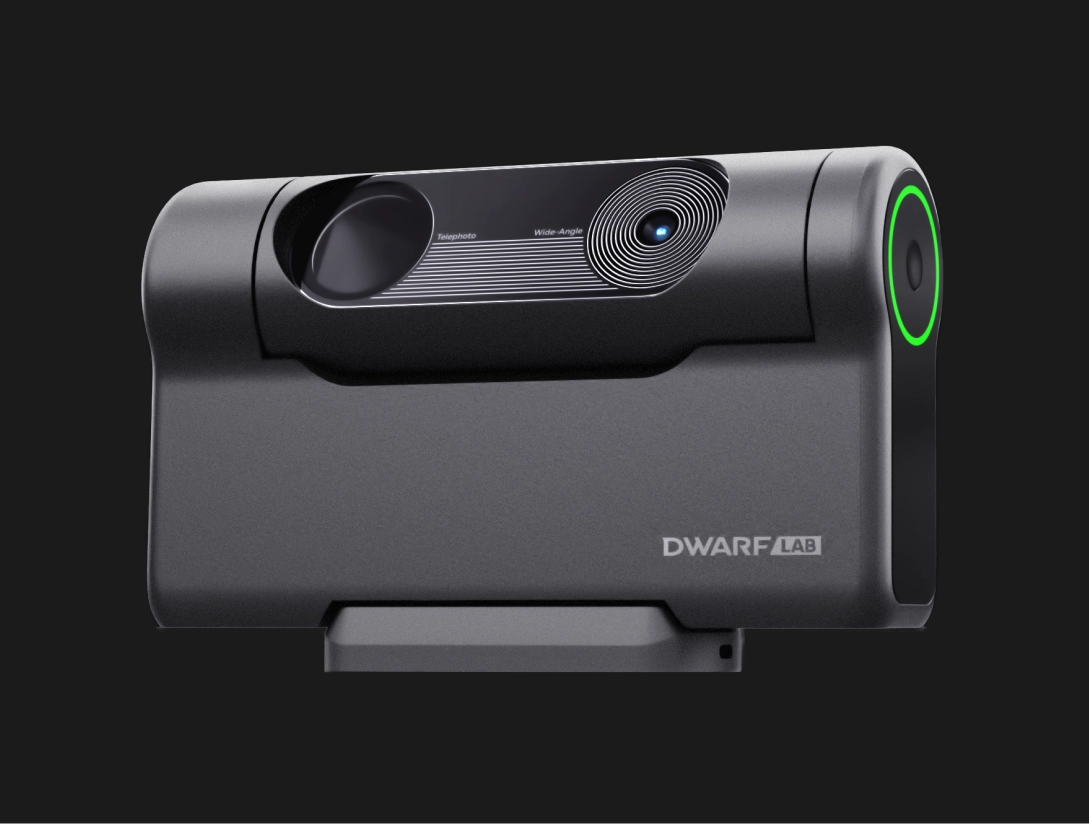
Beyond Vaonis, the alternatives begin to diverge more noticeably. Unistellar's Odyssey costs $2,599.and increases the aperture to 85mm with a 320mm f/3.9 optical system, finer 0.93-arcsecond sampling and particularly strong lunar and planetary capability, although its field is much narrower and its five-hour battery and 64GB storage are less generous. At the opposite end, the DWARF 3 costs only $549 and offers an impressive Sony IMX678-based dual-camera system, 128GB storage and even 60-second telephoto exposures in EQ mode, but its 35mm aperture and 150mm focal length put it in a smaller, wider-field class. And considerably further up the scale sits the Celestron Origin Mark II: a 152mm f/2.2 RASA with an 8.3MP Sony IMX678 camera and dramatically greater light-gathering capability, but at $4,299 and nearly 19kg for the complete system, it is closer to an automated home observatory than a grab-and-go Seestar competitor. Vaonis' older Vespera II, still sold at €1,590, remains another option, but for a new 2026 purchase the Vespera 3 is the much more revealing comparison: it shows just how aggressively ZWO has positioned the S50 Pro on price.
There is also the forthcoming DWARFLAB Draco. At the time of this review, relatively little has been officially revealed, but DWARFLAB has confirmed that it is developing a new smart telescope with a larger aperture than the DWARF 3 and is positioning it around more advanced imaging. The first hints appeared around NEAF 2026, and a subsequent Draco profile discovered within DWARFLAB’s Atlas software points to both telephoto and wide-angle cameras, although final specifications, sensor, aperture, price and release date remain unconfirmed. If Draco moves significantly beyond the DWARF 3 while retaining DWARFLAB’s compact dual-camera approach, it could become one of the more interesting direct challengers to the S50 Pro.
Seestar S50 Pro vs its alternatives
Today's smart telescopes take very different approaches to automated astronomy.
| Spec |
|

|
|
|

|
|---|---|---|---|---|---|
| Aperture | 50mm | 50mm | 85mm | 35mm tele | 152mm |
| Optics |
4-element APO ED glass |
Flat-field APO quadruplet |
Reflector automatic focus |
6-element APO dual-camera system |
152mm RASA |
| Focal length | 260mm | 245mm | 320mm | 150mm tele | 335mm |
| F-ratio | f/5.2 (Wide‑Angle: f/1.75) |
f/4.9 | f/3.9 | Not specified. Approx. f/4.2 | f/2.2 |
| Main sensor |
Telephoto: 1/1.2" · 8.3MP 2.9µm pixels OmniVision OS08B10 |
Sony IMX585 1/1.2" · 8.3MP 2.9µm pixels |
model undisclosed 1.45µm pixels |
Sony IMX678 1/1.8" · 8.3MP 2.0µm pixels |
Sony IMX678-AAQR1 8.3MP · 2.0µm |
| Main FOV | Telephoto: 2.8° Wide‑Angle: 63° (Portrait) |
2.5° × 1.4° | 33.6 × 45 arcmin | 3.38° tele | 1.32° × 0.75° |
| Wide camera |
Yes 4K · 63° |
No | No |
Yes 1080p · 50.6° |
No |
| Tracking |
Alt-Az EQ supported |
Automatic GoTo tracking | Motorised Alt-Az |
Alt-Az EQ supported |
Computerised Alt-Az |
| Exposure / stacking |
Up to 60s EQ mode |
Automatic stacking CovalENS mosaics |
Enhanced Vision automated processing |
60s tele · 90s wide EQ mode |
Automated live stacking |
| Storage |
128GB eMMC ~100GB usable |
115GB | 64GB | 128GB eMMC | No headline capacity specified |
| Battery | Up to 9h | 11h | 5h |
Up to 5.5h astro use |
6h+ |
| Weight |
2.8kg main unit |
5kg |
4kg telescope |
1.35kg |
18.87kg complete system |
| US price |
$899 launch $999 regular |
$2,490 | $2,599 | $549 | $4,299 |
Specifications and US pricing checked against manufacturers' published information in September 2026. Prices may change by market or promotion. Figures are not always directly equivalent where manufacturers use different conventions for field of view, usable storage, battery testing or system weight.
Things we really like about Seestar S50 Pro
Magnetic solar filter and sturdy carrying case are included.
An almost all-night battery life, up to nine hours.
Mosaic stitching for bigger DSO targets.
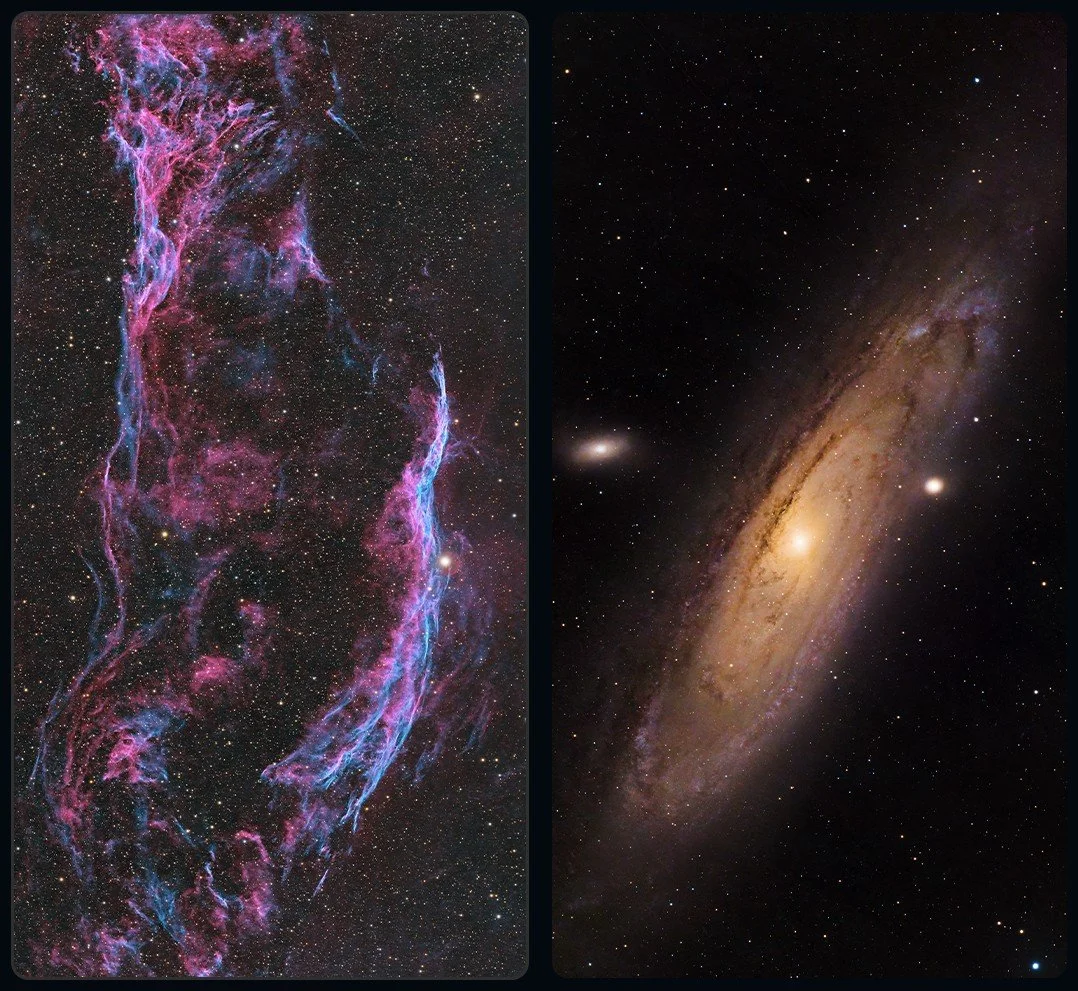
Deep space targets captured with the new Seestar S50 Pro
Things we would like to see changing in the next generations of Seestar
Active camera cooling.
A higher-performance sensor such as Sony sensor IMX294CJK.
We would like to see the tripod head TH10 to be included at no extra cost.
Verdict: the smart telescope is moving into a new territory
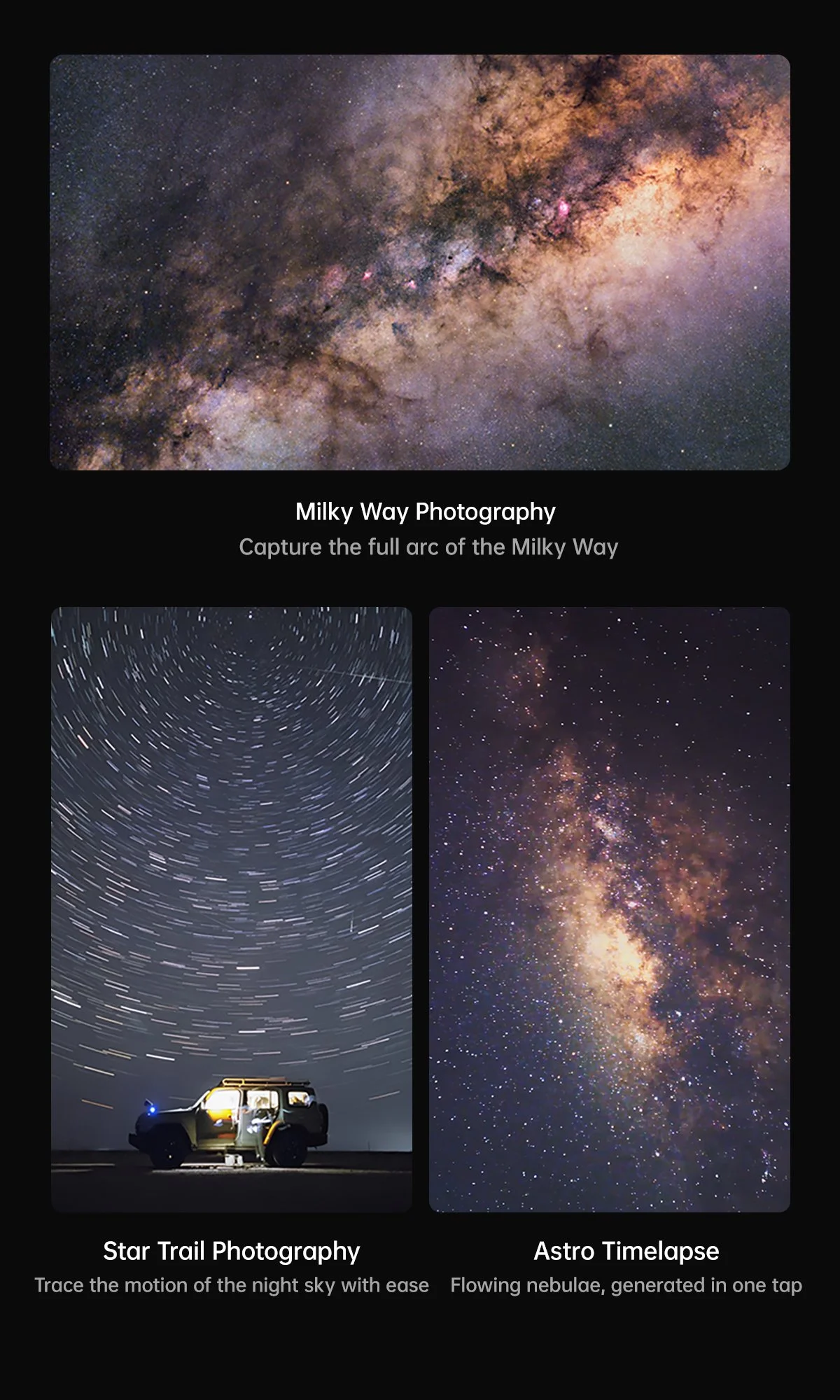
S50 Pro aims to be an all-rounder smart telescope.
The original Seestar S50 was significant because it made smart telescopes affordable enough to reach a much larger audience. The S30 then prioritised portability, while the S30 Pro introduced a far more capable dual-camera architecture. The S50 Pro brings those developments back to the 50mm format.
Its strongest improvements are coherent rather than cosmetic. The larger 1/1.2-inch telephoto format is accompanied by redesigned four-element optics. The higher resolution is paired with a revised precision drive. The narrow astronomical system is complemented by a 63-degree 4K camera. Battery capacity and storage have both increased substantially.
The most interesting tension is that each improvement moves Seestar closer to conventional astrophotography while the product still promises to hide most of the complexity associated with it.
That is the challenge facing the entire smart-telescope category. If these instruments remain too simple, advanced users quickly reach their limits. If manufacturers expose every parameter, accessory and calibration option, they risk recreating the complexity they were built to avoid.
The S50 Pro sits directly on that boundary. At $999 it needs to offer more than convenience, yet convenience remains one of its greatest selling points.
Whether smart telescopes eventually rival much larger conventional imaging systems is almost beside the point. They have already changed expectations about how quickly a telescope should be able to locate, photograph, stack and process the night sky. Smart telescopes are here to stay and to get better, whether we like it or not.
Traditional astrophotography will continue to offer far greater freedom and a higher performance ceiling. Visual astronomy will continue to offer an experience no screen can reproduce. Smart telescopes occupy a third space between those worlds, and that space is becoming increasingly sophisticated. The Seestar S50 Pro may be the clearest indication yet of where it is heading.
At the time of this review, ZWO are running a launch promotion and sell the Seestar S50 Pro for $899. You can purchase it from here.
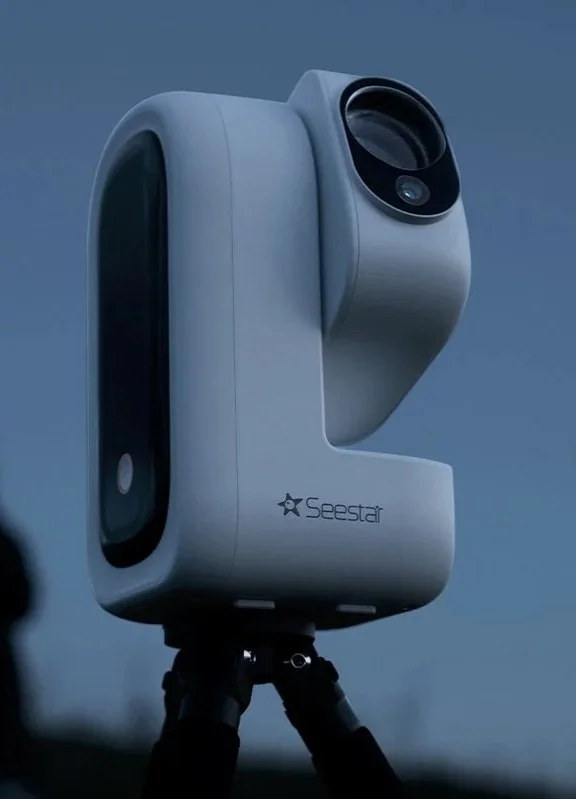
Seestar S50 Pro benefits from a 4-element apochromatic optical design.
Seestar S50 Pro FAQs
When does the Seestar S50 Pro launch?
It is already launched and available to purchase. It was launched on 25 August 2026 worldwide.
Does the Seestar S50 use the Sony IMX585 sensor?
No, ZWO Seestar team have mentioned that although the camera sensor shares many similarities with the IMX585 sensor, it is not the same. They have confirmed that the OmniVision OS08B10 sensor is behind the telephoto lens. They share very similar specifications with the Sony IMX585.
What is the point of the new wide-angle camera on the S50 Pro?
The new 4K wide-angle camera with a 63° field of view allows you to capture the Milky Way arch, time-lapses, star trails and image stitching up to 8K resolution. It can also do live stacking as your images are being captured. The sensor behind the wide lens is the IMX586.
How much is the S50 Pro?
Depending on your location, it will cost you $999 / €999. The launch promotion price is $100 / €100 cheaper.
S50 Pro or S30 Pro? I can’t decide.
The S30 Pro favours portability and wider framing; the S50 Pro benefits from greater light collection and larger image scale on deep-sky targets.
Does the S50 Pro have active sensor cooling?
No. ZWO chose an uncooled design to retain its simplicity and power efficiency.
Where can I buy the S50 Pro Smart Telescope?
If you are based in the UK, you can buy it from First Light Optics. Otherwise, buying directly from manufacturer’s website is recommended.
Affiliate disclosure
Some links in this article may be affiliate links. Astromaniac Magazine may receive a commission from qualifying purchases at no additional cost to the reader. Affiliate partnerships do not determine our editorial conclusions. We continue to maintain our full editorial independence, by publishing impartial, fair and honest reviews. Here, you can learn more about our Affiliate Partners and Code of Conduct.