ToupTek ATR2600C Astronomy Cooled Camera: A Serious Challenger to the APS-C DSO Cameras
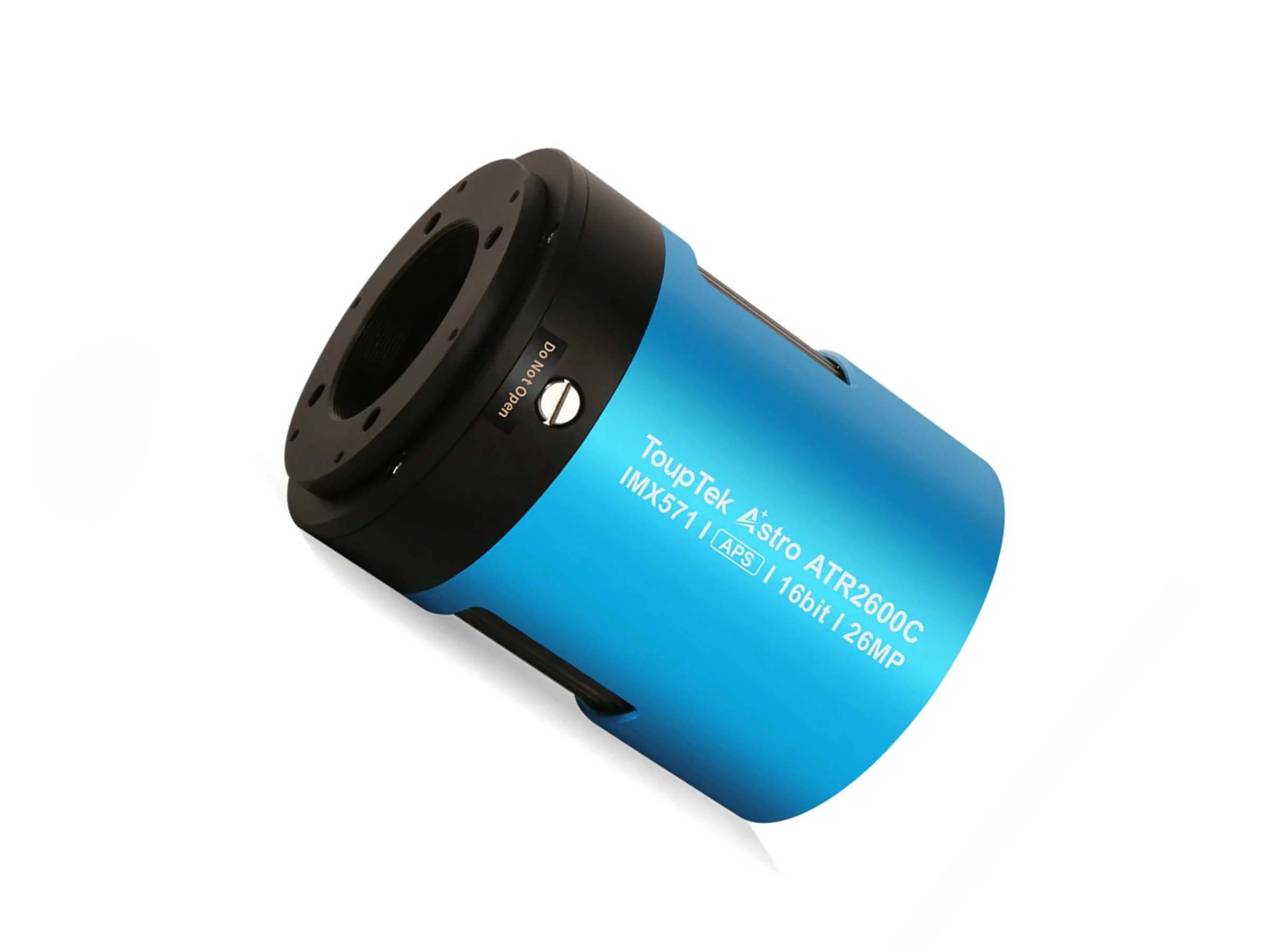
ATR2600C boasts the very reliable IMX571 sensor, made by Sony
In recent years, the APS-C sensor format has become something of a sweet spot for deep-sky astrophotography. It offers a generous field of view, high resolution, and manageable file sizes while remaining compatible with a wide range of telescopes.
One camera that has attracted increasing attention in this category is the ToupTek ATR2600C Cooled Colour Astronomy Camera. Built around the popular IMX571 sensor by Sony, the camera enters a highly competitive segment dominated by devices such as the ZWO ASI2600MC Pro and QHY268C. But the ToupTek ATR2600C promises more for almost 30% less.
ToupTek’s take promises ultra-low read noise, high dynamic range, efficient cooling, and zero amp-glow performance, all features astrophotographers look for when building a reliable deep-sky imaging setup. But how does the ATR2600C perform in practice, and how does it compare to the established ZWO alternative? Let’s take a closer look.
Sensor and Core Technology
At the heart of the ATR2600C lies the Sony IMX571 back-illuminated CMOS sensor, widely regarded as one of the best sensors currently available for deep-sky astrophotography.
Key sensor characteristics include:
APS-C format (23.4 × 15.7 mm)
26 megapixel resolution (6224 × 4168)
3.76 μm pixel size
Native 16-bit ADC
14 stops of dynamic range
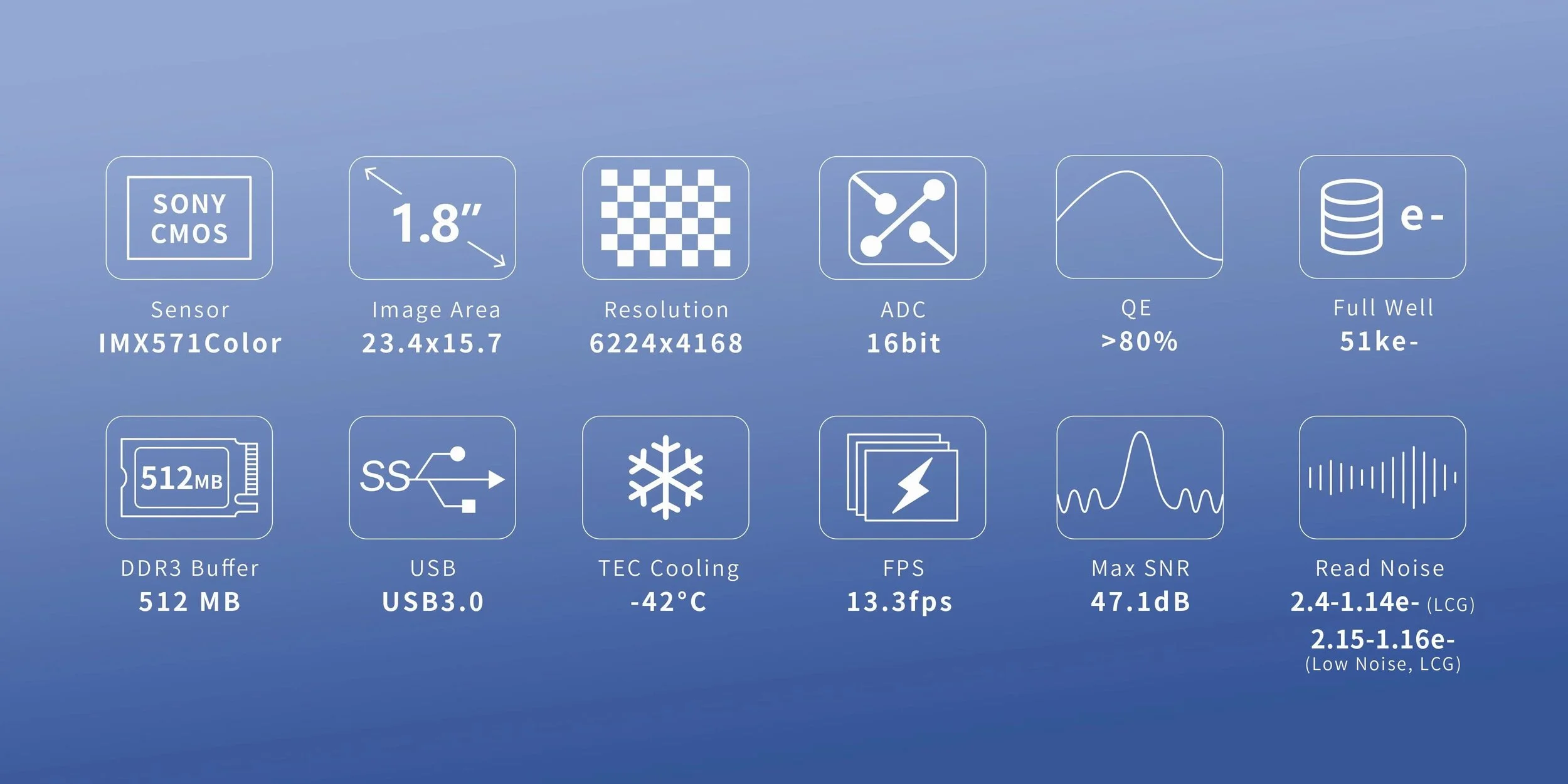
ATR2600C specs show off an impressive camera designed to be the next go-to camera for astrophotographers.
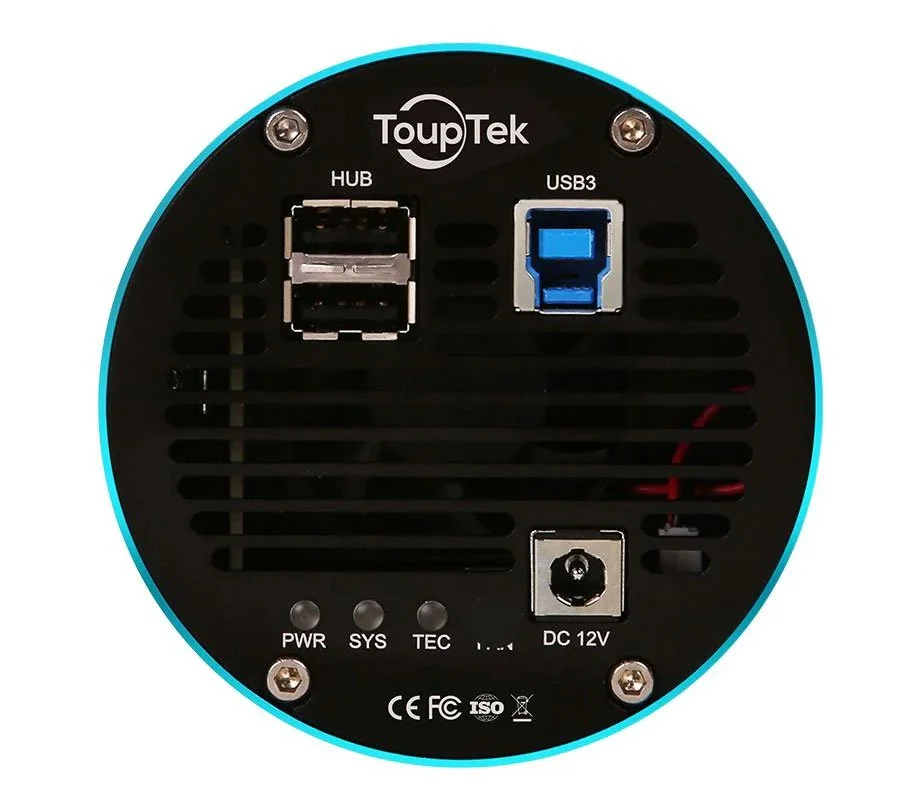
ToupTek ATR2600C features a dual USB-Hub at the back.
The back-illuminated IMX571 architecture offers high quantum efficiency and very low read noise, both valuable when recording faint deep-sky targets.
The IMX571 sensor is also widely praised for its zero amp-glow architecture, meaning long exposures remain clean without the characteristic glow patterns that were an unwanted feature of earlier CMOS astro cameras.
The camera also includes two USB ports on the rear, allowing accessories such as a filter wheel, electronic focuser or guide camera to connect through the camera rather than directly to the computer.
Cooling Performance
Like most dedicated deep-sky cameras, the ATR2600C features two-stage thermoelectric cooling (TEC). This system allows the sensor temperature to reach approximately 42°C below ambient, significantly reducing thermal noise during long exposures. In our tests, the coling mechanism brings down the sensor’s temperature impressively fast, something that astrophotographers might want to slow down via the built-in features in NINA. Sometimes, cooling the camera sensor too rapidly can cause condensation buildup on the camera.
Cooling stability is essential for deep-sky imaging, particularly when capturing dark frames. In real-world conditions the camera can maintain temperatures around −20°C even during mild nights.
Dynamic Range and Noise Performance
The ATR2600C delivers impressive sensor performance:
Low read noise
Dynamic range: roughly 14 stops
Full well capacity: 51 ke- standard mode
This wide dynamic range allows astrophotographers to capture faint nebulosity while preserving star colour and detail in brighter regions. The camera also includes low noise and high full-well operating modes, giving users flexibility depending on their imaging target.
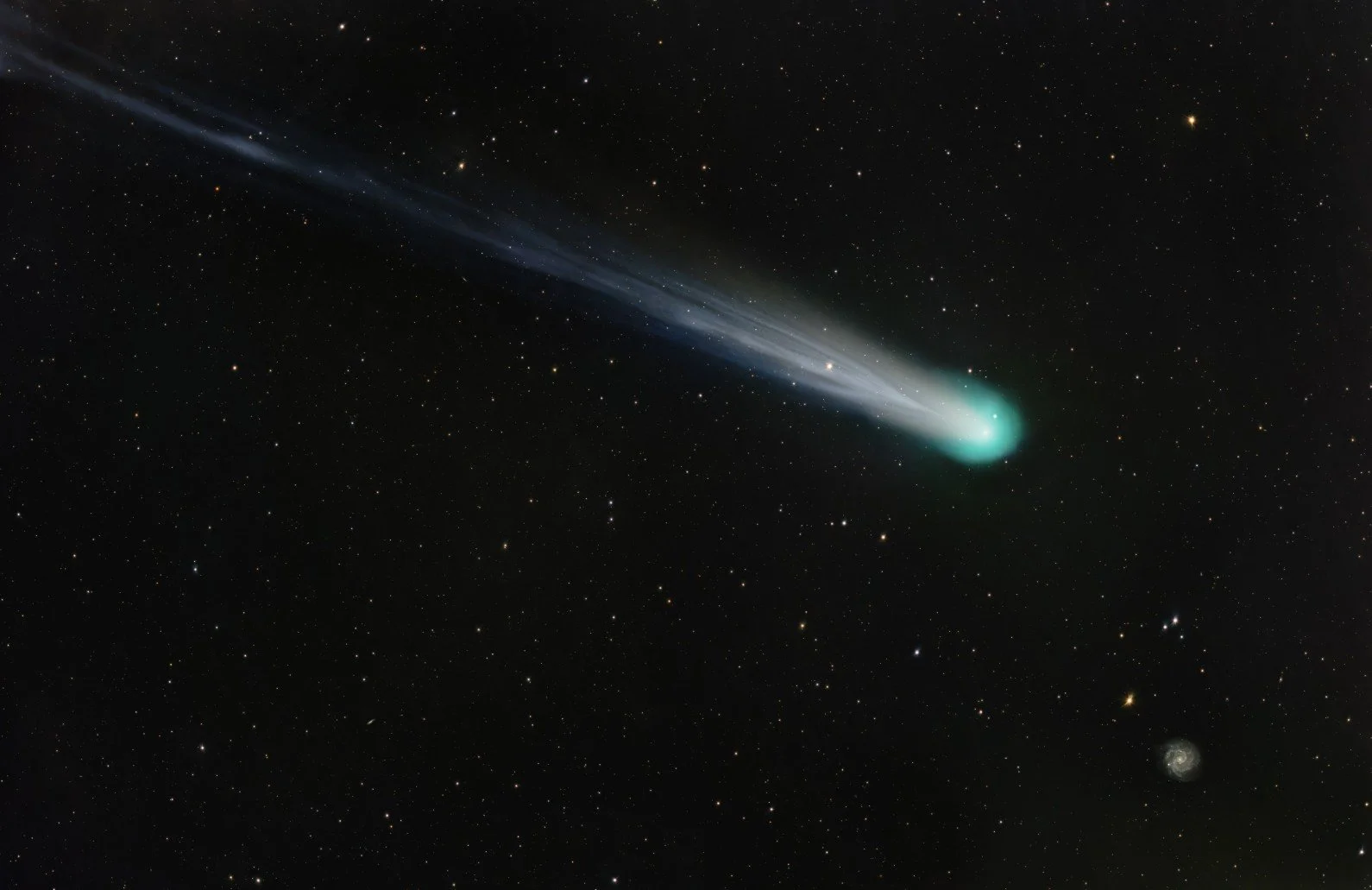
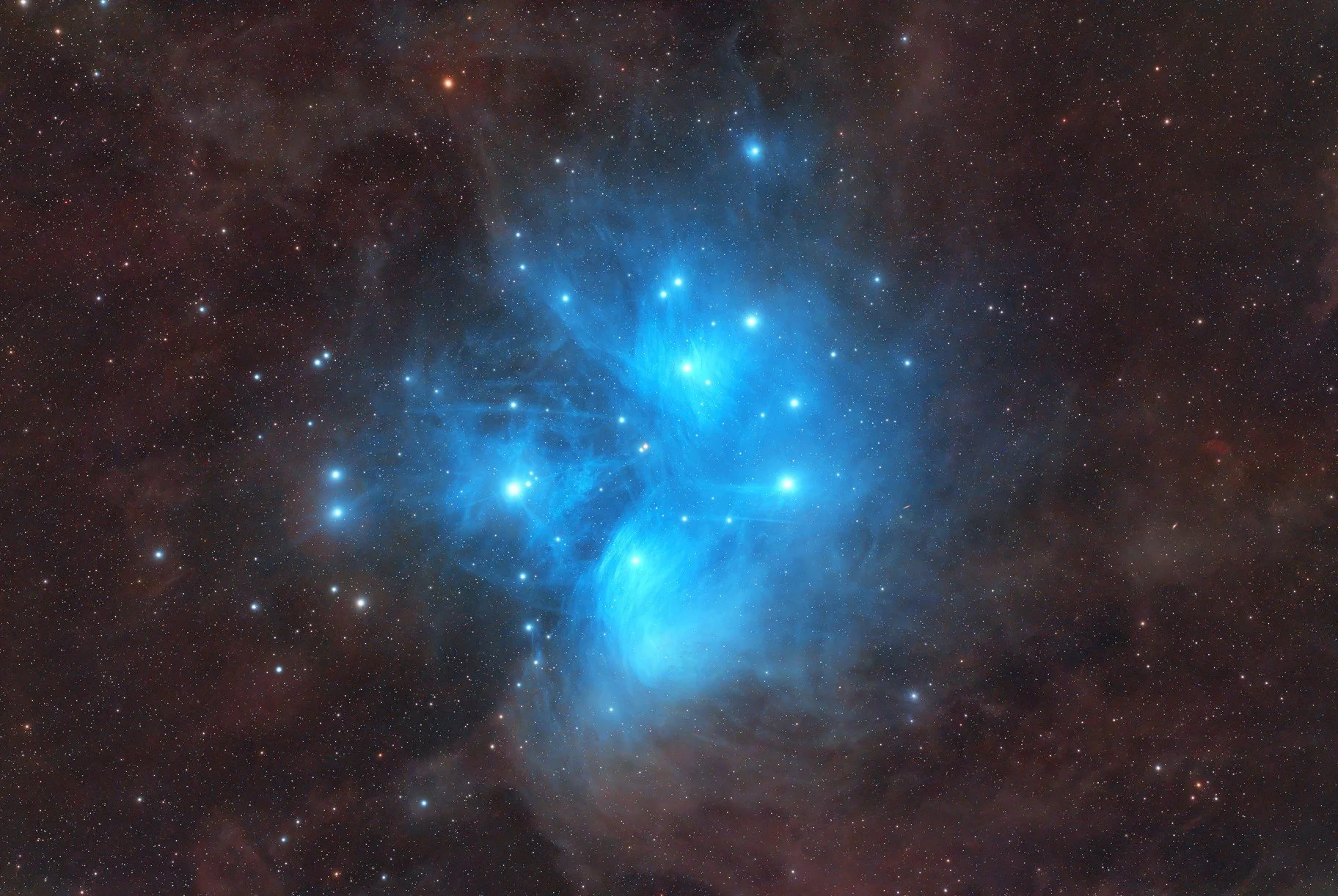
C/2025 A6 Lemmon and NGC 3184 by Satoru Murata. Camera: ToupTek ATR2600C

ATR2600C camera has a 512MB (4Gb) ultra-fast memory buffer.
Image Buffer and Data Stability
One often overlooked feature of modern astrophotography cameras is the internal memory buffer. The ATR2600C includes 512 MB of DDR3 memory, which helps stabilise data transfer over USB and prevents dropped frames during long imaging sessions.
For automated imaging setups running overnight sequences, this type of buffering can significantly improve reliability.
Dew and Environmental Protection
Astrophotography equipment frequently encounters dew and condensation during long nights outdoors. To combat this, the ATR2600C incorporates an integrated anti-dew system with a heater located near the optical window. The heater:
consumes about 5 watts of power
features four adjustable levels
can be turned off via software to conserve power.
This feature is particularly useful for humid environments or remote observatories where manual intervention is limited. The camera comes with a tilt adjuster. In our tests, however, we did not detect any obvious sensor tilt.

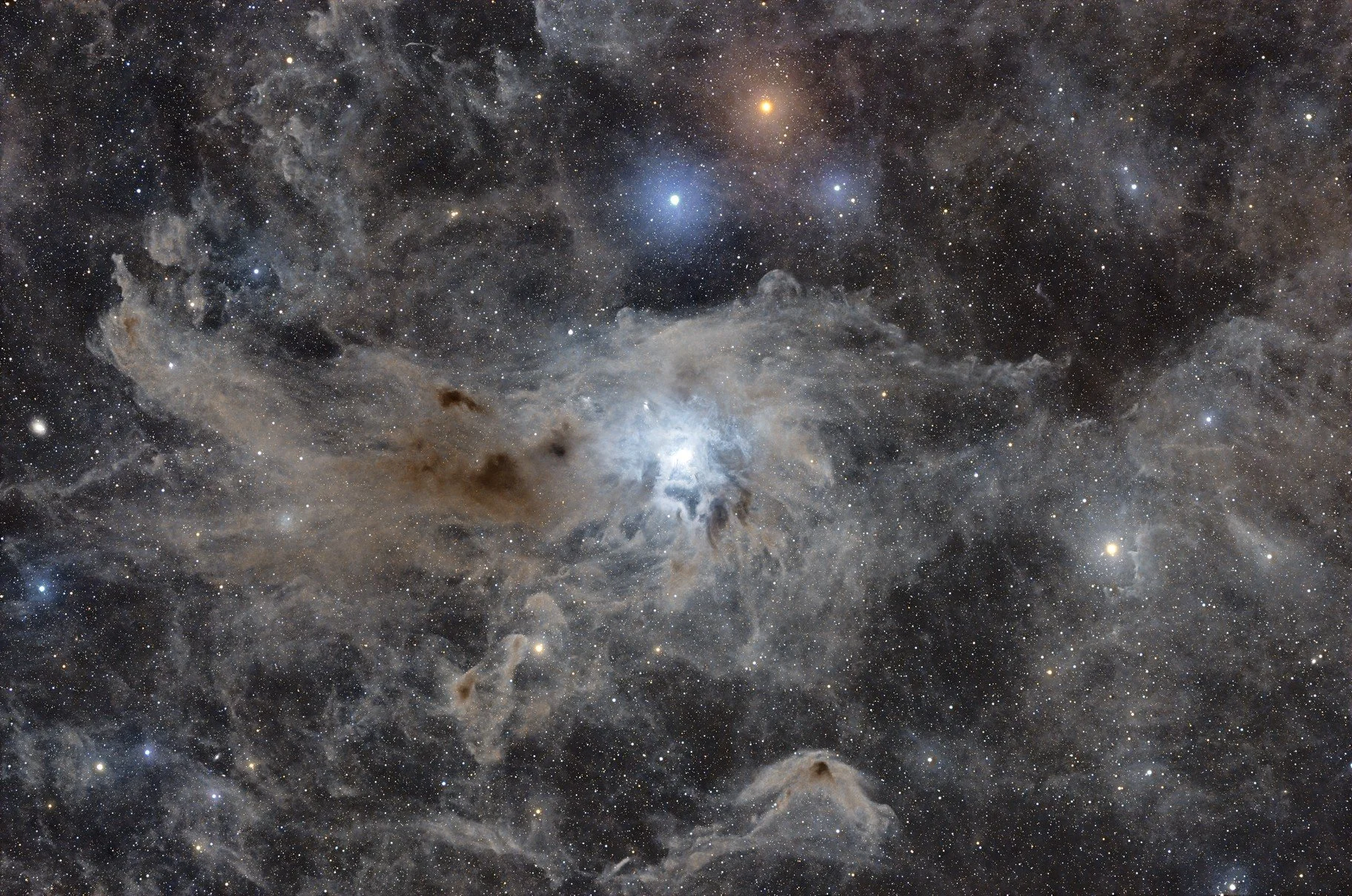
NGC 7000 by Nayyar Badu, captured with the ToupTek ATR2600C camera.
What Is Camera Sensor Tilt in Astrophotography?
In astrophotography, sensor tilt refers to a slight misalignment between the camera’s imaging sensor and the telescope’s optical axis. Ideally, the sensor should sit perfectly perpendicular to the incoming light path so that the focal plane is evenly aligned across the entire field of view.
When the sensor is tilted even by a very small amount, one side of the image reaches focus at a slightly different distance than the other. The result is uneven star shapes across the frame. Typically, stars may appear sharp on one side of the image but become elongated, distorted, or slightly out of focus toward the opposite edge.
Sensor tilt can arise from several factors within an imaging setup, including:
Slight manufacturing tolerances in the camera body
Flexure within the imaging train
Imperfect adapters or spacers
Sag from heavy filter wheels or accessories
Misalignment between the telescope and camera due to flawed extension tubes.
With large sensors such as APS-C or full-frame models, these small alignment errors become more noticeable because the sensor covers a wider field.
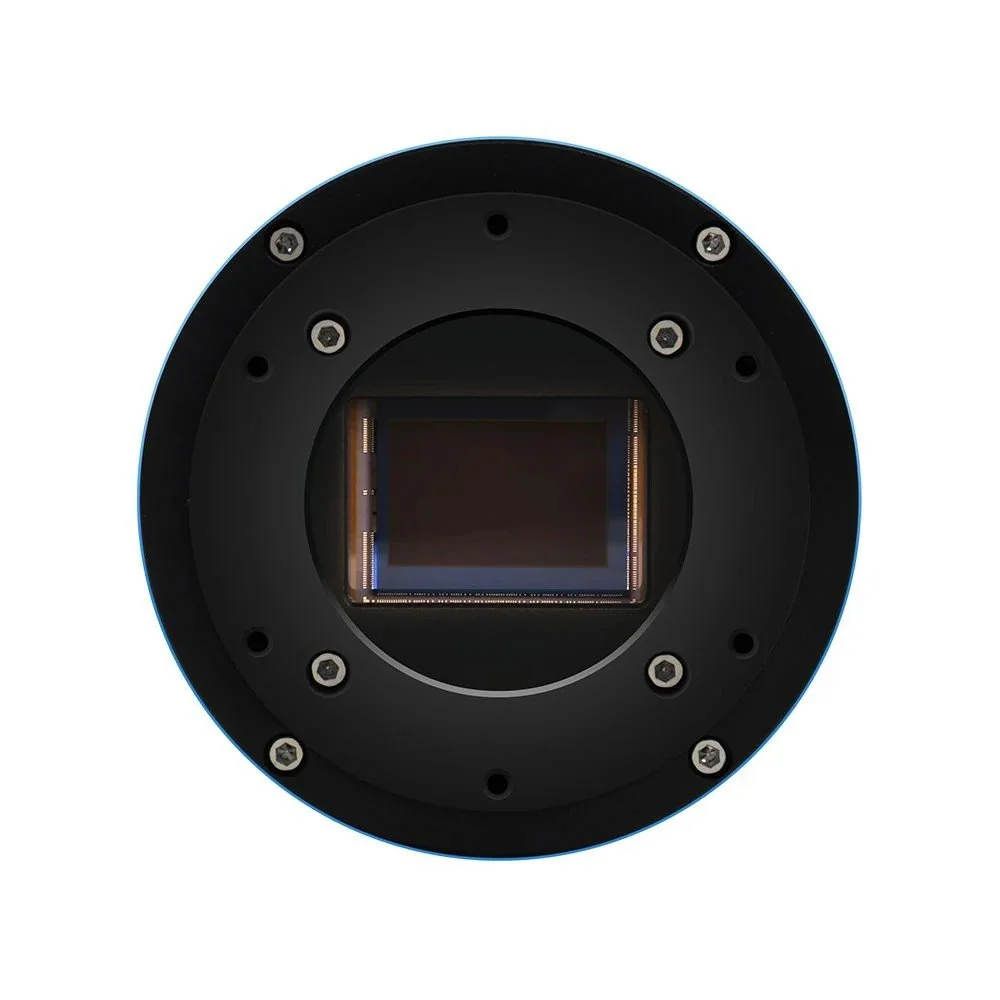
The ATR2600C comes with a tilt adjuster.
What Does a Sensor Tilt Adjustment Do?
Many modern astrophotography cameras include a sensor tilt adjustment mechanism. This is typically a small plate or ring with adjustment screws that allows the user to make very fine corrections to the orientation of the sensor.
By carefully adjusting these screws, astrophotographers can fine-tune the angle of the sensor plane, aligning it precisely with the telescope’s optical axis. When properly calibrated, the sensor sits perfectly parallel to the focal plane produced by the telescope’s optics.
In practice, tilt adjustments are usually performed using test exposures of dense star fields. Software tools can then analyse the star shapes across the frame to identify which part of the sensor is slightly closer or farther from the focal plane.
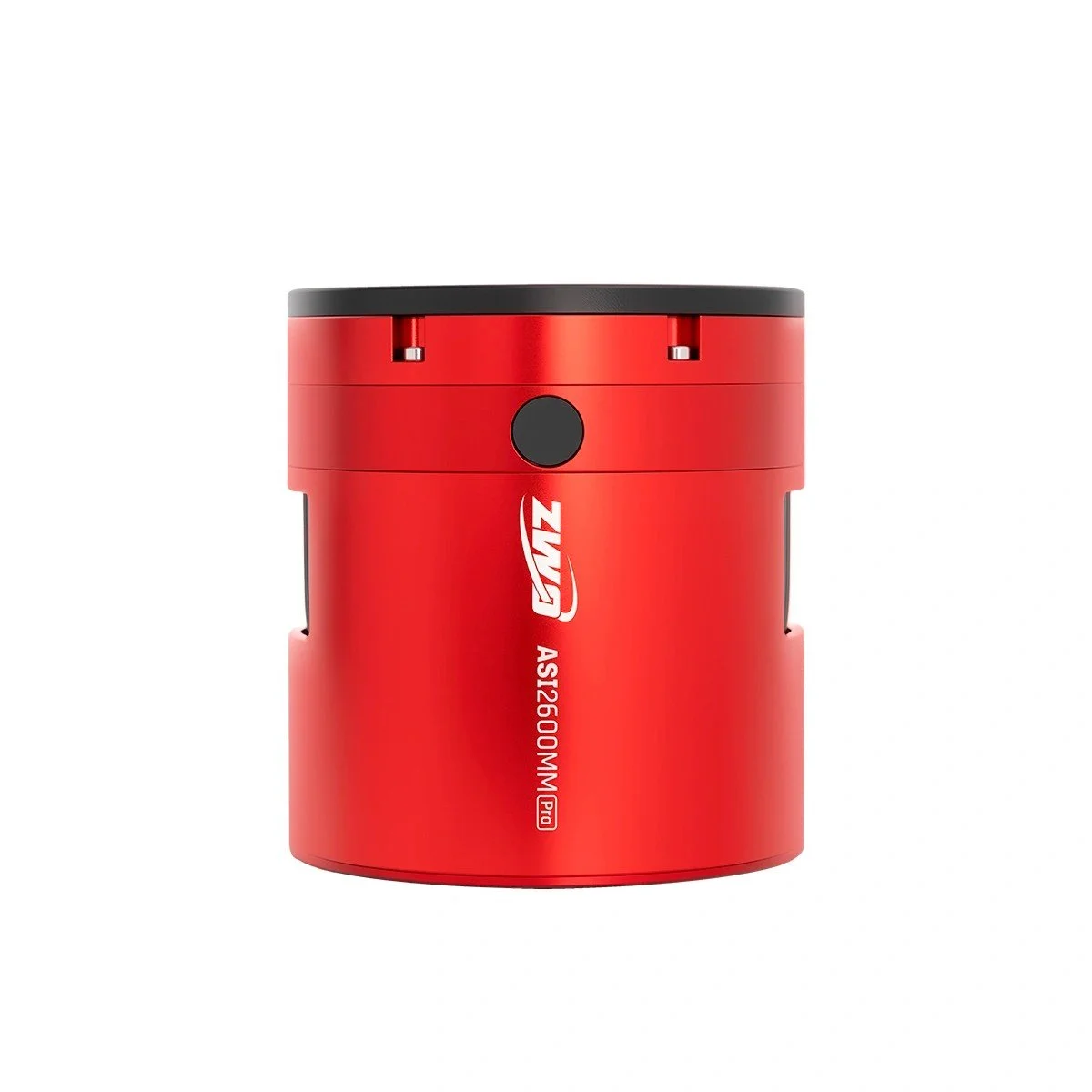
ZWO’s upgraded ASI2600 MM/MC lineup
Once corrected, the improvement can be significant, particularly for fast optical systems and large sensors where even tiny misalignments can affect image quality.
We covered the implications of using a large camera sensor for astrophotography in our comprehensive review of the ZWO ASI6200MC Pro Full Frame camera.
Comparison: ATR2600C vs ASI2600MC Pro
The ATR2600C inevitably invites comparison with the ZWO ASI2600MC Pro, which uses the same Sony IMX571 sensor.
ToupTek ATR2600C vs ZWO ASI2600MC Pro
Two implementations of Sony’s IMX571 APS-C sensor, with much in common at the sensor level but some meaningful differences in cooling, gain modes and camera design.
| Specification |

|

|
|---|---|---|
| Sensor |
Sony IMX571 Back-illuminated APS-C CMOS |
Sony IMX571 Back-illuminated APS-C CMOS |
| Resolution | 6224 × 4168 ≈26MP | 6248 × 4176 ≈26MP |
| Sensor format | APS-C 28.3mm diagonal | APS-C 23.5 × 15.7mm · 28.3mm diagonal |
| Pixel size | 3.76µm | 3.76µm |
| ADC | Native 16-bit | Native 16-bit |
| Dynamic range | Up to 14 stops | Up to 14 stops |
| Read noise | As low as 0.883e⁻ | 1.0–3.3e⁻ |
| Full well | 51ke⁻ standard Up to 100ke⁻ in High Full Well mode | 73ke⁻ |
| Cooling | Up to 42°C below ambient Two-stage TEC | 30–35°C below ambient Two-stage TEC |
| Memory buffer | 512MB DDR3 | 512MB DDR3 |
| Amp glow | Zero amp glow | Zero amp glow |
| Anti-dew | Integrated window heater 4 adjustable levels | Integrated window heater Polyimide heater bonded to protective window |
| Data interface | USB 3.0 | USB 3.0 |
| Body colours |
Blue · Black Fjord Green · Stellar Magenta |
Red |
| US list price | From $1,439 | $1,499 |
Specifications and US manufacturer pricing checked in September 2026. Retail pricing varies by region and promotion. Full-well capacity and read-noise figures depend on gain/readout mode and should not be treated as a direct measure of final image quality.
ZWO currently enjoys wider adoption, particularly because of its integration with systems such as ASIAIR. However, ToupTek has developed its own smart controller, StellaVita. Like ZWO ASI2600MC/MM lineup, ToupTek also offers a mono version of this camera ATR2600M.
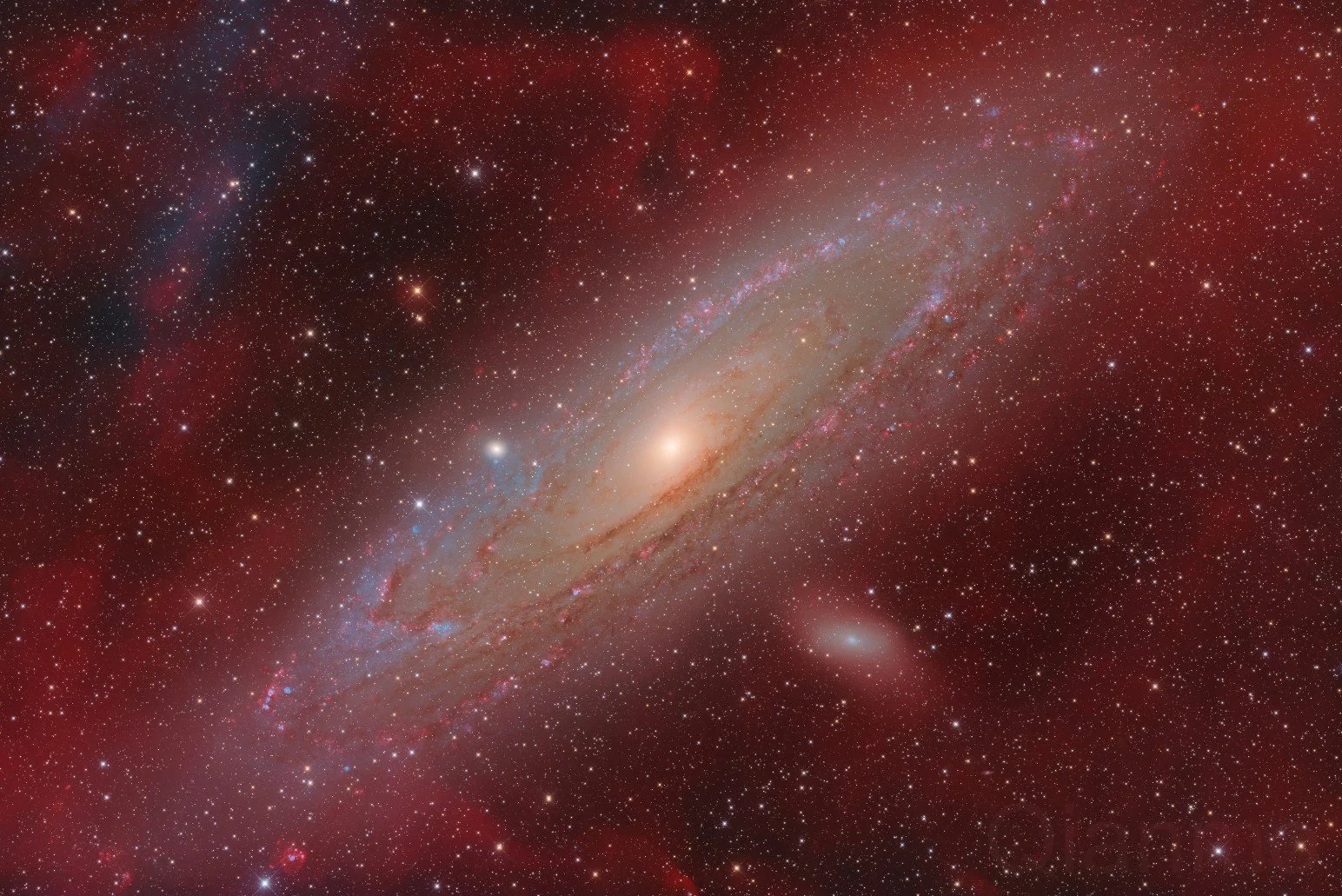
Xiaoyu Wang used the mono version of the ToupTek ATR2600 to capture this stunning photo of Andromeda Galaxy.
Things We Loved about ToupTek ATR2600C:
Options to choose either IR Cut Filter or AR Glass.
4 different colours to choose from.
The ATR2600C camera comes in a hard case for maximum protection.
Impressive cooling system, capable of reaching over 40°C below ambient temperature.
Works well with ToupTek ecosystem such as StellaVita, guide-cameras, off-axis guider, and electronic focuser etc.
Good value for money.
Things That Could Be Improved
Limited options in relation to local retailers.
Sensor dust cap is made of plastic, potentially a dust magnet.

Verdict
The ToupTek ATR2600C Cooled Colour Astronomy Camera represents a compelling option for astrophotographers looking for a high-performance APS-C camera. While full-frame cameras might present various challenges, an APS-C sensor might be the obvious choice.
Thanks to the proven Sony IMX571 sensor, the camera delivers excellent image quality, low noise performance, and wide dynamic range. Its cooling system, internal buffer, and anti-dew technology make it well suited to long automated imaging sessions.
While the ZWO ASI2600MC Pro remains the more widely adopted camera in this class, the ATR2600C offers very similar performance at a slightly more attractive price point. In the UK this camera can be purchased for approximately £500 less than its ZWO equivalent and that is its strongest strength.
For astrophotographers comfortable with the ToupTek ecosystem or those simply looking for the performance of the IMX571 sensor without paying a premium for branding, the ATR2600C is a serious contender. For astrophotographers who use a DSLR or a DSO camera with a smaller sensor, the ATR2600C is the obvious next upgrade.
If you are based in the UK, you can purchase this camera from here.
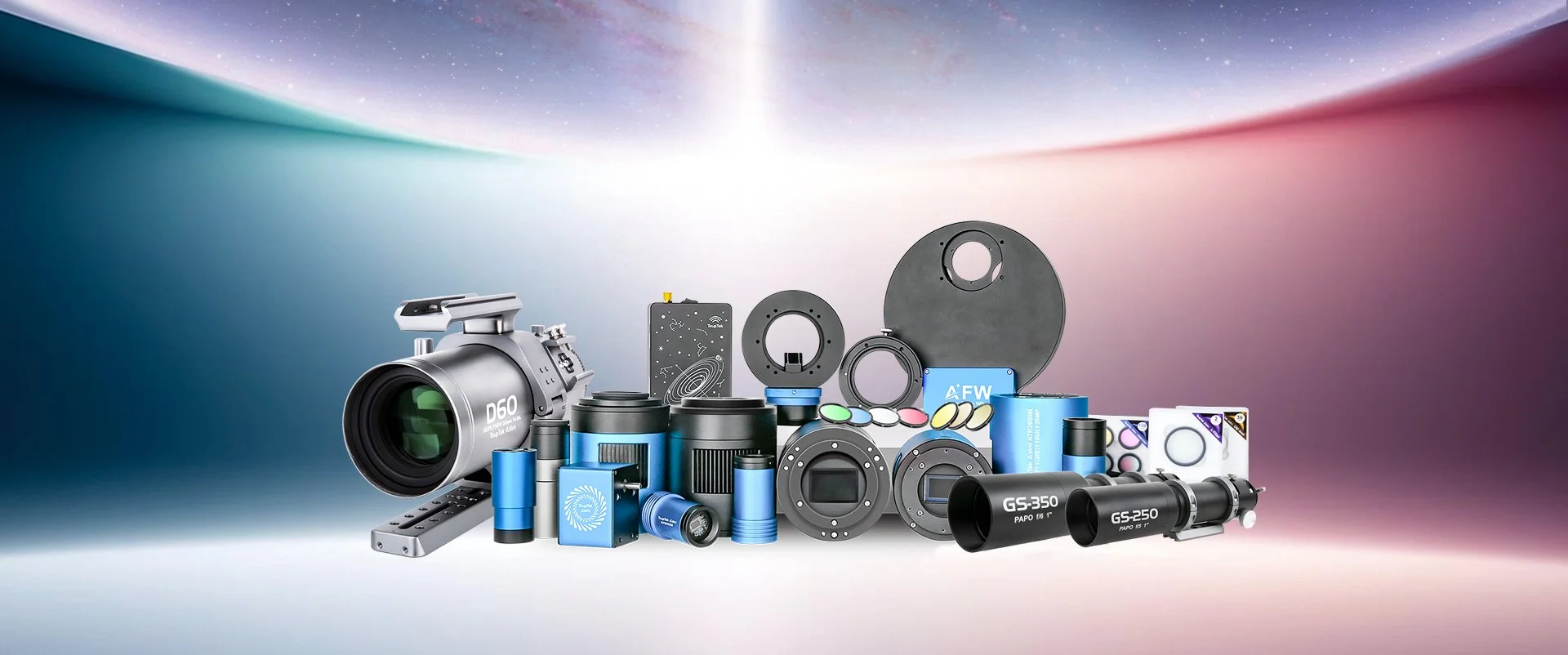
Touptek designs and manufactures a wide range of equipment for astrophotographers.
About ToupTek:
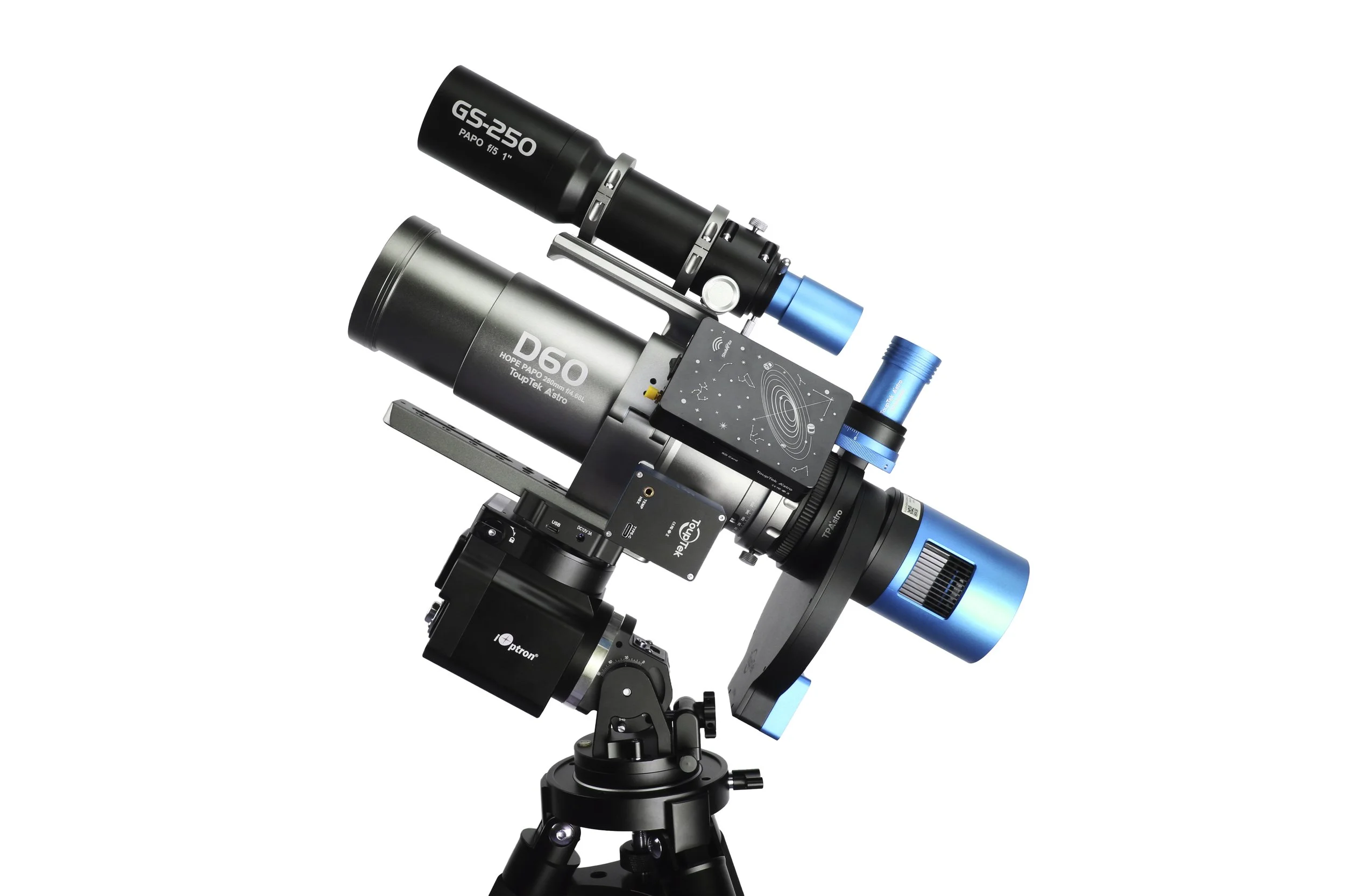
ToupTek Astro was established in 2010 in China.
ToupTek Astro is the astronomy-dedicated brand of Hangzhou ToupTek Photonics Co., Ltd., a high-tech company established in 2010 that specialises in the research and development of optical imaging equipment . The brand is built on the philosophy of "Simplify Imaging," aiming to make astrophotography more accessible to everyone, from beginners to experienced enthusiasts .
ToupTek Astro develops and manufactures its own products, offering a comprehensive range of equipment that includes:
Astronomical cameras such as the deep-sky SkyEye and ATR series, and the G3M series for planetary photography, and GPM series for guide cameras.
HOPE series astronomical telescopes.
Smart Controllers such as StellaVita.
Astronomy accessories including filter wheels, off-axis guiders (OAG), and automatic focusers (AAF).
This review contains affiliate links. Purchasing through them may support Astromaniac Magazine at no additional cost to you and does not influence our editorial conclusions.