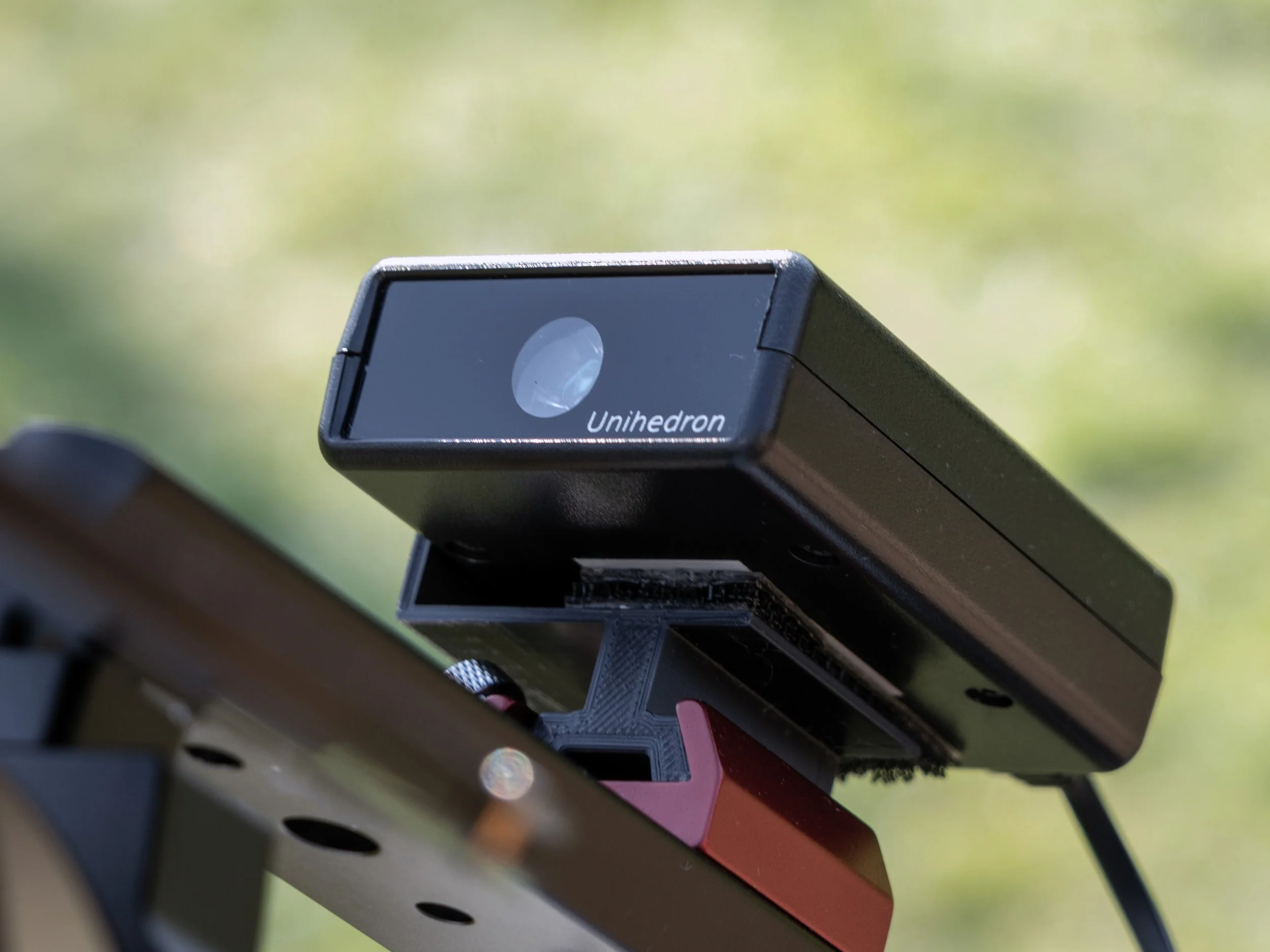
Falcon Rotator v2: Meticulously Crafted Camera Rotator with a Personality
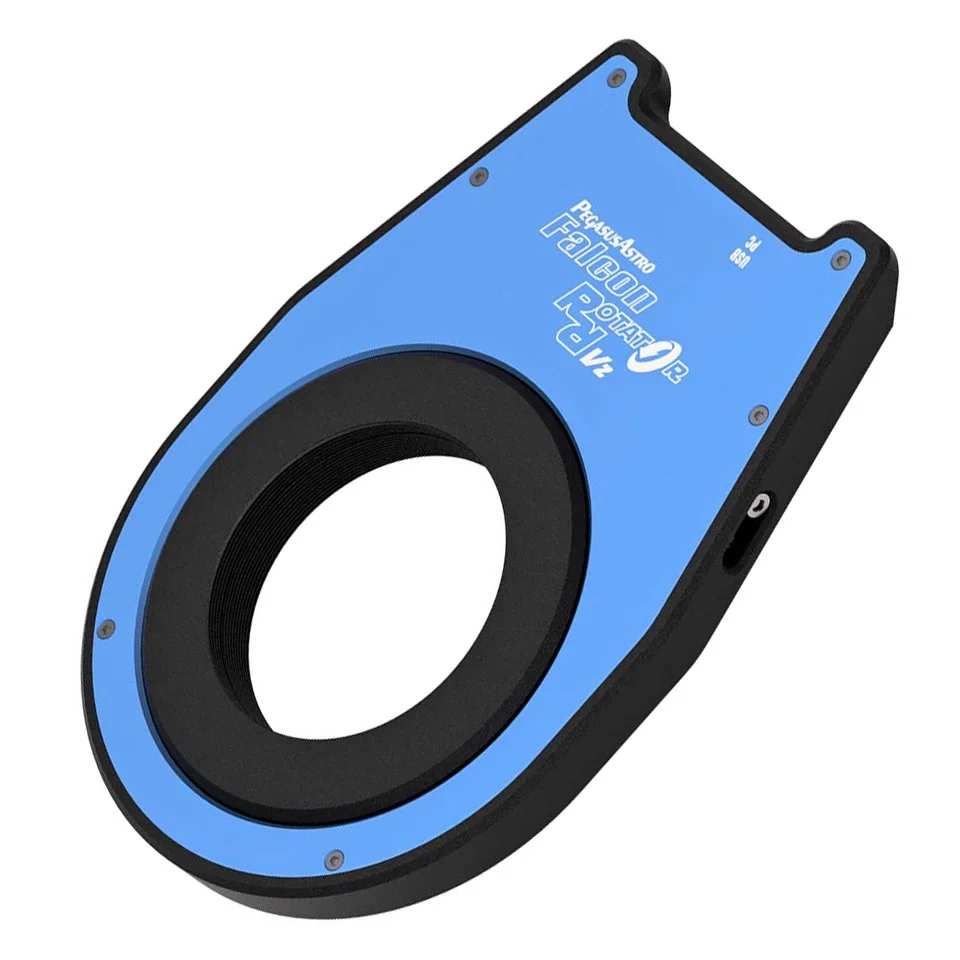
Pegasus Astro released the second generator of its camera field rotator, Falcon Rotator v2.
First Impressions: A Small Box, A Big Promise
There’s something rather satisfying about opening a well-made piece of astrophotography kit and the Falcon Rotator v2 by Pegasus Astro delivers that feeling almost immediately.
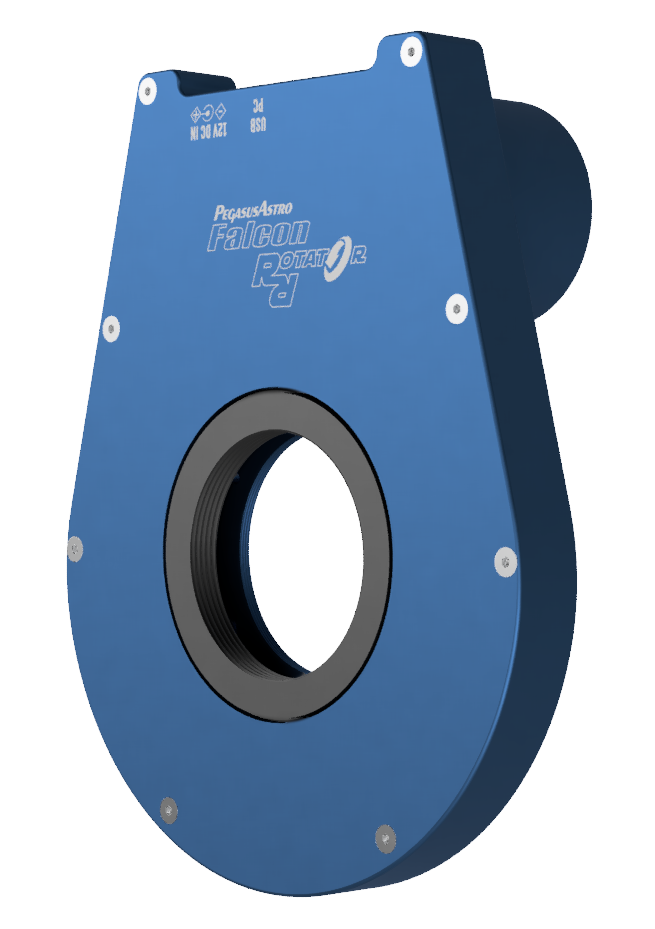
The first generation of Falcon Rotator (Discontinued)
It’s not flashy and it doesn’t try too hard. But the moment you take it out of the box, you notice the weight, the finish, the precision of the machining. The anodised aluminium has that unmistakable blue Pegasus Astro look: clean, slick, undeniably premium, and that distinction matters.
Everything about the Falcon Rotator v2 suggests careful engineering rather than simply building something that does what it says on the tin. The other thing that becomes immediately apparent is the incredibly large aperture on both sides of the rotator, an almighty M68 diameter. But wait! It comes with two M54 adapters, phewww.
This rotator was released off the back of the already premium first-gen Falcon Rotator by Pegasus Astro. The second edition of this rotator goes even further in terms of the quality of engineering, the finish and functionality. At this point, before even powering it on, you get the sense that this is a product designed by people who actually use astrophotography gear. The attention to details is incredible and you might (only might) start to justify the hefty price tag.
In 2025, we thoroughly enjoyed reviewing the WandererRotator Mini V2 by Wanderer Astro. You can see that review here with more information about field rotators and their role in astrophotography. On paper, the Falcon Rotator v2 boasts a different set of features and places itself in a different tier of camera rotators: The Big Aperture League. So let’s get right into.
Why Rotators Matter in Astrophotography More Than You Think:
This review is part of our comprehensive approach to test equipment that introduce automation to your astrophotography workflow. That matters if you want to not only control your setup remotely, but to do so precisely and accurately. Plus, before using a rotator, framing a target is one of those annoyingly manual parts of astrophotography that forces you to get out of your warm and cosy home to manually rotate the angle of your camera in order to get the perfect farming.
You loosen the manual rotator lock, rotate slightly, tighten, plate solve, repeat! And good luck remembering to tighten the rotator knob. In all honesty, it’s not the end of the world. But firstly, you have to be physically present next to the telescope to do that and secondly, it may take a few attemps to get it right and in the process, you may knock the setup or accidentally pull a cable.
The Falcon Rotator v2 removes all of that.
It allows you to treat framing as part of an automated imaging process, not a separate, manual task. Combined with plate solving, it becomes something you can automate entirely, something that just happens in the background. That’s why if you run a remote setup, having a camera field rotator is a must.
The interesting part is that once you’ve experienced that, it’s surprisingly hard to go back and that is the main selling point of Pegasus Astro’s new field rotator.
Other benefits of having a camera field rotator:
Mosaics become far easier to plan.
Multi-target sessions run seamlessly.
Perfect framing in remote observatories becomes a breeze.
Compact body. Big aperture. Slim profile.
Building on the success of the first model, the Falcon Rotator v2 brings major upgrades to the imaging train: a larger M68 aperture, a slimmer 16mm profile, USB-C single-cable operation, Wi-Fi support, native ASCOM Alpaca integration, and improved field de-rotation precision down to 5 arc-seconds. Despite weighing only 700g, it can support imaging trains up to 6kg with minimal flexure.
Design & Form Factor: Clever Where It Matters
What Pegasus Astro has done particularly well here is design, it’s slick, minimal and feels high-end. They have made it very clear that if you’re after budget astrophotography, this rotator is not for you
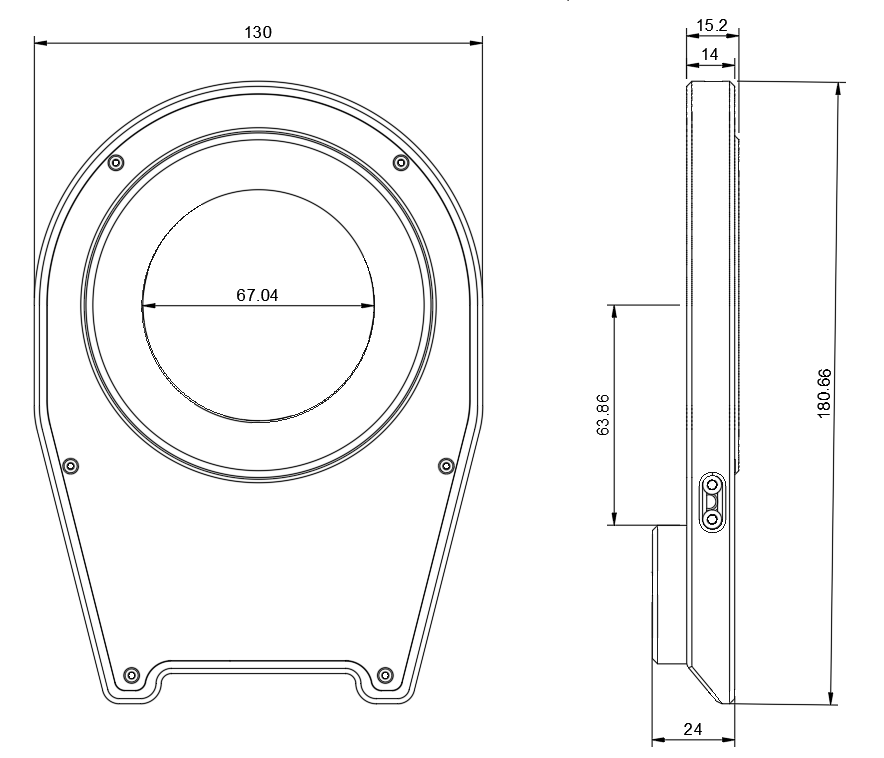
The Falcon Rotator v2 weighs 604g (1.33lbs)
The Falcon Rotator v2 is remarkably compact, with a backfocus of roughly 16mm, which makes it far easier to integrate than some competing rotators.
That might not sound like much, but in astrophotography, every millimetre matters. Your imaging train is already a delicate balance of spacers, filter wheel, off-axis guiding and adapters. So adding anything into that chain is usually an alarm that your backfocus could go out of whack.
But Pegasus Astro have anticipated that. Hence the relatively thin profile.
The M68 aperture on both sides is another thoughtful touch. It gives you confidence that even with larger sensors (full-frame or even large format), you’re not introducing unnecessary vignetting.
And then there’s the single-cable design. One USB-C connection handles both power and data, which sounds like a small thing, until you’ve wrestled with cable management at 2am in the dark, one less cable. Plus, the cable’s design is pretty unit, with folding USB-C and premium USB-2 ports.
In Use: Where It Starts to Shine
At the heart of this focuser lies, not its reliable and silent motor, but it large 68mm aperture which put it in a higher tier, comparable with WandererRotator Lite V2 and Primaluce Lab ARCO 3". These rotators all boast a large aperture.
Why Larger Aperture Matters
As astrophotography setups become more advanced, the aperture of a camera rotator matters far more than many realise. A larger aperture allows more light to pass cleanly through the imaging train, helping to reduce vignetting and improve edge illumination across the frame.
This becomes increasingly important when using full-frame and medium-format sensors, where smaller apertures can begin restricting the light path and negatively affecting corner performance.
Larger apertures also make a system more future-proof, offering greater flexibility for wider reducers, larger filter wheels, heavier imaging trains, and increasingly demanding automated observatory setups.
Once integrated into a setup and connected through software like NINA, the Falcon Rotator v2 begins to show its real value. Framing becomes precise, repeatable, predictable and more importantly, automated. It operated quietly and is quite fast.
Under the blue hood, a geared stepper motor with low backlash handles rotation, allowing the unit to lock accurately to a given position. The motor has been cleverly positioned away from the optical axis to ensure it does not interfere with your equipment.
There’s also something slightly surreal about watching your imaging rig adjust itself, rotating to a new angle without you touching anything. It’s a small moment, but one that really captures what modern astrophotography is becoming.
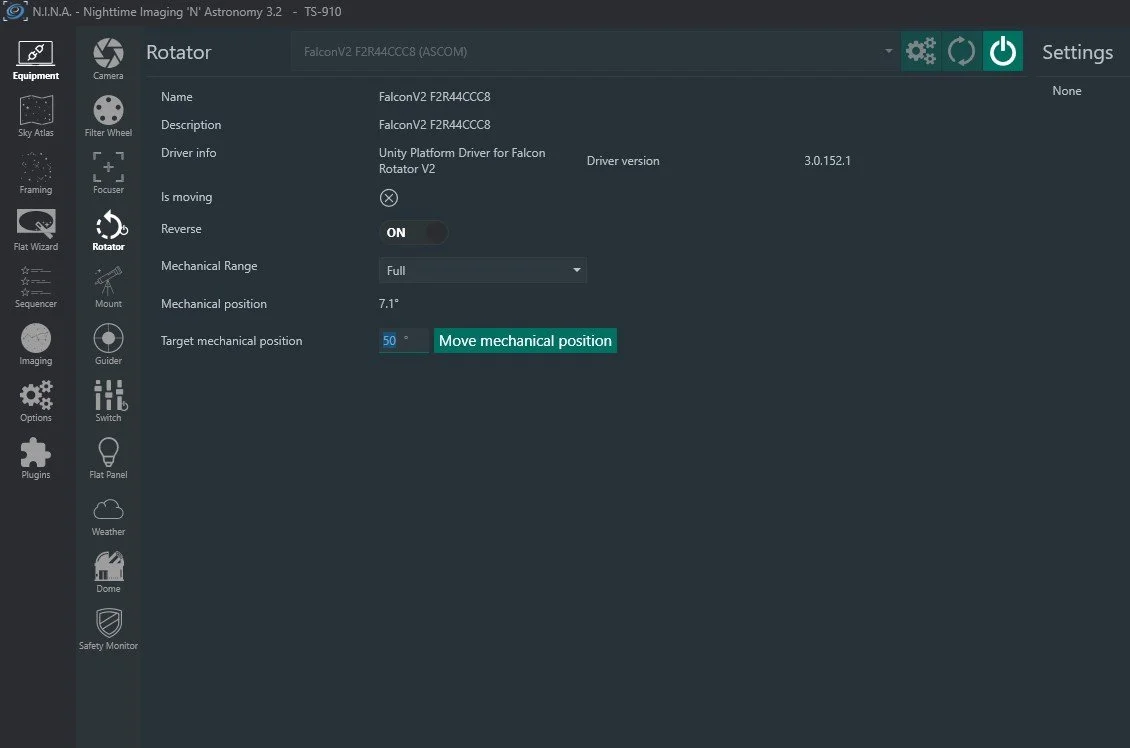
Running and controlling Falcon Rotator v2 in NINA is a joy. Using NINA’s Advanced Sequencer, this rotator can truly improve a fully automated imaging session.
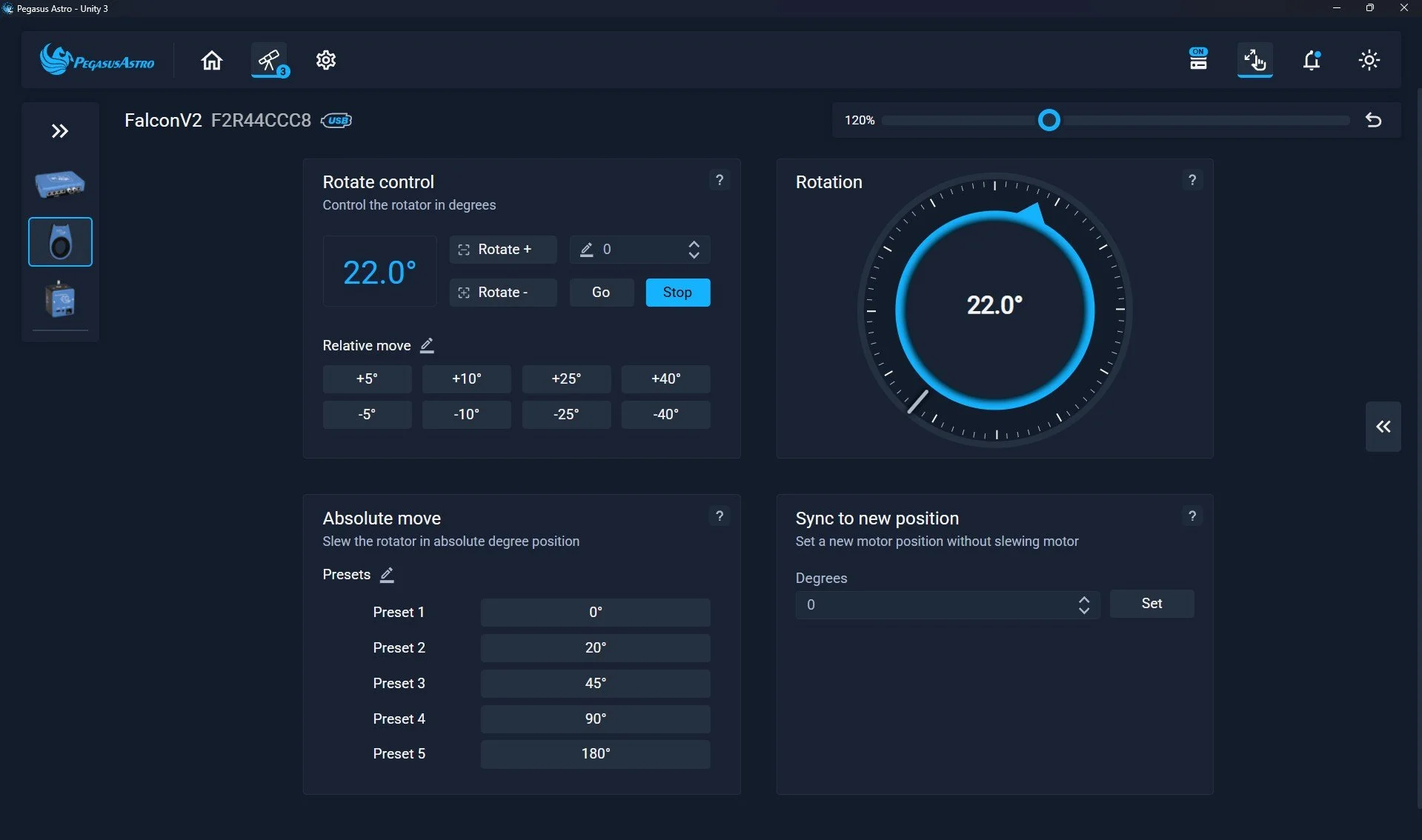
With Pegasus Astro’s dedicated software, Unity 3, you can control, monitor and upgrade the firmware of your Falcon Rotator.
Software & Integration: One of Its Strongest Features
Pegasus Astro has always been strong on integration, and the Falcon Rotator v2 continues that trend.
It works with:
ASCOM/ASCOM Alpaca
INDI
Pegasus Astro’s Unity Platform and NINA
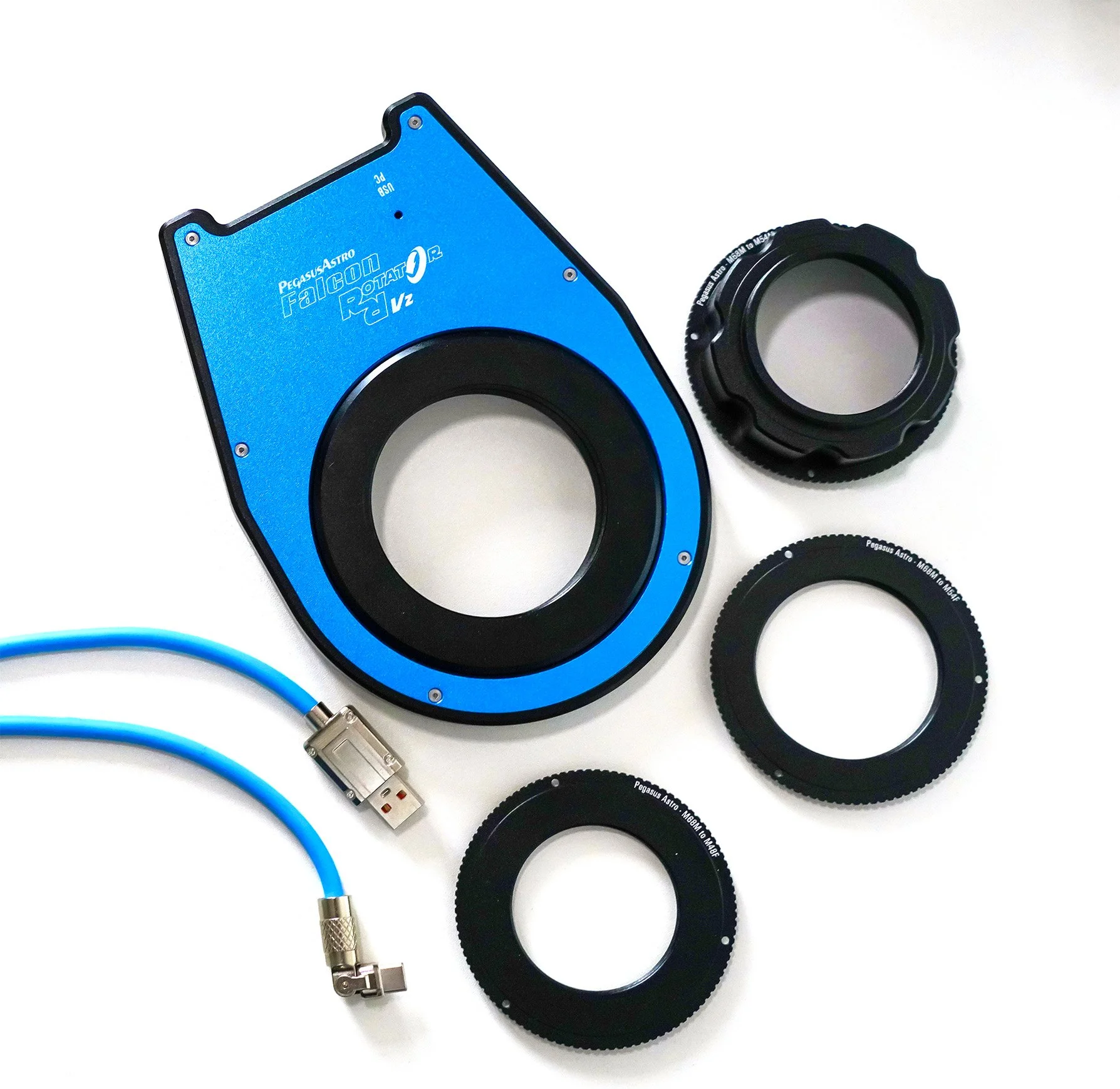
A well thought-out USB cable, two M68M to M54F Adapters and a spacer are included in Falcon Rotator v2.
The inclusion of Alpaca and Wi-Fi control adds another layer of flexibility, especially for remote setups.
Firmware updates are straightforward, and more importantly support from Pegasus Astro appears responsive, with users reporting issues being resolved through updates when needed. It’s important that you run the latest version of the Unity Platform software. Also, there are several important pieces of information in the user manual that you do not want to miss. Make sure to download the manual from here.

Theta Muscae by Michael Bouyer, using the Pegasus Astro Falcon Rotator v2 for his remote setup.
Performance in the Real World
For most setups, the Falcon Rotator v2 performs exactly as you’d hope. In our tests, the payload on the camera side of the rotator was approximately 2KG which includes Off-axis guider, Filter wheel, and a full-frame cooled camera. One aspect of this rotator that astrophotographers will appreciate is its one-cable-functionality. The cable will support both power and data transmission which helps to reduce the number of cables in your setup.
It rotates smoothly, lands on target angles accurately, and holds position without noticeable drift. The rated payload of around 6kg is generous enough for most (if not all) imaging setups. But exceeding the 6KG is not recommended at all as it may cause tilting and damage to your focuser.
The Subtle Feature That Makes a Difference: De-Rotation
One feature that often gets overlooked is field de-rotation. By fine-tuning the micro-step drive control of the motor, derotation can achieve an resolution as precise as 5 arc-seconds.
For those using Alt-Az mounts, the Falcon can continuously adjust the camera’s orientation to compensate for field rotation, effectively enabling longer exposures in setups where that would otherwise be impossible.
It’s not something everyone will use. But for those who do, it can be transformative.
Large-Aperture Rotators Comparison
Not all camera rotators occupy the same category. While compact M54 rotators prioritise portability and tighter backfocus budgets, these larger-aperture systems are designed for demanding imaging trains, larger sensors, and advanced automated observatory workflows.
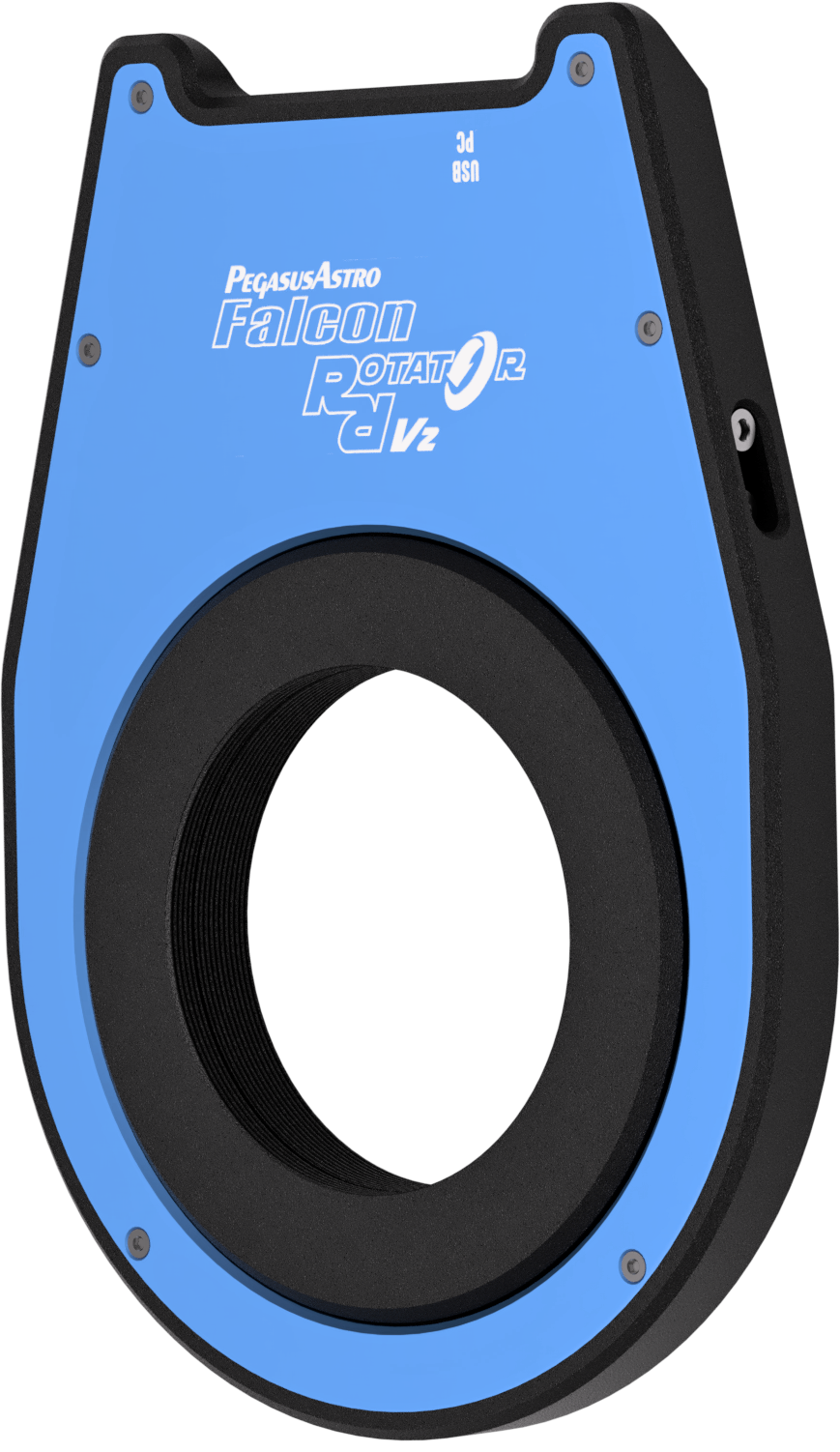
Falcon Rotator v2
Pegasus Astro
Greece
|
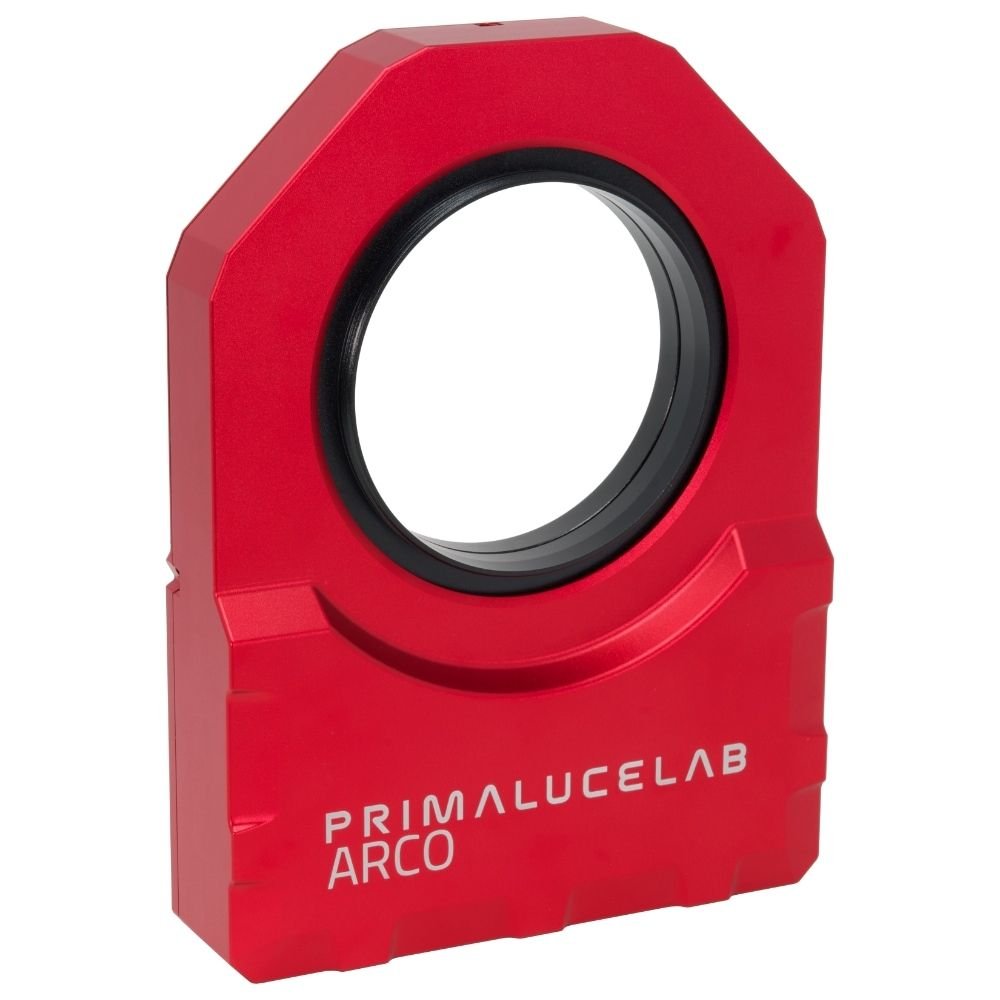
ARCO 3"
PrimaLuceLab
Italy
|
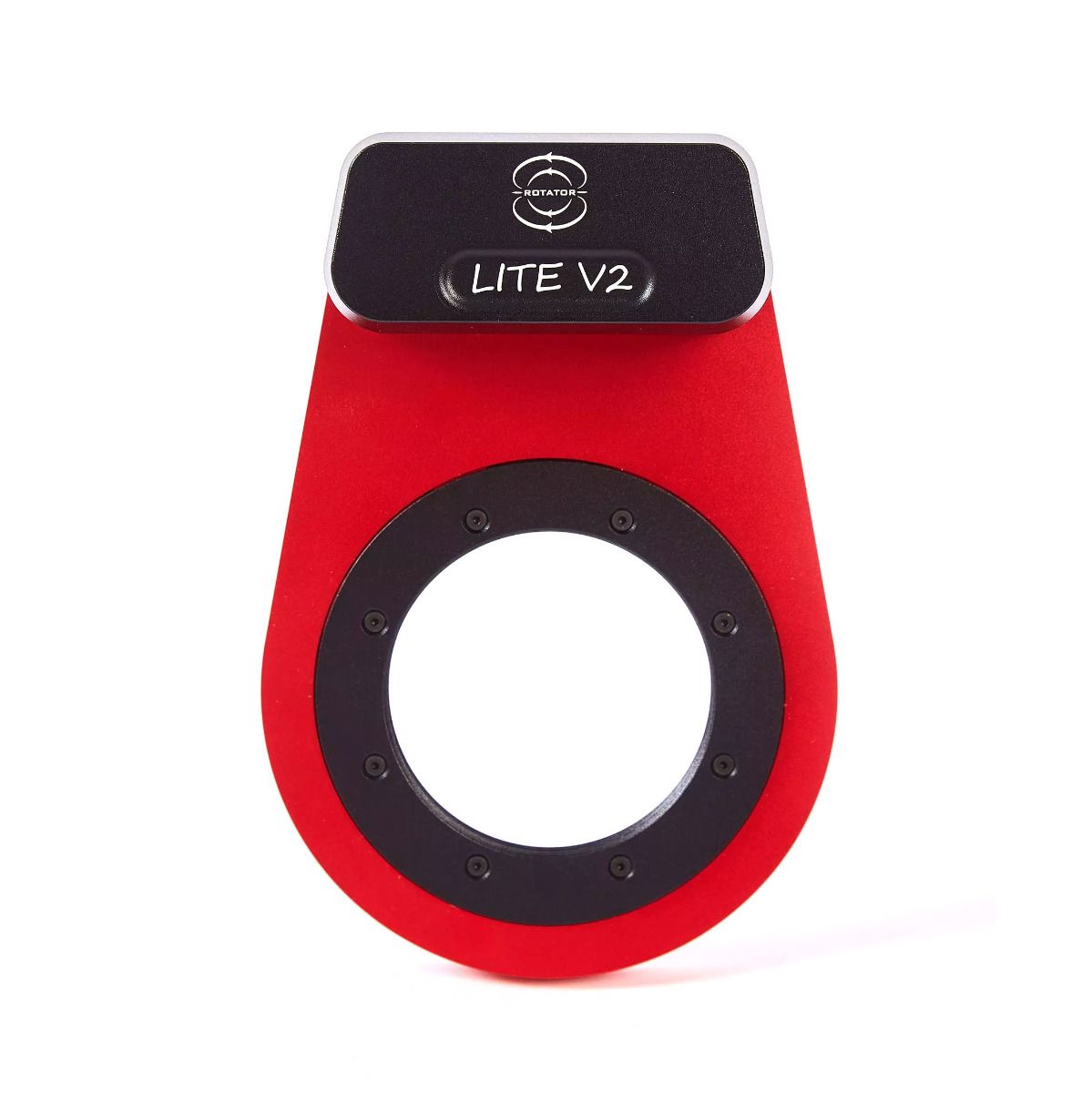
WandererRotator Lite V2
WandererAstro
China
|
|
| Design | Lightweight, low-profile design with built-in Wi-Fi | Heavy-duty observatory-focused ecosystem rotator | Incredibly thin and lightweight design |
| Aperture | 68mm | 76.3mm | 68mm |
| Backfocus | 16mm | 12mm | 23mm |
| Payload | Up to 6kg | Up to 5kg | Up to 6kg |
| Connectivity | Single USB-C cable | Single USB-C cable | USB2 + 12V DC |
| Weight | 610g | 1060g | 550g |
| Dedicated Software |
Unity Platform ASCOM, Alpaca & INDI |
PLAY ASCOM |
WandererEmpire ASCOM & INDI |
| Price | £659 (£429 during promotion) | £1,224 | £525 |
What we loved about the Falcon Rotator v2 by Pegasus Astro:
This product screams quality, precision and attention to details.
Easy setup and included adapters. These adapters add versatility, meaning that beginner setups, as well as more advanced ones, can benefit from the Falcon Rotator v2.
It operated via a single incredibly premium USB cable.
The Software integration is smooth and seamless, whether via its dedicated Unity Platform, NINA and even via web browser.
The Falcon Rotator v2 functions very well with high payload of up to 6KG.
What we would like to see improved:
Given the fact that this is currently the only rotator from Pegasus Astro, it would be nice to see a more budget-friendly alternative with a smaller aperture.
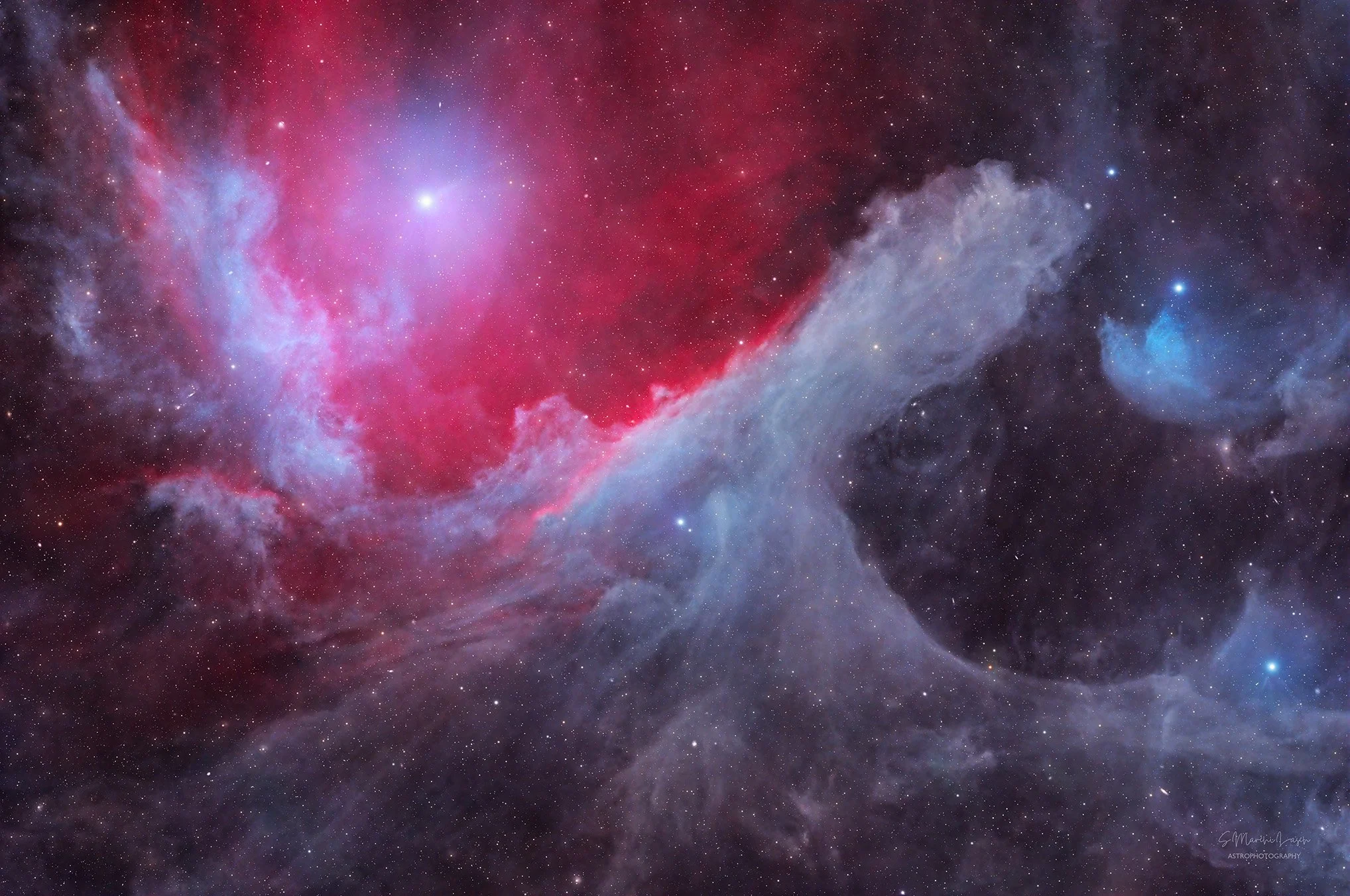
Sh2-1 in HaLRGB by Sebastian Marchi, using Pegasus Astro accessories including Falcon Rotator v2.
Verdict: Precision With Personality
The Falcon Rotator v2 is contributing to an ever-growing aspect of astrophotography: automation.
It’s a thoughtfully designed, well-built rotator that integrates beautifully into modern astrophotography workflows. Its compact form factor, strong software ecosystem, and clean design make it particularly future-proof for astrophotographers who will move to bigger optical setups along the way.
whilst the Falcon Rotator v2 isn’t for beginners, it rewards more seasoned astrophotographers with ease of use, and stability thanks to Pegasus Astro’s history of building a reliable eco-system. It doesn’t lock you into its eco-system. Updating its Unity Platform software and firmware is straightforward and hassle-free. It’s precise and operates quietly. It shows that the Greek company, Pegasus Astro has succeeded in delivering yet another reliable and rebust piece of astrophotography gear.
As long as it’s not trying to handle payloads of above 6KG (and why would you) and you have a tracking mount that isn’t pushed to its limit and can handle an extra 610g payload, the Falcon Rotator v2 is a joy to use. Within its comfort zone, it performs with quiet confidence.
And perhaps more importantly, it changes how you think about imaging. Not as a series of manual steps, but as an automated workflow that just works. You can purchase the Pegasus Falcon Rotator v2 from our affiliate link.
Make sure to visit our Reviews page to learn more about astrophotography gear that introduce automation to your workflow.
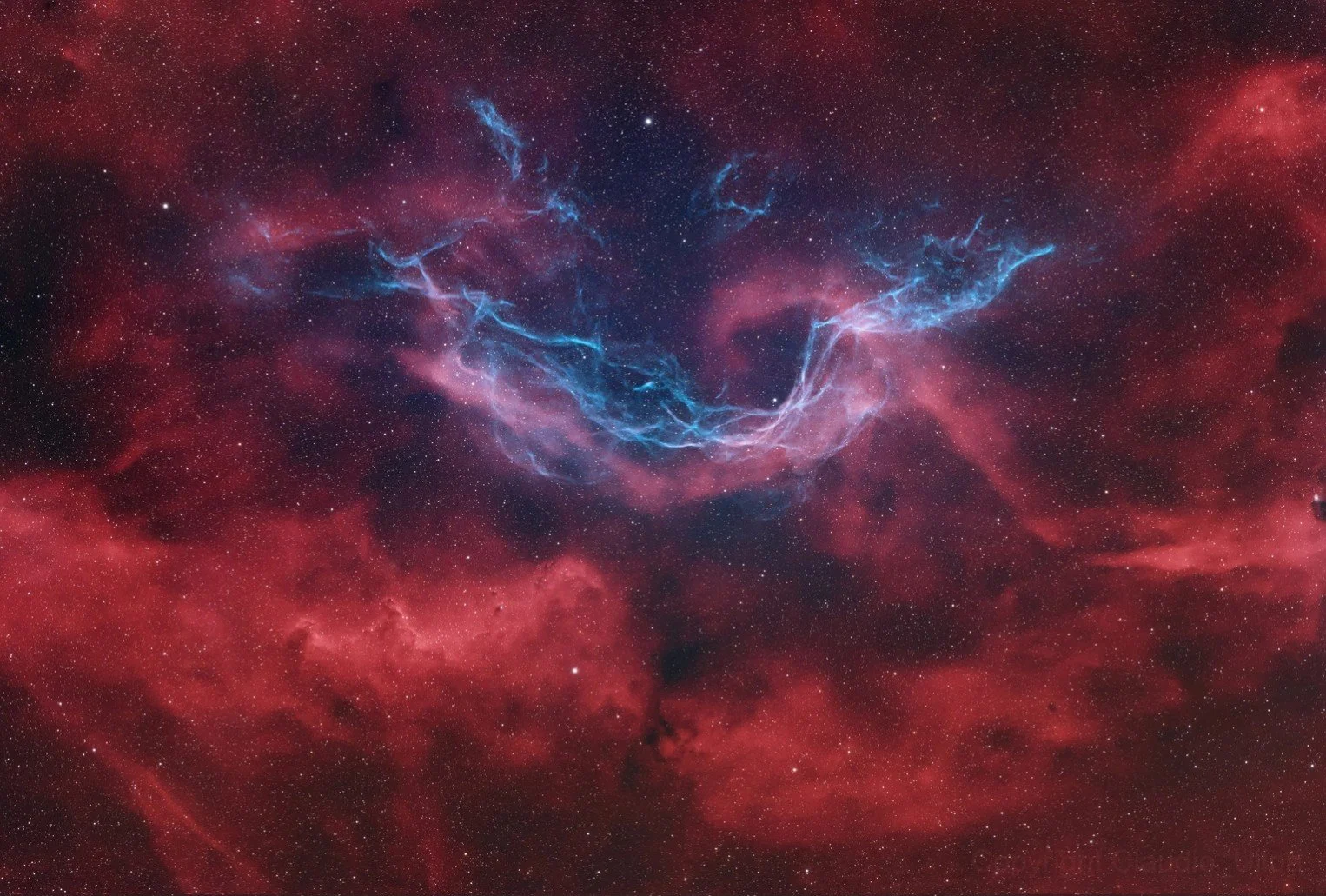
SNR G304.4-3.1 by Claudio Ulloa Saavedra, captured from a remote observatory, using the Falcon Rotator.