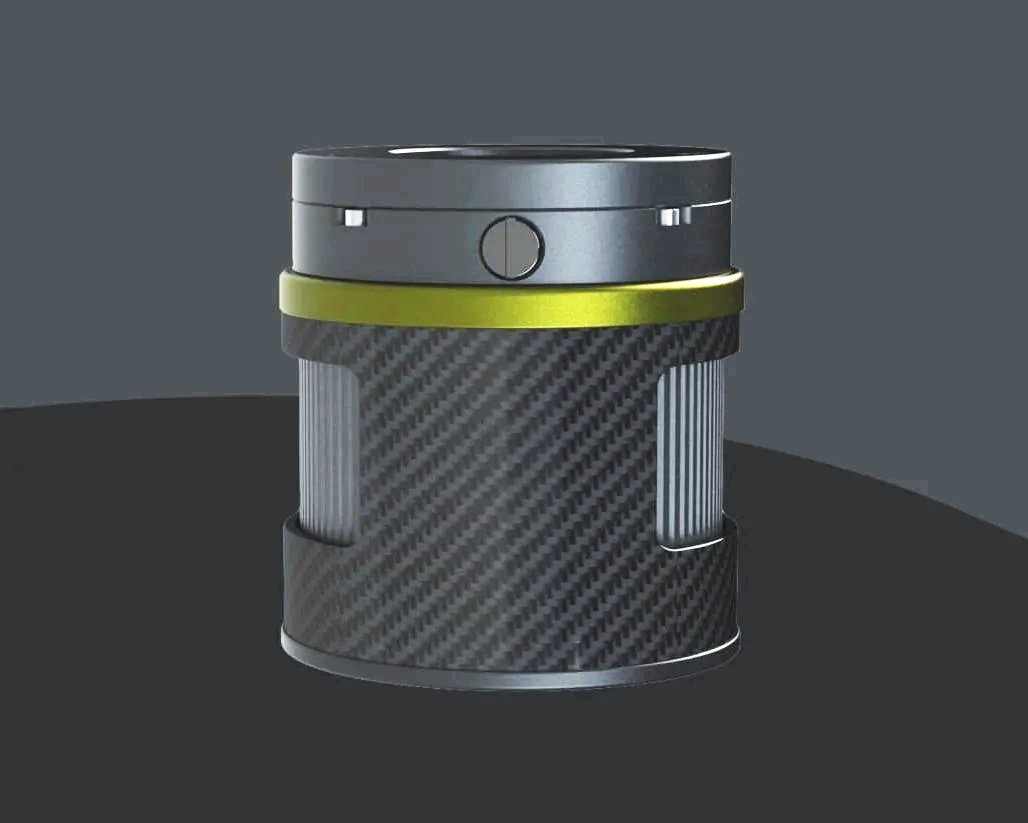
The Apollo 428M MAX Pro has a carbon fiber body.
There is a tendency in astrophotography to judge cameras by the same familiar checklist: sensor size, pixel count, read noise, cooling and price. Those specifications are important, but they do not always tell us what a camera is actually designed to do.
The Player One Astronomy Apollo 428M MAX Pro is a good example. Built around Sony's IMX428 monochrome global-shutter sensor, it combines a relatively large 1.1-inch sensor with 4.5μm pixels, 7.1MP resolution, two-stage TEC cooling and a surprisingly high 51fps full-resolution readout. It is also one of the more unusual cameras in the Player One range because its roots are firmly in solar imaging, while its specs make it capable of so much more.
That makes the Apollo 428M MAX Pro difficult to categorise as simply a solar/planetary camera or a deep-sky camera. It is better understood as a high-speed, high-sensitivity monochrome camera with a very different character from the rolling-shutter sensors that dominate much of cooled astrophotography cameras.
| Specification | Apollo 428M MAX Pro |
|---|---|
| Sensor | Sony IMX428 monochrome CMOS Sony Pregius third-generation global-shutter sensor |
| Sensor size | 1.1-inch format 14.5 × 9.9mm active area · 17.5mm diagonal |
| Resolution | 7.1MP · 3216 × 2208 pixels |
| Pixel size | 4.5μm |
| Shutter | Global shutter All pixels are exposed simultaneously |
| Full-resolution frame rate | Up to 51fps in RAW8 or 27fps in RAW16 At 3216 × 2208 over USB 3.0 |
| Hardware 2×2 binning | Up to 135fps in MONO8 or 109fps in MONO16 Manufacturer-quoted full well capacity up to 100ke⁻ in BIN2 mode |
| Peak quantum efficiency | Approximately 79% Manufacturer specification |
| Read noise | 5.5–1.4e⁻ HCG activates at gain 70; approximately 2.4e⁻ in HCG mode, with 1.4e⁻ quoted at gain 450 |
| Full well capacity | 25.3ke⁻ at native pixel size |
| ADC | 12-bit |
| Exposure range | 32μs to 2,000 seconds |
| Cooling and power | Two-stage TEC cooling Delta-T of 35–40°C below ambient in long-exposure mode; integrated adjustable anti-dew heater. Cooling power: 12V DC, up to 3A. A minimum 5A power supply is recommended and sold separately. |
| Dark current and amp glow | 0.08e⁻/pixel/second at −20°C 0.1e⁻/pixel/second at 0°C. Amp glow is present; Player One describes it as smooth and potentially easier to calibrate. |
| Connectivity and integration | USB Type-C · USB 3.0 / USB 2.0 512MB DDR3 buffer · 17.5mm back focus · 420g camera weight |
Specifications are based on Player One Astronomy's published product information and Apollo 428M MAX Pro manual. Actual frame rates depend on the connection, capture settings and recording drive. Read noise, cooling performance and other operating figures depend on settings and conditions.
Meet the Apollo 428M MAX Pro
Straight out of the box, the Apollo 428M MAX Pro makes a good first impression. The camera feels astonishingly light, yet solid and well-built, with a carbon fibre body, and comes with a wide range of accessories, more on that later.
Player One developed the Apollo family specifically for solar imaging, using monochrome Sony global-shutter sensors. The 428M MAX Pro sits at the top of that particular family, alongside the lower-cost passively cooled Apollo 428M MAX and the Apollo-M MAX Pro based on the lower-resolution 9μm-pixel IMX432. Player One launched the 428M MAX and MAX Pro in September 2024.
At its heart is Sony's IMX428, a 1.1-inch, 7.1MP monochrome CMOS sensor. The native resolution is 3216 × 2208, with a 17.5mm sensor diagonal and an image area of approximately 14.5 × 9.9mm. Player One quotes a peak QE of around 79%, a 25.3ke⁻ full-well capacity and read noise ranging from 5.5e⁻ to 1.4e⁻ depending on gain. You can see the full specs in the table above.
The following table gives you an idea of how large the IMX428 sensor is compared to a Micro 4/3 or APS-C sensor. The dimensions are enlarged for better demonstration, but the ratios are what you’re looking for.
Sensor Sizes, Overlaid
A proportional overlay of popular sensor sizes, using one ZWO astronomy camera from each class, with the Player One Apollo 428M MAX Pro and an iPhone 18 Pro main camera added for scale.
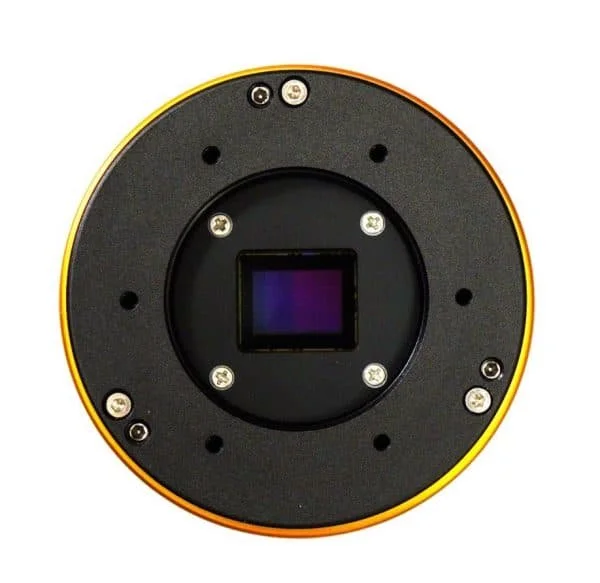
Apollo 428M MAX Pro uses Sony Pregius 3rd Gen sensor.
The IMX428 is not a new-generation BSI deep-sky sensor like the IMX533, IMX571 or IMX455. It belongs to Sony's third-generation Pregius family, where global shutter and speed were major priorities. That makes it capable of capturing large numbers of frames quickly. That is what makes this camera perfectly suitable for solar, lunar and planetary imaging.
Global shutter is the headline
A global shutter exposes all pixels simultaneously, whereas a conventional rolling shutter reads the sensor progressively from one region to another. For long-exposure deep-sky imaging, the difference may not be especially important. For solar, lunar, planetary and other rapidly changing scenes, it can be significant.
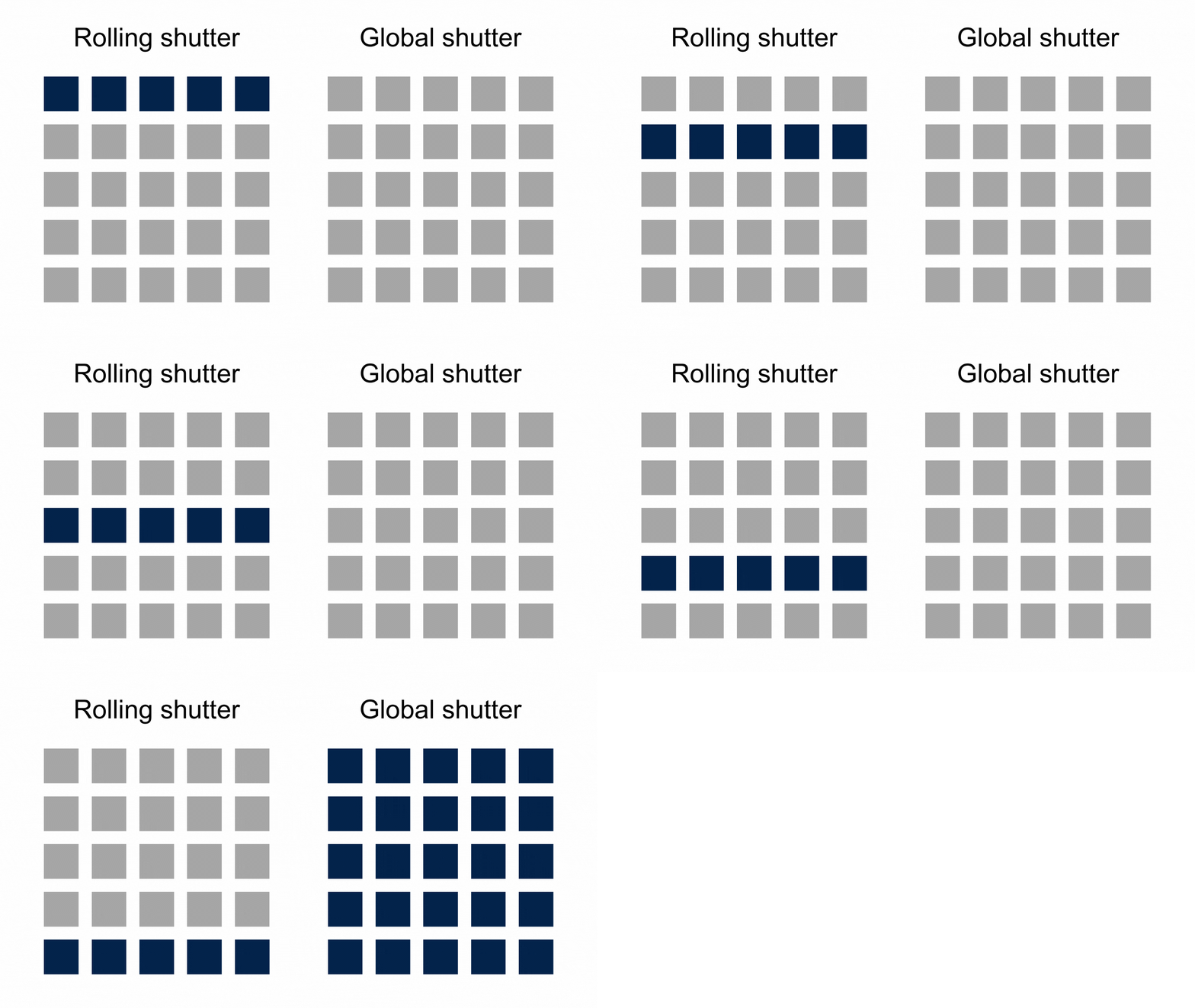
Functioning of rolling and global shutter, © blog.st.com
The Sun is an obvious example. Atmospheric turbulence is constantly changing the image, and solar features can evolve while thousands of frames are being captured. A global shutter removes the geometric distortion associated with sequential exposure and gives every pixel the same exposure timing.
The Apollo 428M MAX Pro can capture the entire 3216 × 2208 frame at up to 51fps in 10-bit RAW8, or 27fps in 12-bit RAW16 over USB 3.0. With hardware 2×2 binning, Player One quotes up to 135fps in MONO8 and 109fps in MONO16.
For solar lucky imaging, those numbers are far more than some fancy stats. They allow the imager to collect a large number of frames during fleeting periods of good seeing, before selecting and stacking the sharpest chunks of their data.
This is also why the choice of 4.5μm pixels is no coincidence. They provide considerably more spatial sampling than the 9μm pixels of the IMX432, while 2×2 binning effectively creates 9μm pixels and increases the quoted full-well capacity to around 100ke⁻.

Cooling is a game changer
The MAX Pro designation brings a major difference over the standard Apollo 428M MAX: active two-stage TEC cooling.
Player One specifies a Delta-T of approximately 35–40°C below ambient, with the precise figure dependent on operating conditions. The manufacturer recommends operating around 30–35°C below ambient for long-exposure work rather than simply pushing the cooler to its absolute limit. The cooling system and front-mounted anti-dew heater can both be controlled through the ASCOM interface.
For solar imaging, cooling may initially seem unnecessary. The Sun is bright enough that exposure times are generally short, so thermal noise is rarely the dominant problem. Player One presents the Apollo 428M MAX Pro as a cooled camera capable of DSO imaging, and the manual includes a 300-second dark frame example at gain 0 and −10°C. The company also acknowledges that the camera does exhibit amp glow, although it describes the glow as smooth and therefore relatively straightforward to calibrate. So this is not a modern zero-amp-glow deep-sky sensor. Therefore, calibration frames remain an inevitable part of the workflow when using this camera. The camera achieves all of that while weighting only 480g.

Photo by Astrospacesun1988
So, is it a deep-sky camera?
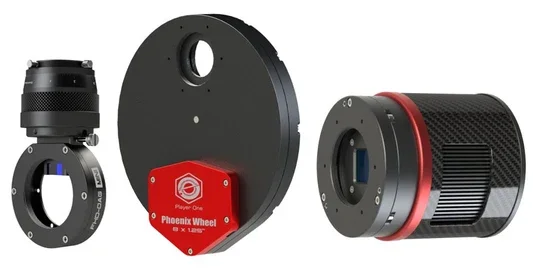
PlayerOne make a range of astrophotography gear, from cameras to filter wheels and off-axis guiding systems.
Yes, but with an important caveat.
The Apollo 428M MAX Pro can absolutely be used for deep-sky astrophotography. It has the necessary characteristics: a cooled monochrome sensor, long exposures up to 2,000 seconds, a respectable full-well capacity, high QE and low read noise at higher gain. It also has a standard 17.5mm back-focus distance and compatibility with Player One's Phoenix filter wheels and FHD-OAG systems.
But that does not mean it is automatically the go-to choice for conventional long-exposure deep space imaging. Modern sensors such as the IMX571 and IMX455 offer substantially higher resolution, larger overall image areas and excellent low-noise performance. They are designed from the outset around the requirements of modern deep sky imaging. The Apollo's advantage is its relatively large pixels, global shutter and high frame rate give it a different set of strengths.
That makes it an ideal camera for solar imaging, lunar imaging, planetary work, lucky imaging and anything that relies on short-exposure deep-sky applications, while still being capable of conventional DSO imaging.
It’s important to know where the strengths of this camera lie, because focusing purely on specifications can lead to the wrong conclusion. In this case, seven megapixels is modest by today's deep-sky standards, but 51fps global-shutter capture on a 1.1-inch monochrome sensor is a very different proposition.
A clever physical design
The camera itself weighs just 420g and uses a carbon-fibre housing to keep the mass down. That is a useful characteristic for solar and high-speed imaging rigs, where the camera may be mounted behind a substantial filter system, Barlow or solar telescope. The body is 78mm in diameter and the specified back-focus distance is 17.5mm.
Player One has also included both front three-point and rear four-point sensor-tilt plates. The latter is particularly useful when the camera is integrated into an imaging train containing a filter wheel, filter drawer or off-axis guider, where access to the sensor tilt adjustment can otherwise become awkward.
This is a small but meaningful sign that the camera has been designed for people who are likely to build fairly sophisticated optical systems around it.
The rear panel provides two USB Type-C connections, with the principal data connection supporting USB 3.0, alongside a 12V DC input for the cooling system. The internal 512MB DDR3 buffer is intended to stabilise data transmission and reduce dropped frames, particularly during high-speed acquisition.
There is also a practical advantage to the camera's architecture: it can operate without the external 12V cooling supply as an uncooled camera, using the main USB connection alone.
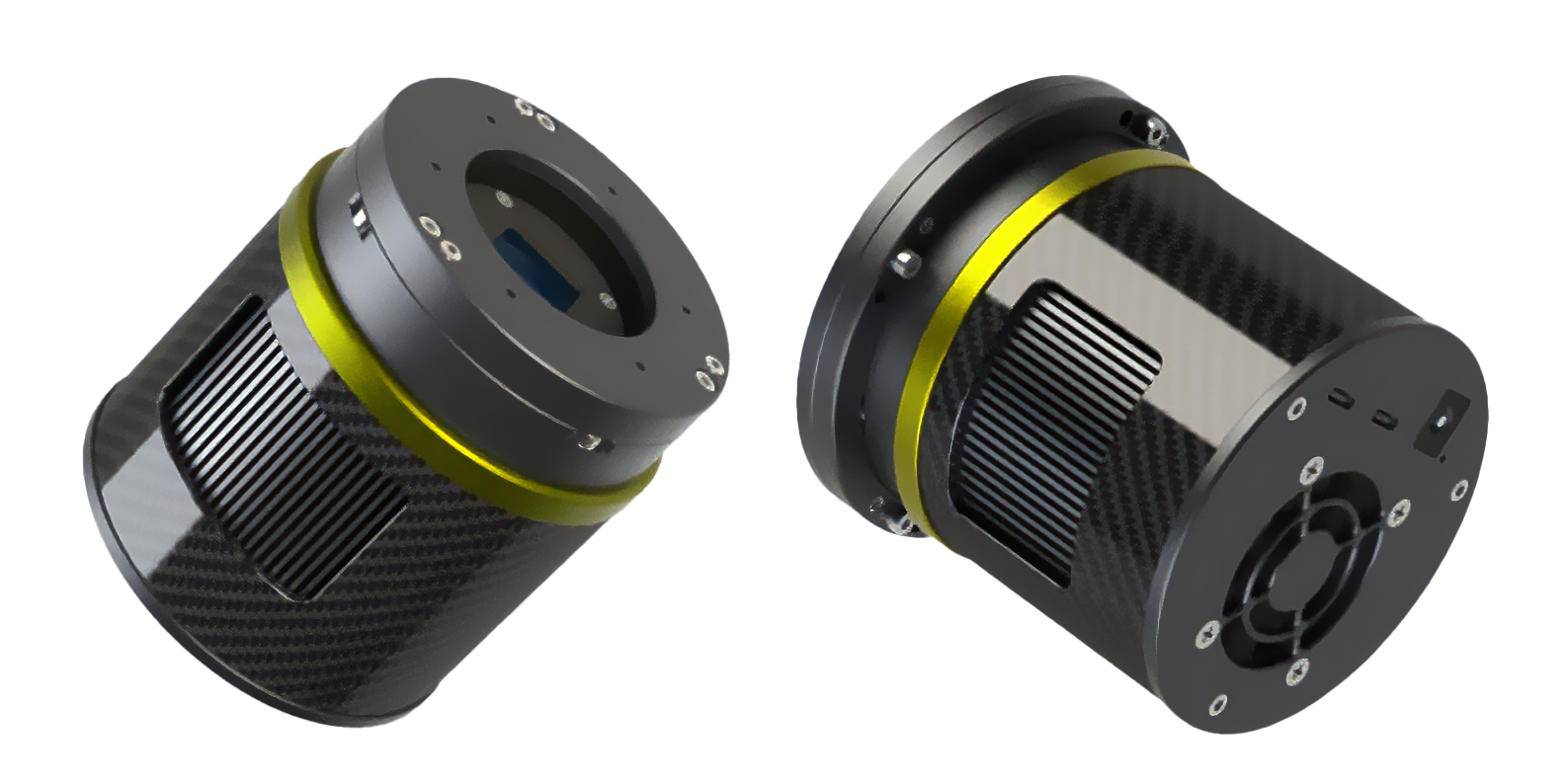
Apollo 428M MAX Pro benefits from both front and rear tilt plates.
The numbers look particularly good at high gain
The Apollo 428M MAX Pro uses an automatic HCG mode that activates at gain 70. Player One quotes read noise of approximately 2.4e⁻ in HCG mode and as low as 1.4e⁻ at gain 450.
These figures are impressive, although they should be interpreted in context. Read noise is only one component of camera performance, and a quoted minimum at a particular gain does not mean that gain 450 is the ideal setting for every target.
The camera's 25.3ke⁻ full well at its native configuration is also relatively modest compared with some larger-pixel deep-sky sensors. The hardware 2×2 binning mode changes that substantially, with Player One quoting up to 100ke⁻ full well.
This gives the Apollo something rather unusual: the ability to move between a relatively high-resolution 4.5μm configuration and a much larger effective pixel configuration depending on the imaging problem.
Who is the Apollo 428M MAX Pro actually for?
The obvious answer is the serious solar imager, and that is where the camera makes the strongest case for itself.
A monochrome 1.1-inch global-shutter sensor, 4.5μm pixels, high frame rate and active cooling make a compelling combination for high-resolution solar work, particularly when paired with a suitable H-alpha system or other properly configured solar telescope.
The camera also makes sense for astrophotographers who want one specialist camera capable of moving between solar, lunar, planetary and selected deep-sky applications. Its global shutter and fast readout make it particularly attractive where lucky imaging is part of the workflow.
It may not be the clear choice as a first-choice general-purpose deep-sky camera for somebody primarily interested in galaxies, nebulae and broadband or narrowband long-exposure imaging. In that role, a modern 16-bit BSI sensor such as the IMX571 or IMX455 offers a more obvious route to high-resolution deep-sky imaging. That is not a criticism of the Apollo. It is actually the point. It just means that this camera’s primary mission lies elsewhere. So it’s important to recognise where the IMX428 can shine.
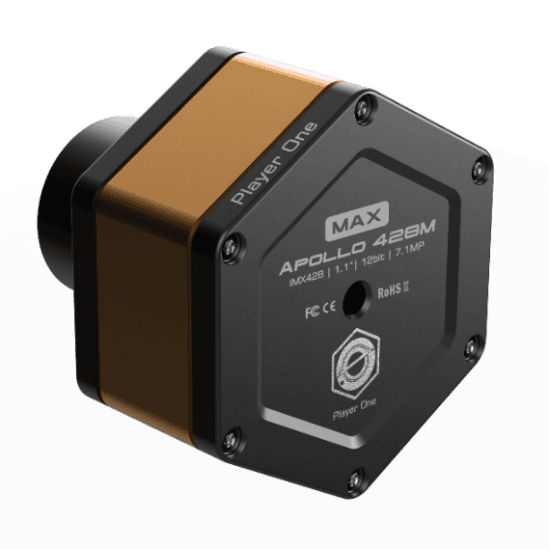
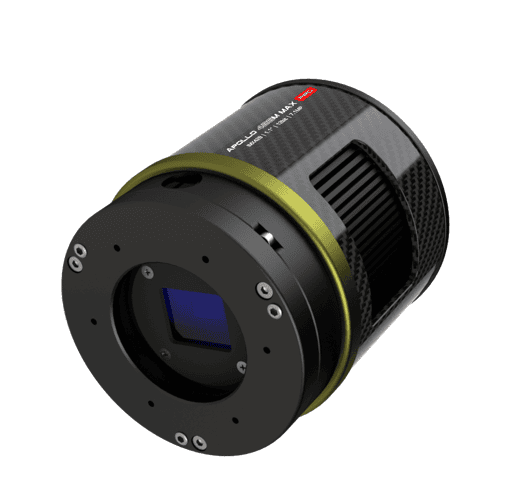
One key point is the two variations of this camera: Apollo 428M MAX and Apollo 428M MAX Pro, both using the IMX428 sensor, but with some differences:
| Difference |
|
|
|---|---|---|
| Cooling | Passive No TEC cooling | 2-stage TEC 35–40°C below ambient |
| DDR3 buffer | 256MB | 512MB |
| USB connection | USB 3.0 Type-B connector | USB 3.0 USB-C data connector |
| Sensor tilt | Sensor Tilt Plate | Front 3P and Rear 4P tilt plates |
| Back focus | 12.5mm | 17.5mm Designed around more conventional imaging-train configurations |
| Accessories | Basic camera package 1.25″ nosepiece, USB 3.0 cable, ST4 cable, cap, blower and tools | Expanded imaging package Includes 1.25″ nosepiece, multiple USB cables, caps, tilt plate, extension tubes, step-up ring, tools and semi-hard case |
| Price | $799 Optional active cooling module for an extra $168 | $999 |
Who are Player One Astronomy
Founded in June 2020 and based in Suzhou, China, Player One Astronomy is a relatively young manufacturer specialising in astronomical cameras and imaging accessories. The company initially established itself with cameras for planetary and lunar imaging before expanding into solar photography, autoguiding and cooled deep-sky cameras. Its growing product range now includes cameras built around Sony CMOS sensors, electronic filter wheels, filters and other imaging accessories. With a strong emphasis on research and development, Player One has expanded rapidly, offering equipment for both amateur astrophotographers and more experienced imagers.
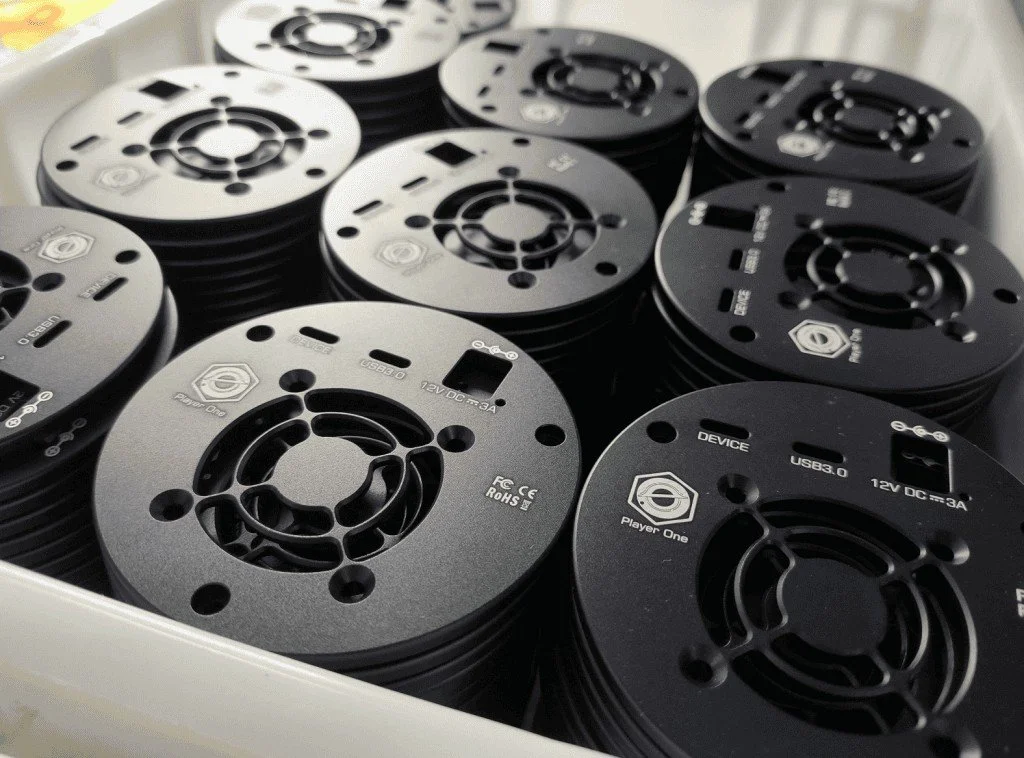
Player One Astronomy is fast becoming a main player amongst astrophotographers.
The Apollo philosophy
Astrophotography cameras have increasingly converged around a handful of familiar Sony sensors, with manufacturers competing on cooling, electronics, software and mechanical implementation. The Apollo takes a different route by putting a relatively specialised global-shutter sensor at the centre of the design. That of course makes it less of an obvious all-rounder and more of a tool for a particular kind of imager.
It also gives Player One an interesting approach within its wider camera range. The company's Player One Zeus-M Pro, based on Sony's IMX455, occupies an entirely different part of the market as a full-frame, very similar to ZWO ASI6200MC/MM Pro high-resolution deep-sky camera, while the Poseidon-C Pro benefits from an APS-C sensor, in direct comparison with the ToupTek ATR2600C Astronomy Cooled Camera.
And perhaps that is the best way to view the Apollo: not as a cheaper ZEUS, nor as a conventional cooled mono camera with an unusual sensor, but as a camera designed around the moments when speed, global shutter and sensitivity matter more than simply having more pixels.
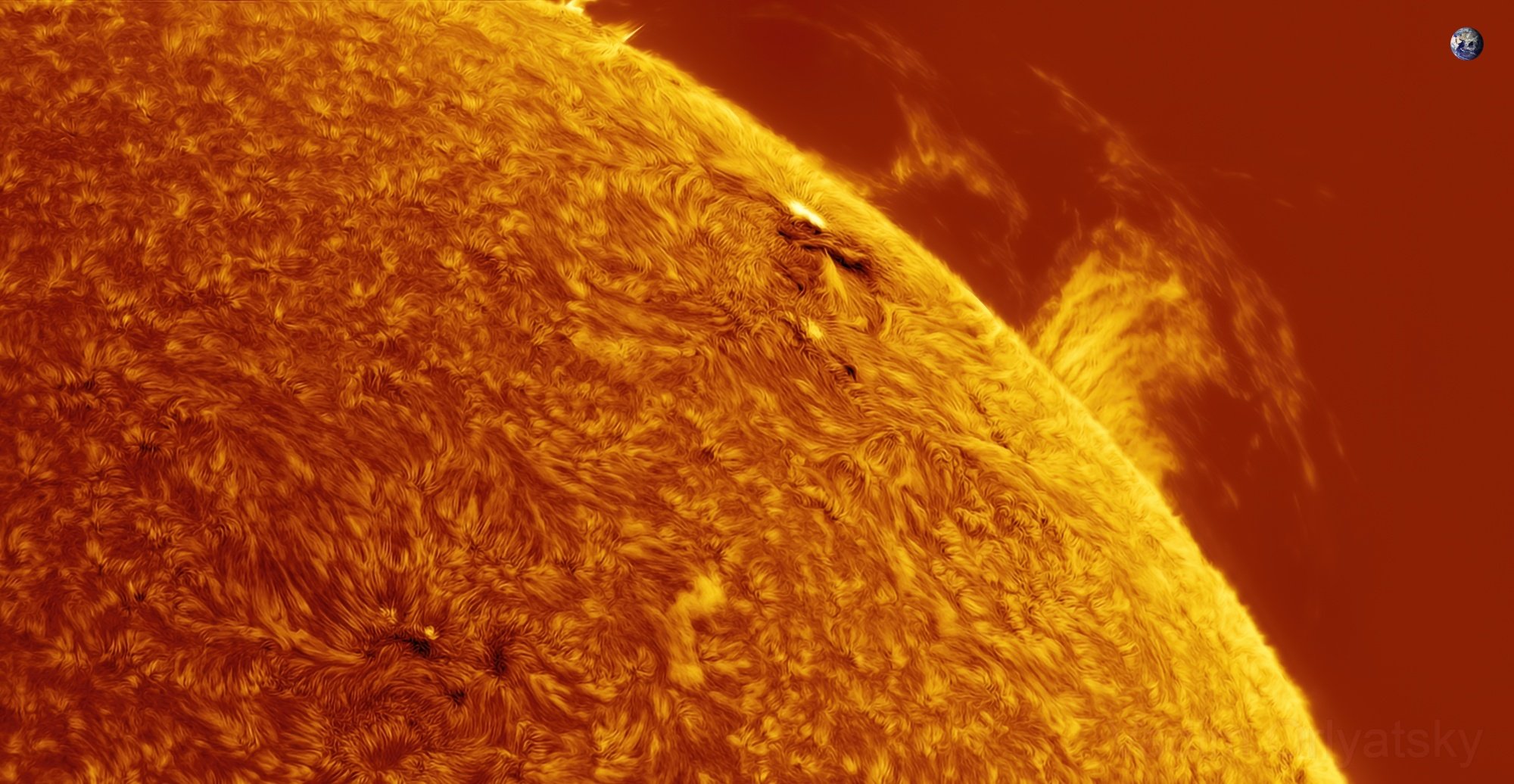
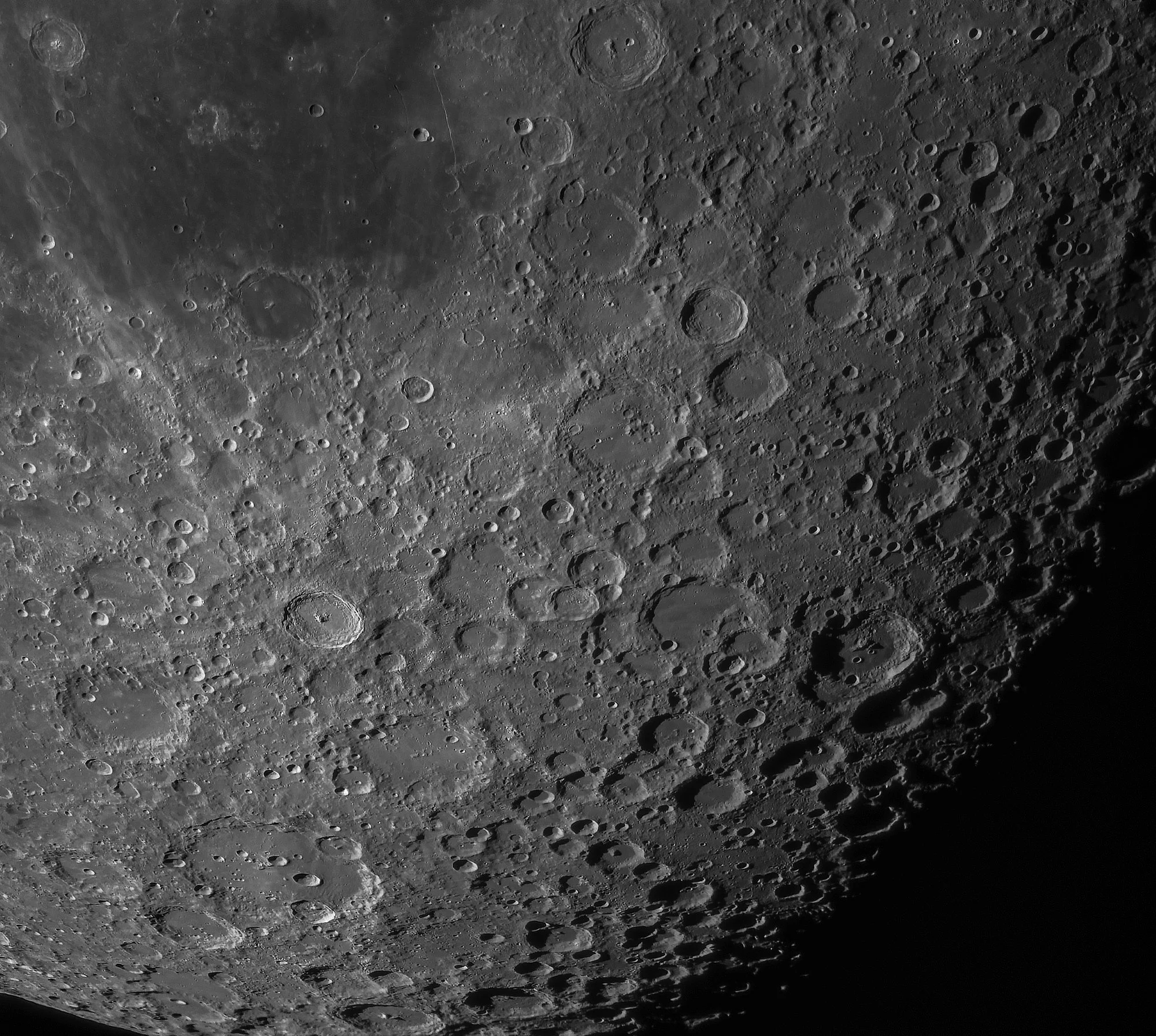
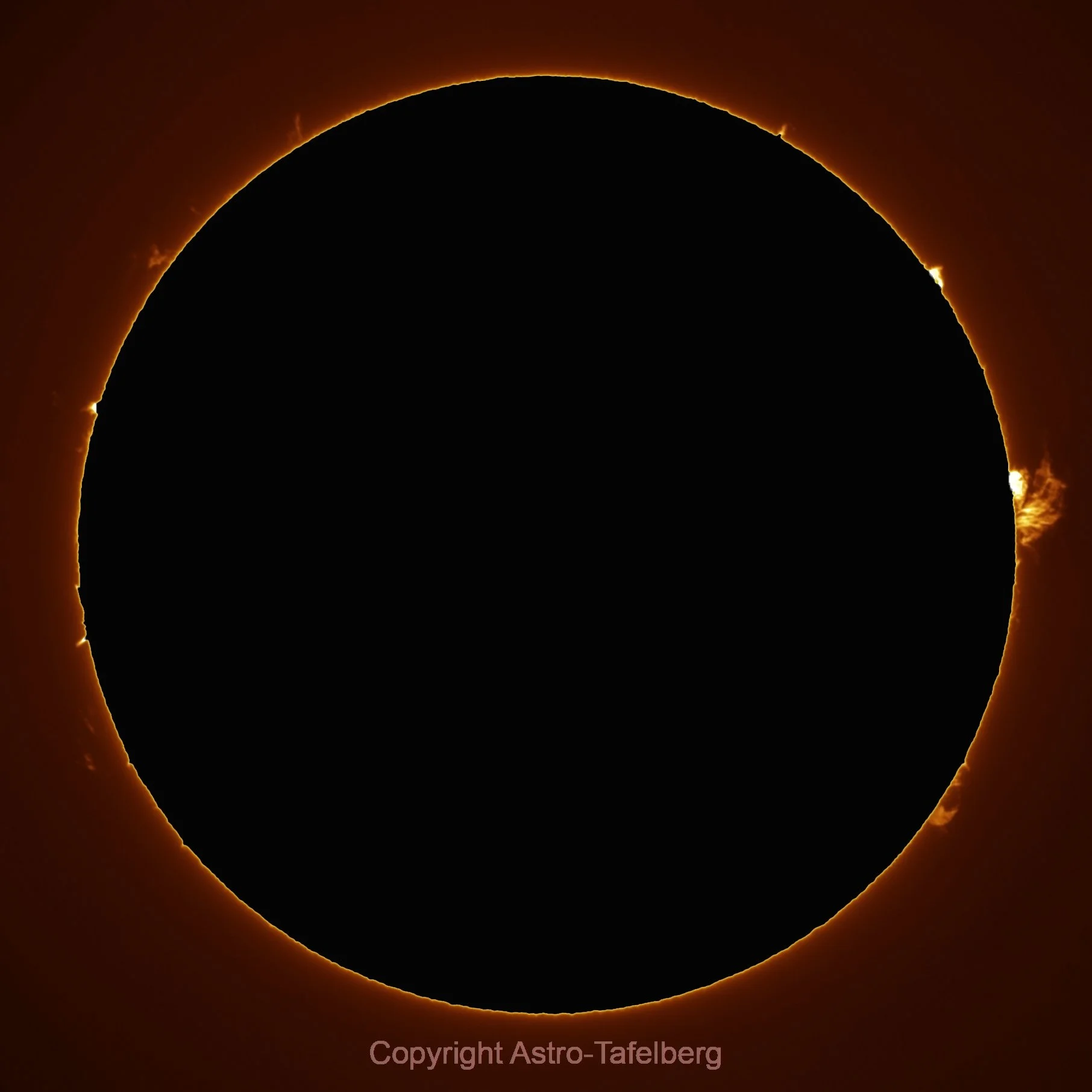
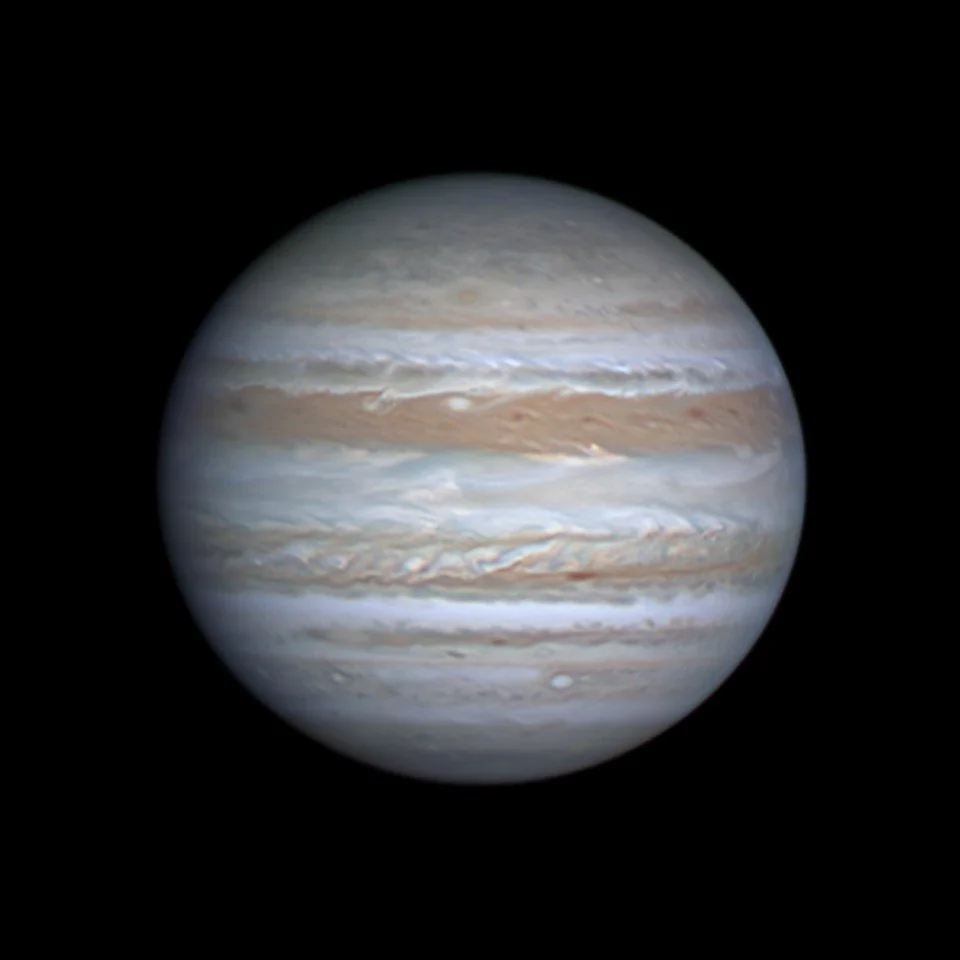
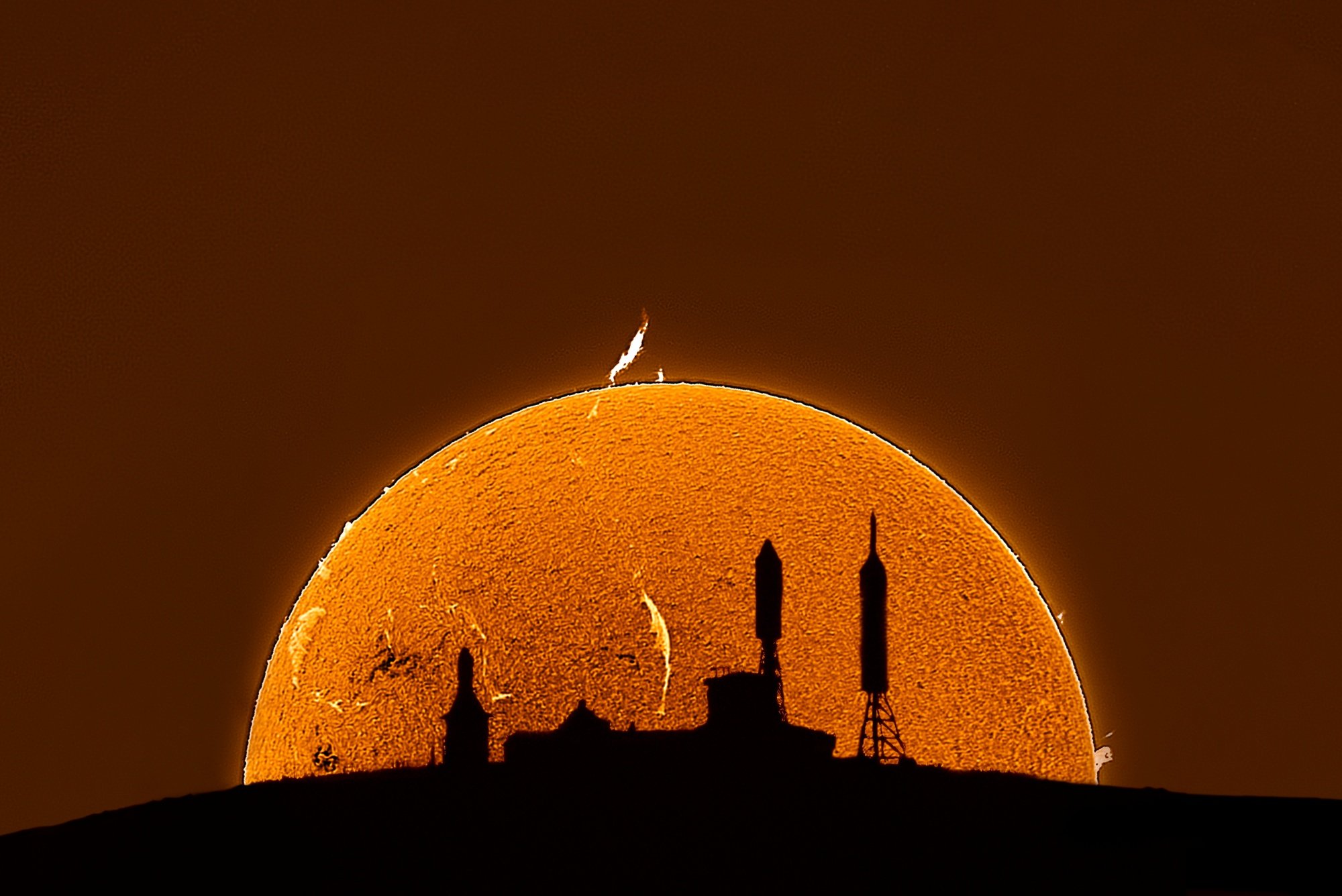
The following images were captured using the Apollo 428M MAX Pro by PlayerOne Astronomy:
Our verdict
The Player One Astronomy Apollo 428M MAX Pro is not a standard, all-in-one camera. Its 7.1MP IMX428 sensor will not win a specification-sheet battle against today's high-resolution deep-sky cameras, and its 12-bit architecture and visible amp glow remind us that this is not a modern flagship DSO platform. But judged against what it was designed to do, the picture changes completely.
The combination of global shutter, 4.5μm pixels, 51fps full-resolution capture, 2×2 binning, two-stage TEC cooling, anti-dew heating, sensor tilt adjustment and a 512MB buffer creates a camera with a very specific character. For solar astrophotography, that character is particularly compelling. For lunar, planetary and lucky-imaging applications, it becomes equally interesting.
What we particularly liked about this camera package, was the inclusion of a generous selection of accessories, from installation tools, spacers and air blower to high quality cables and camera bag. Player One really didn’t cut any corners on the accessories. Their recommended 12V 5A Power Supply is not included and must be purchased separately.
At the time of writing, Player One lists the Apollo 428M MAX Pro at £800, depending on the purchase configuration. Whilst it might not immediately seem that this is good value for money, it’s worth asking whether its particular combination of global shutter, high frame rate, large 4.5μm pixels and active cooling solves the problems you actually encounter at the telescope.
For an astrophotographer solely invested in deep-space imaging, this may not be the obvious choice for your one and only camera. But it can do something that many more conventional cameras cannot. The value of Apollo 428M MAX Pro lies somewhere beyond the seven-megapixel sensor or the 1.1-inch sensor size.
Some reviews may include affiliate links. Purchasing through them will support Astromaniac Magazine at no additional cost to you and does not influence our impartiality and editorial independence. Find out about our affiliates and partners here.