PixInsight Through the Years: How the Astrophotography Landscape Is Changing
Recent changes to PixInsight, growing competition and rumours surrounding some of its most popular third-party tools have sparked an unusually heated debate across the astrophotography community. PixInsight has now responded with an open letter of its own. Strip away the social-media noise, though, and the situation is more complicated than either side would have you believe.

The Unseen Challenges Of Life On The Moon
For the first time since the Apollo era, humans are preparing not just to visit the Moon, but to live and work there for weeks, months – and eventually years.

Molecules Found In Martian Rock Hint At Ancient Life
A new study of carbon-based molecules in a Martian rock offers new hints about the possibility that the red planet once hosted life. The researchers considered a range of possible processes that could have produced the molecules they found.

Wormholes May Not Exist – We’ve Found They Reveal Something Deeper About Time And The Universe
Wormholes are often imagined as tunnels through space or time — shortcuts across the universe. But this image rests on a misunderstanding of work by physicists Albert Einstein and Nathan Rosen.

Could The First Images From The Vera Rubin Telescope Change How We View Space For Good?
We are entering a new era of cosmic exploration. The new Vera C Rubin Observatory in Chile will transform astronomy with its extraordinary ability to map the universe in breathtaking detail. It is set to reveal secrets previously beyond our grasp. Here, we delve into the first images taken by Rubin’s telescope and what they are already showing us.
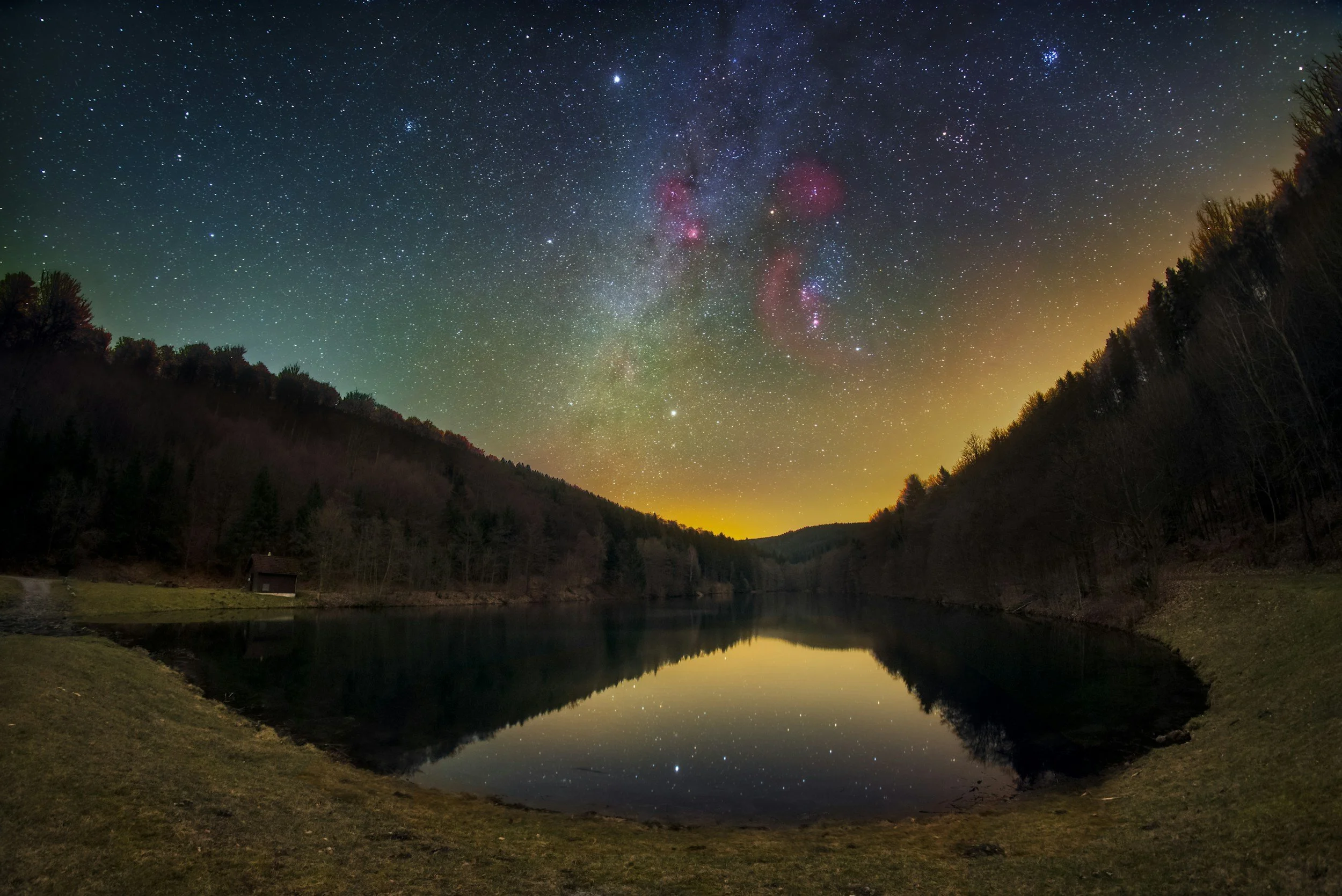
The Big Seven: Why Numbers Matter in Astrophotography
A beautiful astrophotograph can hide a surprising amount of information. Behind every sharp star, clean background and faint piece of nebulosity is a set of numbers that can tell you what happened during the exposure. While the beauty of a final image might capture hearts, it’s the data behind the scenes that determines its quality. From HFR to RMS, SQM to Star Count, these numbers are the silent narrators of your night under the stars.

A Real Treat for Skywatchers: Rare Planetary Parade
On February 28, 2025, spave enthusiasts are in for a rare celestial treat: a "planetary parade" featuring seven planets—Mercury, Venus, Mars, Jupiter, Saturn, Uranus, and Neptune, visible in the night sky simultaneously. This extraordinary alignment won't occur again until 2040, making it a must-see event for astronomy enthusiasts.

The Earliest Galaxies Formed Amazingly Fast After The Big Bang. Do They Break The Universe Or Change Its Age?
The James Webb Space Telescope (JWST) is the largest and most powerful space telescope built to date. Since it was launched in December 2021 it has provided groundbreaking insights. These include discovering the earliest and most distant known galaxies, which existed just 300 million years after the Big Bang.

Light Pollution Has Cut Humanity’s Ancient Connection With The Stars – But We Can Restore It.
Humans are naturally afraid of the dark. We sometimes imagine monsters under the bed and walk faster down unlit streets at night. To conquer our fears, we may leave a night light on to scare away the monsters and a light over the porch to deter break-ins.

A New Generation of Telescopes Will Probe The ‘Unknown Unknowns’ That Could Transform Our Knowledge of The Universe
In recent decades, we’ve learnt huge amounts about the universe and its history. The rapidly developing technology of telescopes – both on Earth and in space – has been a key part of this process, and those that are due to start operating over the next two decades should push the boundaries of our understanding of cosmology much further.