ZWO ASI6200MC Pro: The Full-Frame Promise In Astrophotography
At the heart of the ASI6200MM/MC Pro, sits Sony’s 61 megapixel back-illuminated IMX455 CMOS sensor.
The Full-Frame Promise
There is a particular kind of temptation in astrophotography that arrives the moment you begin to outgrow your first serious camera, cooled, astronomy dedicated AND RED.
Cleaner data, lower noise, sharper stars, cleaner calibration frames and more resolution? What is not to like? The bigger, the better, right? An incredible full-frame 16-bit sensor… That is the promise of the ZWO ASI6200MC Pro.
ZWO’s 61.2-megapixel, full-frame, one-shot-colour deep-sky camera built around Sony’s IMX455 sensor. On paper, it offers almost everything an ambitious astrophotographer might be after: a huge 36mm x 24mm imaging area, tiny 3.76µm pixels, native 16-bit ADC, low read noise, zero amp glow, sensor cooling, high quantum efficiency and the convenience of colour imaging without filters and filter wheels. It sounds perfect.
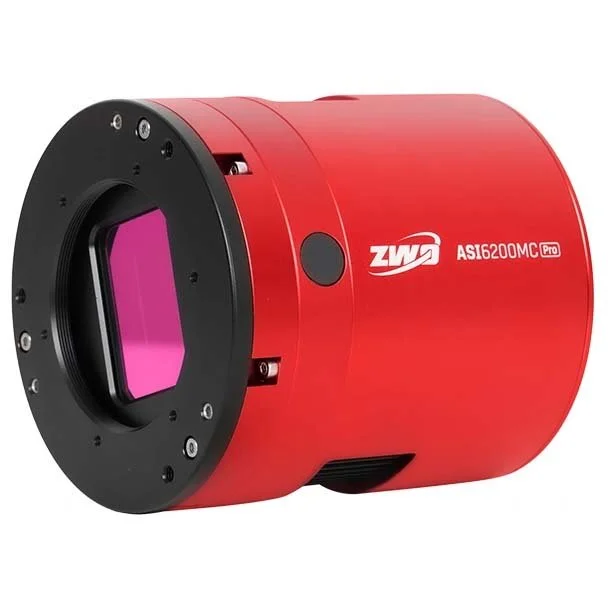
Despite its large sensor, the ASI6200 weighs only 700g (1.54 lbs).
But full-frame astrophotography has a habit of exposing every weakness in your setup. A camera like the ASI6200MC/MM Pro does not simply upgrade your field of view. It audits your entire imaging train. Your telescope, reducer, flattener, filters, focuser, adapters, backfocus, tilt, calibration routine, storage, processing computer and patience are all suddenly under inspection. And god forbid if you suffer from camera tilting.
That is what makes this camera interesting.
So, this is not just a product review of the ASI6200MC Pro. It is a useful way to ask a much bigger question: when is full-frame astrophotography genuinely worth it, and when is it just an expensive way to discover that the rest of your setup is not ready?
The Gist
The ZWO ASI6200MC Pro’s biggest strengths are obvious: Huge sensor, excellent resolution, true 16-bit output, low noise, zero amp glow, high sensitivity and strong integration within the ZWO ecosystem.
Its biggest weakness is also obvious: It is demanding.
To get the best from it, you need optics that can illuminate and correct a full-frame sensor, careful control of tilt and backfocus, large enough filters if you use them, enough storage for large files, and a processing workflow that can handle 61MP images without turning every project into a slow-motion punishment.
This is a camera with enormous potential, but it is not a shortcut. It rewards well-built systems and punishes sloppy ones.
Who Is the ZWO ASI6200MC Pro For?
This is far beyond what most entry to mid-level dedicated astronomy cameras offer. Cameras such as the ASI533MC Pro use a much smaller square sensor. The ASI2600MC Pro uses an APS-C sensor. We even reviewed the ToupTek ATR2600C APS-C DSO Camera, and concluded that its APS-C sensor might be the sweet spot when it comes to astrophotography.
Sensor Sizes, Overlaid
A proportional overlay of popular sensor sizes, using one ZWO astronomy camera from each class, with an iPhone 17 Pro main camera sensor added for scale.
The ASI6200MC Pro sits in a different category entirely: not necessarily better for everyone, but larger, more demanding and capable of producing enormous, highly detailed images when paired with the right telescope.
The “MC” version is the colour model, meaning it uses a Bayer matrix to capture colour data in a single exposure. That makes it simpler than the monochrome ASI6200MM Pro, which requires filters and a filter wheel, but it also means the colour version gives up some of the absolute flexibility and sensitivity of mono imaging.
For many astrophotographers, that trade-off is attractive. One-shot colour is faster to set up, easier to automate, less mechanically complex and more forgiving for portable imaging.
ZWO ASI6200MC Pro
Why Full-Frame Astrophotography Is So Appealing
The obvious attraction of a full-frame astronomy camera is field of view and resolution.
With the same telescope, a full-frame sensor captures more sky than an APS-C sensor. That means large nebulae, sprawling dust regions, big galaxy fields and complex star-rich areas can be framed more naturally without immediately reaching for a mosaic.
A camera like the ASI6200MC Pro allows you to use more of your telescope’s native image circle. Instead of cropping the telescope’s view down to a smaller sensor, you are collecting a larger portion of the corrected field. For wide-field refractors and fast astrographs, that can be genuinely liberating.
Objects that feel cramped on smaller sensors, suddenly have room to breathe. The North America Nebula, the Heart and Soul Nebulae, the Rosette Nebula, the Andromeda Galaxy, the Seagull Nebula, the Orion molecular cloud region and vast Cygnus emission structures all benefit from generous framing, especially if you’re using a large aperture telescope.
But this is where full-frame becomes misunderstood.
A bigger sensor does not “zoom out” optically. It simply records a larger area of the image circle projected by your telescope. Your pixel scale remains determined by pixel size and focal length. If you compare the ASI6200MC Pro with the ASI2600MC Pro, both have 3.76µm pixels. On the same telescope, they sample the sky at the same arcseconds per pixel. The ASI6200MC Pro just records a much larger area.
That is its real advantage. It is a bigger canvas.
DSO Camera Terms, Explained
Cooled astronomy cameras come with a wall of technical language. These terms matter, so let's see what they actually mean for deep-sky imaging, calibration and overall image quality.
| Term | What it means | |
|---|---|---|
|
What it means
TEC stands for thermoelectric cooling. A two-stage system uses two cooling stages to pull heat away from the sensor more effectively.
Why it matters
A cooler sensor produces less thermal noise, especially during long exposures. It also makes dark frames more consistent.
Practical tip
Pick a realistic temperature, such as -10°C or -15°C, and keep it consistent across your lights, darks and dark flats.
|
||
|
What it means
Amp glow appears as a bright patch or flare in one area of the image, often near the edge or corner of the frame.
Why it matters
If not calibrated properly, amp glow can leave ugly gradients or bright artefacts in stacked images.
Practical tip
Modern cameras often advertise zero amp glow, but calibration frames are still essential for clean deep-sky data.
|
||
|
What it means
Think of each pixel as a tiny bucket collecting light. Full well capacity is how much that bucket can hold before it overflows.
Why it matters
Higher full well capacity can help preserve star colour and avoid blowing out bright nebular cores too quickly.
Practical tip
If your stars are clipping, reduce exposure time or gain. More exposure is not always better.
|
||
|
What it means
A buffer temporarily stores image data inside the camera before it is sent to the computer or control device.
Why it matters
Large sensors create large files. A buffer helps reduce dropped frames, unstable downloads and USB transfer issues.
Practical tip
Use a reliable USB cable and avoid overloaded hubs. A buffer helps, but it does not fix a poor connection.
|
||
|
What it means
QE measures how efficiently a sensor converts light into electrons. Higher QE means more of the arriving light becomes usable data.
Why it matters
A more efficient sensor can gather signal more effectively, which is especially useful for faint nebulae and galaxies.
Practical tip
Do not judge a camera by QE alone. Pixel size, read noise, full well, cooling and your telescope all matter too.
|
||
|
What it means
The peak value is the sensor’s best efficiency point, not its efficiency across the whole visible spectrum.
Why it matters
Two cameras can have similar peak QE but behave differently across red, green, blue, hydrogen-alpha or oxygen wavelengths.
Practical tip
Look at the QE curve if available, not just the headline peak percentage.
|
||
|
What it means
Pixel size affects image scale, sampling and how the camera pairs with different focal lengths.
Why it matters
Small pixels can capture fine detail, but may oversample at long focal lengths. Larger pixels can be more forgiving.
Practical tip
Match pixel size to your telescope and seeing conditions. Bigger or smaller is not automatically better.
|
||
|
What it means
Read noise is not caused by the sky. It is introduced by the camera electronics when the image is read out.
Why it matters
Lower read noise is helpful when taking many shorter exposures or imaging faint objects.
Practical tip
Gain settings can affect read noise and dynamic range. Use a sensible gain rather than always chasing the lowest number.
|
||
|
What it means
The heater gently warms the protective window above the sensor chamber to reduce the risk of dew or frost.
Why it matters
Dew can ruin an entire night’s data by softening stars, reducing contrast and creating strange gradients.
Practical tip
In humid conditions, enable the heater early rather than waiting for dew to appear.
|
||
|
What it means
Dark current is heat-related signal that builds up during an exposure, even with the camera covered.
Why it matters
Long exposures and warm sensors increase dark current, which can reduce image cleanliness.
Practical tip
Cooling reduces dark current. Matching dark frames at the same temperature and exposure length helps remove it.
|
||
The 61MP Question: Resolution or Overkill?
The ASI6200MC Pro’s 61.2MP resolution is one of its defining features. It allows enormous images, deep cropping potential and very fine detail when the optics, seeing and tracking support it. But 61 megapixels is not automatically better.
The 3.76µm pixels are relatively small for a full-frame camera. This gives the ASI6200MC Pro impressive detail potential, especially on shorter to medium focal length telescopes. At around 400mm to 800mm, it can be a very powerful match, offering both a generous field and fine sampling.
At longer focal lengths, especially under average seeing, those same small pixels may become less forgiving. You may end up oversampling, creating huge files without gaining meaningful extra detail. In those cases, a camera with larger pixels, such as the ASI2400MC Pro, may sometimes make more practical sense despite its lower resolution.
This is why full-frame camera choice should never be based on sensor size alone.
The right question is not: “Is the ASI6200MC Pro better than a smaller camera?” The right question is: “Does its pixel size, sensor size and resolution make sense for my telescope, seeing conditions and targets?”
That is a less exciting question, but it is the one that saves people from expensive mistakes.
The Sensor: Sony IMX455 and Why It Matters
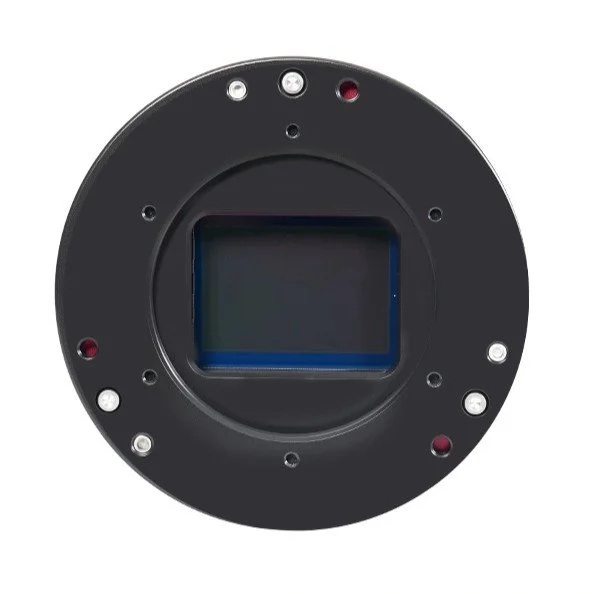
The Sony IMX455 is a high-performance 61.04-megapixel full-frame backside-illuminated (BSI) CMOS image sensor.
The Sony IMX455 has become a benchmark sensor because it combines a large full-frame format with modern CMOS performance.
Back-illuminated architecture improves light-gathering efficiency compared with older front-illuminated designs. Low read noise allows cleaner subs, particularly when shooting many shorter exposures. Native 16-bit ADC gives smoother tonal transitions and a wider range of brightness values. Zero amp glow simplifies calibration, especially for long-exposure imaging.
Older CMOS sensors often required more careful dark calibration because amp glow could become obvious during long exposures. The ASI6200MC Pro’s zero amp-glow design makes calibration more predictable. That does not mean calibration frames become optional. They do not. Darks, flats and bias or dark flats still matter. But the camera starts from a cleaner place.
If you like to learn more about calibration frames in astrophotography, we strongly recommend that you read our review of WandererCover V4-EC Motorised Flat Panel.
The 51.4ke full well capacity is also important. It gives the camera good highlight handling, helping preserve star colour and bright nebular cores better than lower full-well sensors when exposure is managed properly. Combined with the 16-bit ADC, the ZWO ASI6200MC Pro can produce data with smooth gradients and strong dynamic range.
This is especially useful for broadband targets: galaxies, reflection nebulae, star fields, dust regions and wide-field Milky Way structures.
One-Shot Colour: Convenience vs. Compromise
The ASI6200MC Pro is a one-shot-colour camera, and that is central to its appeal.
For many astrophotographers, especially those who image from home, travel to dark sites, or want simpler automation, OSC imaging is wonderfully practical. You do not need a filter wheel to capture RGB colour. You do not need to plan separate red, green and blue sequences. You do not have to worry about refocusing between filters or managing a heavy mono imaging train.
You connect the camera, cool it, focus it, frame the target and start collecting colour data.
That simplicity matters. Plus, you will have access to an ever-expanding range of multi-narrowband filters, designed for one-shot colour cameras that allow you to create true Hubble palette images.
The compromise is that a colour camera uses a Bayer matrix, so each pixel records only part of the colour information. A monochrome camera with filters can be more efficient and flexible, especially for narrowband imaging. The ASI6200MM Pro will be the more powerful scientific and narrowband instrument. But it is also more expensive once you add large filters, a filter wheel and the mechanical demands of a full-frame mono setup.
The ASI6200MC Pro sits in a sweet but expensive middle ground: full-frame scale without the full complication of mono. That makes it particularly attractive for broadband imaging in a hurry, comet imaging, more portable setups and generally for more beginner astrophotographers (though lots of pros use one-shot-colour cameras too). But it is less ideal if your primary goal is narrowband work at the highest possible efficiency. For that, mono still wins.
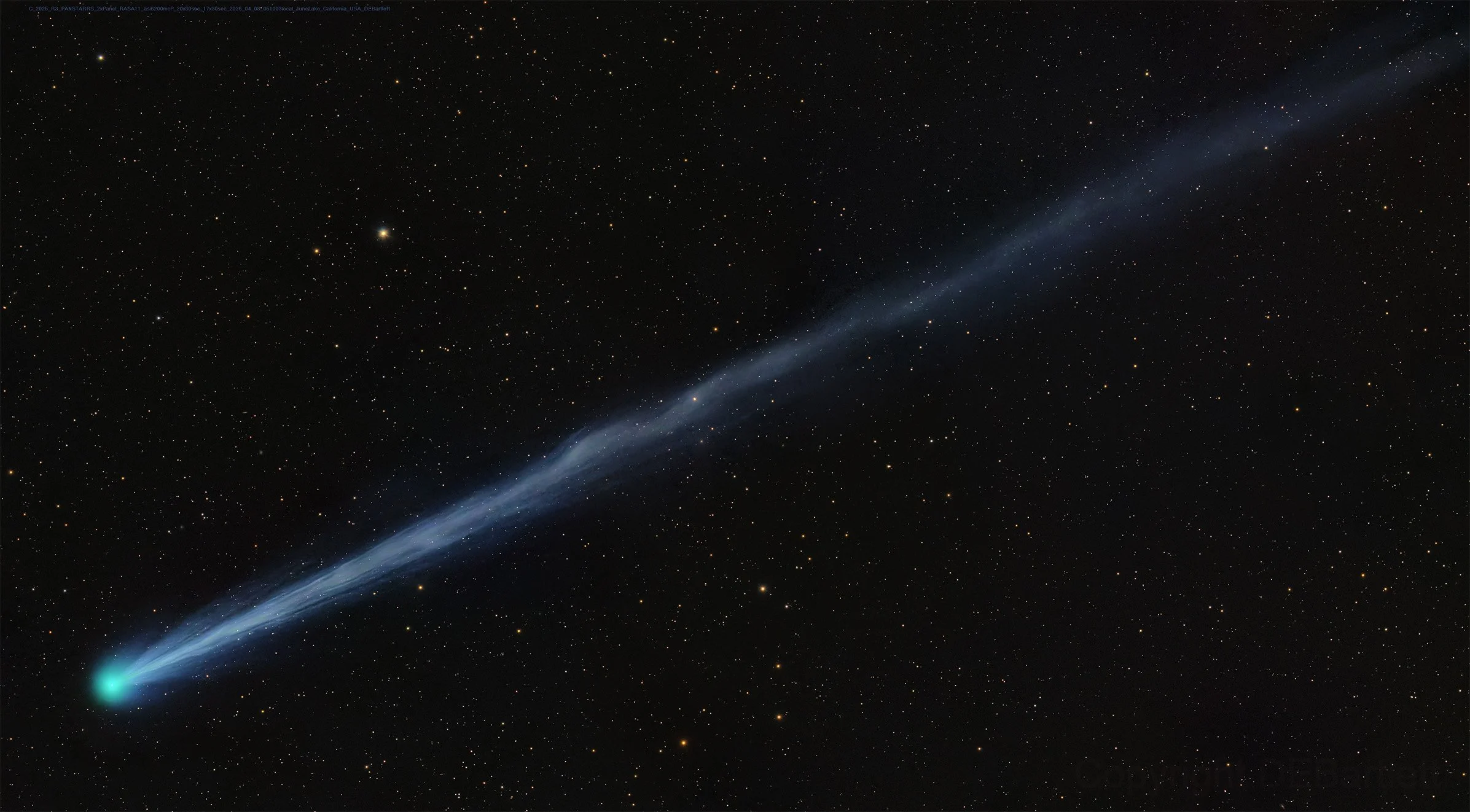
Comet C/2025 R3 PANSTARRS Blowing Strands and Streamers by Dan Bartlett, captured with ZWO ASI6200MC Pro
Cooling and Noise Performance
Cooling is one of the major advantages of a dedicated astronomy camera over a DSLR or mirrorless camera. The ASI6200MC Pro uses two-stage TEC cooling, allowing the sensor to be cooled significantly below ambient temperature.
In practice, cooling helps reduce dark current and makes calibration more consistent. Being able to run the camera at a stable temperature across sessions allows you to build a reusable dark library, which saves time and improves workflow consistency. This is now a feature that most moden astronomy dedicated cameras have. In some case, cameras like the ToupTek ATR2600C, can cool down the sensor quicker and to a lower temperature. Althought, we don’t recommend cooling your camera sensor too rapidly.
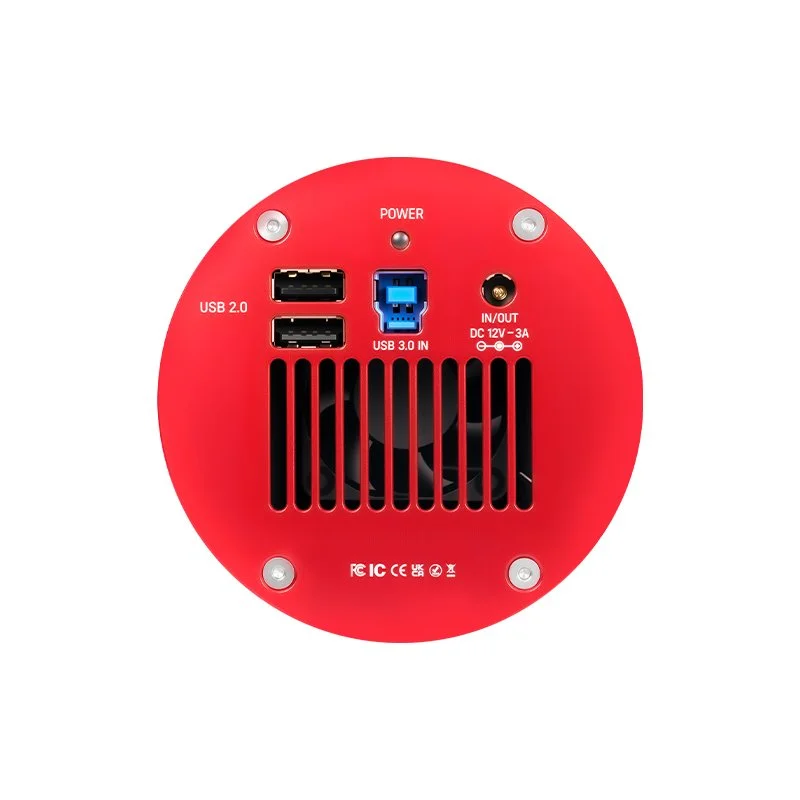
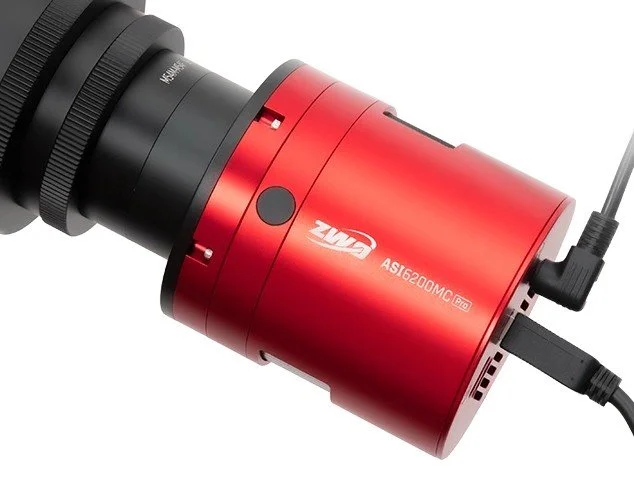
Two USB 2.0 ports at the back to act as a USB hub for your accessories.
The ASI6200MC Pro is not unusual in needing an external 12V power supply. USB alone is not enough. This is standard for cooled astronomy cameras, but it still matters for cable planning, especially in portable rigs. At the back of the camera, you have access to two USB 2.0 ports to attach your accessories such as guide camera, filter wheel, electronic focuser etc.
Whilst mostly standard these days, the built-in anti-dew heater is also important. Large sensor windows are vulnerable to dew and frost, especially during long humid nights. A camera of this price and class needs a proper window-heating system, and ZWO has included one.
In normal deep-sky imaging, the combination of low read noise, cooling and zero amp glow means the ASI6200MC Pro produces clean, highly workable data. But the large sensor means calibration needs to be done properly. Bad flats or noisy subs on a full-frame camera are not a small problem. They are a disaster spread across 61 million pixels.
Full-Frame Reality Check: Your Telescope Must Be Ready
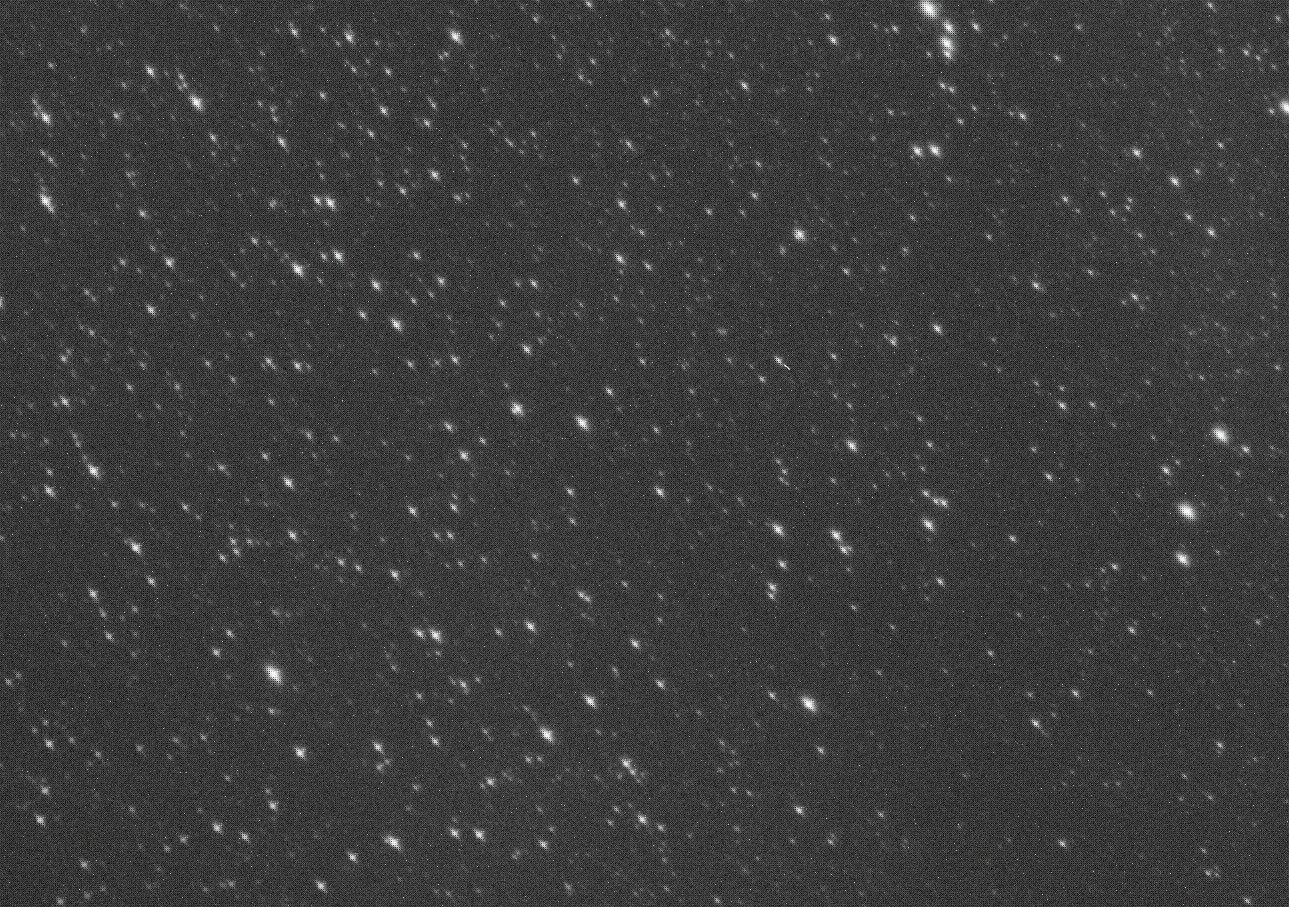
When using the ASI6200, your telescope should provide full-frame corrected image circle.
This is the part many reviews underplay. The ASI6200MC Pro will reveal the truth about your telescope.
A full-frame sensor needs a telescope with a sufficiently large corrected image circle. Ideally, you want optics that can illuminate and correct at least a 43.3mm diagonal, and in practice a little more breathing room is preferable. Many telescopes claim full-frame compatibility, but that does not mean the corners will be perfect. It may simply mean the sensor can be illuminated, not that stars will remain tight and round right to the edge.
A smaller APS-C camera can hide optical weaknesses. A full-frame camera exposes them. Field curvature, coma, astigmatism, uneven illumination, reducer limitations, focuser sag and adapter tilt all become more obvious. This does not make the camera bad. It makes it honest.
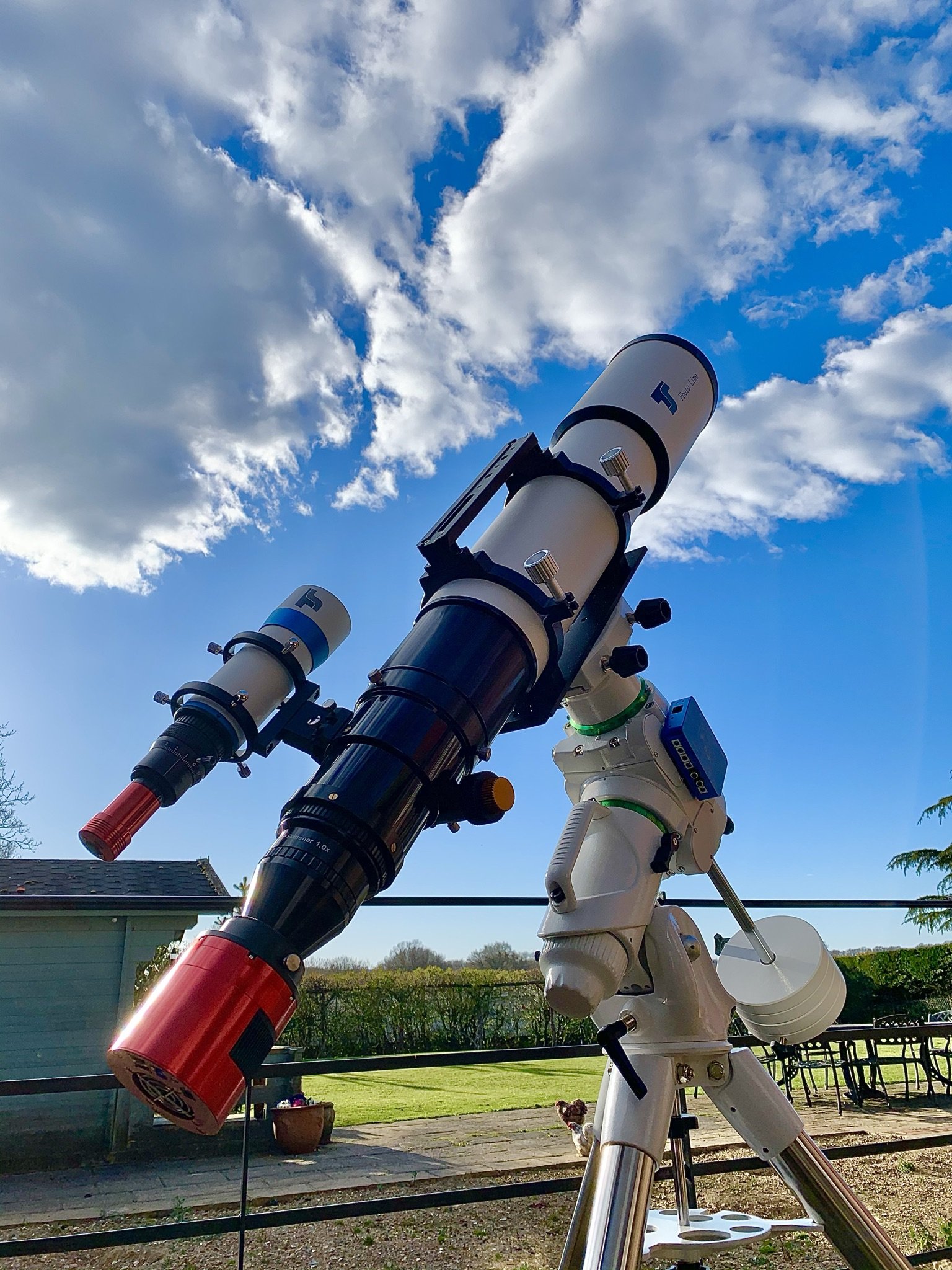
ZWO ASI6200MC Pro paired with TS-Optics 130APO telescope with a beefy 3.7" Focuser.
If your telescope is not genuinely corrected for full-frame, the ASI6200MC Pro may simply give you larger files full of corner problems. You might end up cropping the image so heavily that the advantage over APS-C becomes much smaller than expected.
Before buying this camera, ask yourself:
Does my telescope have a full-frame corrected image circle?
Does my flattener or reducer support full-frame?
Will my focuser hold the camera without sag?
Can my adapters maintain alignment?
Do I know how to diagnose and correct sensor tilt?
How much cropping will I need?
Bigger camera and bigger telescope, means bigger mount. Is my equatorial mount capable of handling the weight?
If the answer to most of these is no, the ASI2600MC Pro may be the smarter camera.
Tilt: The Full-Frame Tax
Sensor tilt is one of the biggest practical headaches in full-frame astrophotography.
Tilt occurs when the camera sensor is not perfectly aligned with the telescope’s focal plane. Even a tiny misalignment can cause one side or corner of the image to appear softer, more elongated or differently focused than the rest. With smaller sensors, minor tilt can go unnoticed. With full-frame, it often becomes impossible to ignore.
The ASI6200MC Pro includes tilt adjustment screws, which is useful, but adjustment is not always quick or enjoyable. It requires patience, repeated test exposures, careful analysis and a willingness to troubleshoot the entire imaging train.
The frustrating thing is that tilt may not come from the camera itself. It can come from threaded adapters, compression fittings, filter drawers, reducer spacing, focuser sag, rotators or even tiny mechanical tolerances stacking up across the system.
“A full-frame camera does not create problems. It reveals them.”
For this reason, the ASI6200MC Pro is best suited to astrophotographers who are willing to treat mechanical alignment as part of the craft. If you want plug-and-play simplicity, full-frame is probably not where you should start.
Filters: The Expensive Detail You Don’t Want to Forget
The colour version of the ASI6200 is easier than the mono version because it does not require a full LRGB + Narrowband filter set. But filters may still matter.
If you use light-pollution filters, dual-band filters, UV/IR cut filters or other optical filters, the full-frame sensor places much greater demands on filter size and placement.
A 2-inch mounted filter almost always works well, but depending on spacing, focal ratio and optical design, and with faster telescopes, it may introduce noticeable vignetting with a full-frame sensor. Larger unmounted filters or wider optical paths may be needed to fully illuminate the frame. With fast systems, the demands become even greater. This does not mean 2-inch filters are useless. Many astrophotographers use them successfully.
Full-frame does not forgive bottlenecks. So, if you plan to use the ASI6200MC Pro seriously, you need to think about the entire light path:
Focuser aperture
Reducer or flattener aperture
Adapter inner diameter
Filter size, minimum 2” filters needed.
Distance between filter and sensor, keep them close.
Rotator aperture
OAG prism size and positioning
File Size and Processing: 61MP with Caveats
A single 16-bit full-resolution frame from a 9576 x 6388 sensor is roughly 120MB before considering processing formats, debayering, integration files and temporary data. A full night of imaging can quickly become hundreds of gigabytes.
This affects processing and editing time. Think about:
Download time
Storage space
Backup strategy
Calibration speed
Stacking time
PixInsight performance
StarXTerminator/BlurXTerminator processing time
Drizzle decisions
Archive management
A camera like this may force you to upgrade not just your telescope, filters, tracking mount, but your computer workflow. This is not a reason to avoid the ASI6200MC Pro. This is an important aspect of a 61 megapixel camera that you should consider.
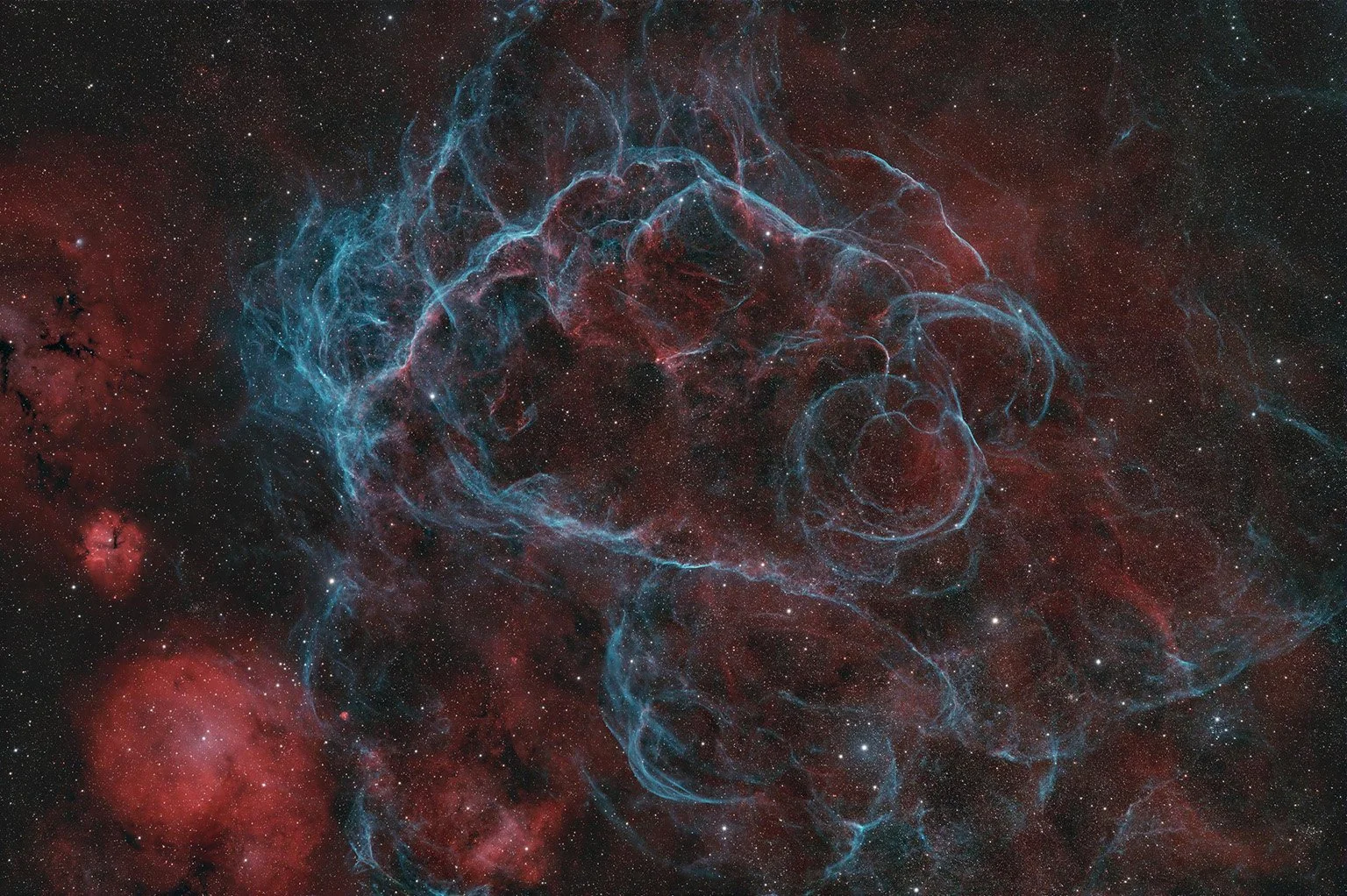
Vela Supernova Remnant by Lorena Arias, captured with ZWO ASI6200MC Pro
Image Quality: What This Camera Can Deliver
When everything is working, the ASI6200MC Pro is capable of spectacular results. The combination of full-frame field of view, high resolution and low-noise cooled performance gives images a sense of scale that smaller cameras struggle to match in a single frame. Pair with decent optical performance, this camera is capable of blowing your hat off. Plus, cropping becomes less destructive because the original frame is so large.
This is perhaps the camera’s greatest strength: freedom.
With smaller sensors, framing can feel like a negotiation. With the ASI6200MC Pro, framing becomes more generous. You can include surrounding nebulosity, compose with negative space, capture neighbouring objects, or crop later while retaining strong resolution. All the restrictions you’ve been facing lead to your freedom.
The colour data is clean, the files are deep, and the dynamic range gives enough room for careful processing. Used well, it can produce images that feel expansive and refined. Used badly, it can produce enormous files with ugly corners.
ASI6200MC Pro vs ASI2600MC Pro
This is probably the comparison most astrophotographers will make.
Both cameras use 3.76µm pixels. That means on the same telescope they produce the same image scale. The difference is field of view.
The ASI2600MC Pro uses an APS-C sensor. It is cheaper, easier to pair with more telescopes, less demanding on filters and optics, produces smaller files, and is generally more forgiving. For many astrophotographers, it is the smarter and more practical choice.
The ASI6200MC Pro gives you more sky and more pixels. It is more ambitious, more expensive, more demanding, and less forgiving. It makes sense if your telescope can support full-frame and you genuinely need the larger field. That is why we thoroughly enjoyed reviewing TS-Optics Photoline 130mm Triplet Telescope.
But if you have the optics, budget and processing workflow to support it, the ASI6200MC Pro gives you something the 2600 cannot: a huge full-frame canvas with the same fine pixel scale.
ASI6200MC Pro vs ASI2400MC Pro
The ASI2400MC Pro is another full-frame colour camera from ZWO, but it has a very different character.
The ASI2400MC Pro uses larger pixels and lower resolution. It is a 24MP full-frame camera rather than a 61MP camera. That makes it less demanding in some ways, especially at longer focal lengths or under average seeing. Its larger pixels can make it a more forgiving match for certain telescopes and conditions.
The ASI6200MC Pro, by contrast, offers far higher resolution with smaller pixels. It is better suited to shorter and medium focal length systems where the pixel scale remains sensible and the extra resolution can actually be used.
Neither is universally better. The ASI2400MC Pro is arguably the more relaxed full-frame camera. The ASI6200MC Pro is the more ambitious one.
Choose the ASI6200MC Pro if you want resolution, crop flexibility and fine sampling. Choose the ASI2400MC Pro if you want larger pixels, simpler file handling and a more forgiving full-frame experience.
Practical Setup Tips
Before using the ASI6200MC Pro seriously, check your imaging train in this order:
Confirm your telescope and flattener or reducer are genuinely full-frame capable. Do not rely only on marketing language. Look for image circle figures, spot diagrams and real-world examples. Whilst a lot of telescope manufacturers may falsely advertise their products as full-frame ready, the good news is that in recent years, more and more newer telescopes and field correctors are actually capable of providing the optical performance need for a full-frame sensor.
Use threaded connections wherever possible. Compression rings and loose adapters are asking for tilt.
Pay close attention to backfocus. Full-frame sensors reveal spacing errors quickly.
Take proper flats. With a sensor this large, flats are not optional. They are essential. You’ll thank yourself later.
Inspect corners early. Use a tool such as Aberration Inspector in PixInsight to check all four corners and the centre.
Separate tilt problems from spacing problems. If all corners stretch symmetrically, spacing may be wrong. If one side or one corner is worse, tilt is more likely.
Plan storage. A full season of ASI6200MC Pro imaging can consume serious disk space. When you edit high-res images, you benefit hugely from a fast Solid State storage.
Be willing to crop. Using a full-frame camera does not mean every image must use every pixel. Cropping 5–10% can still leave an enormous, high-resolution image.
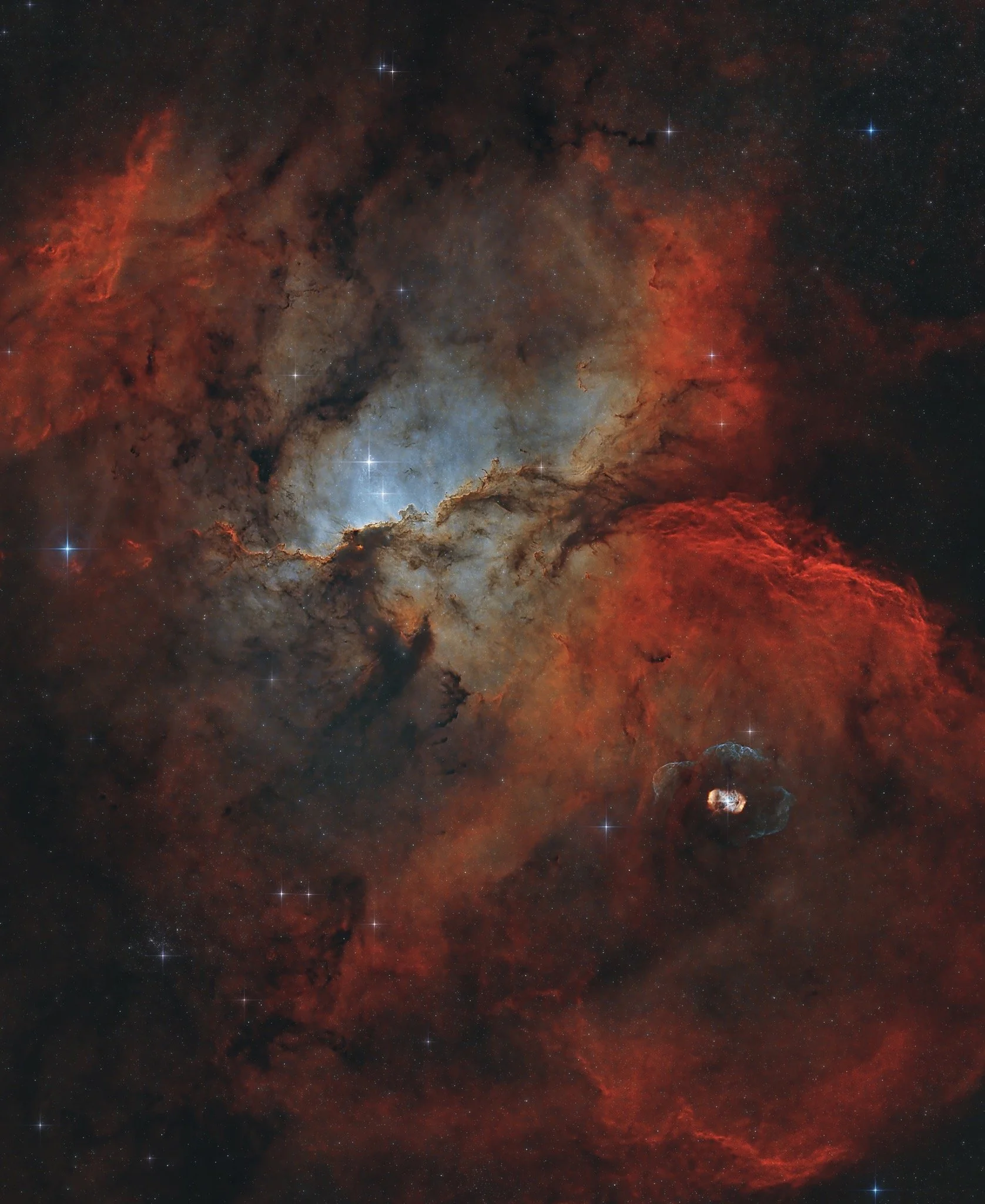
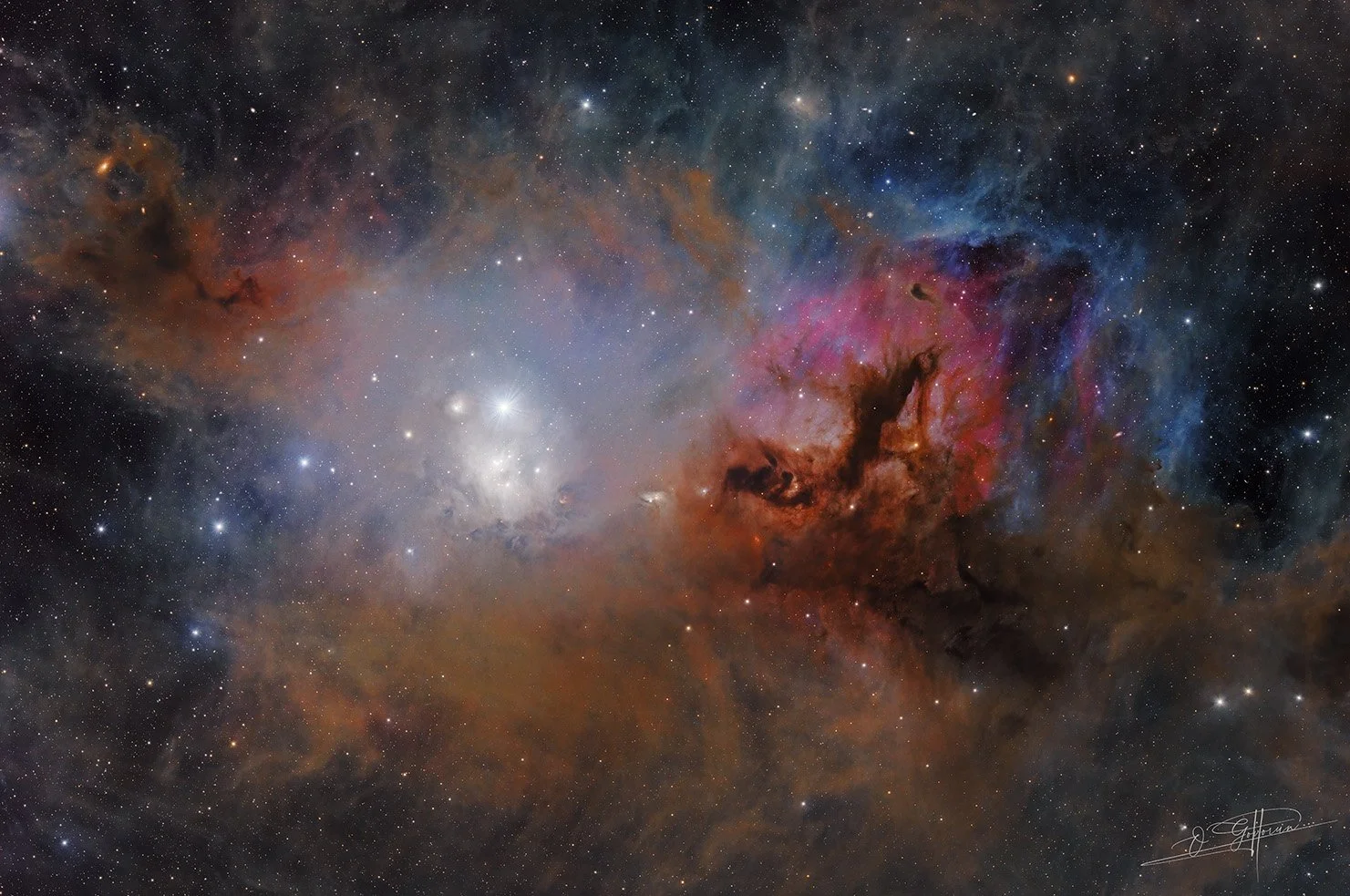
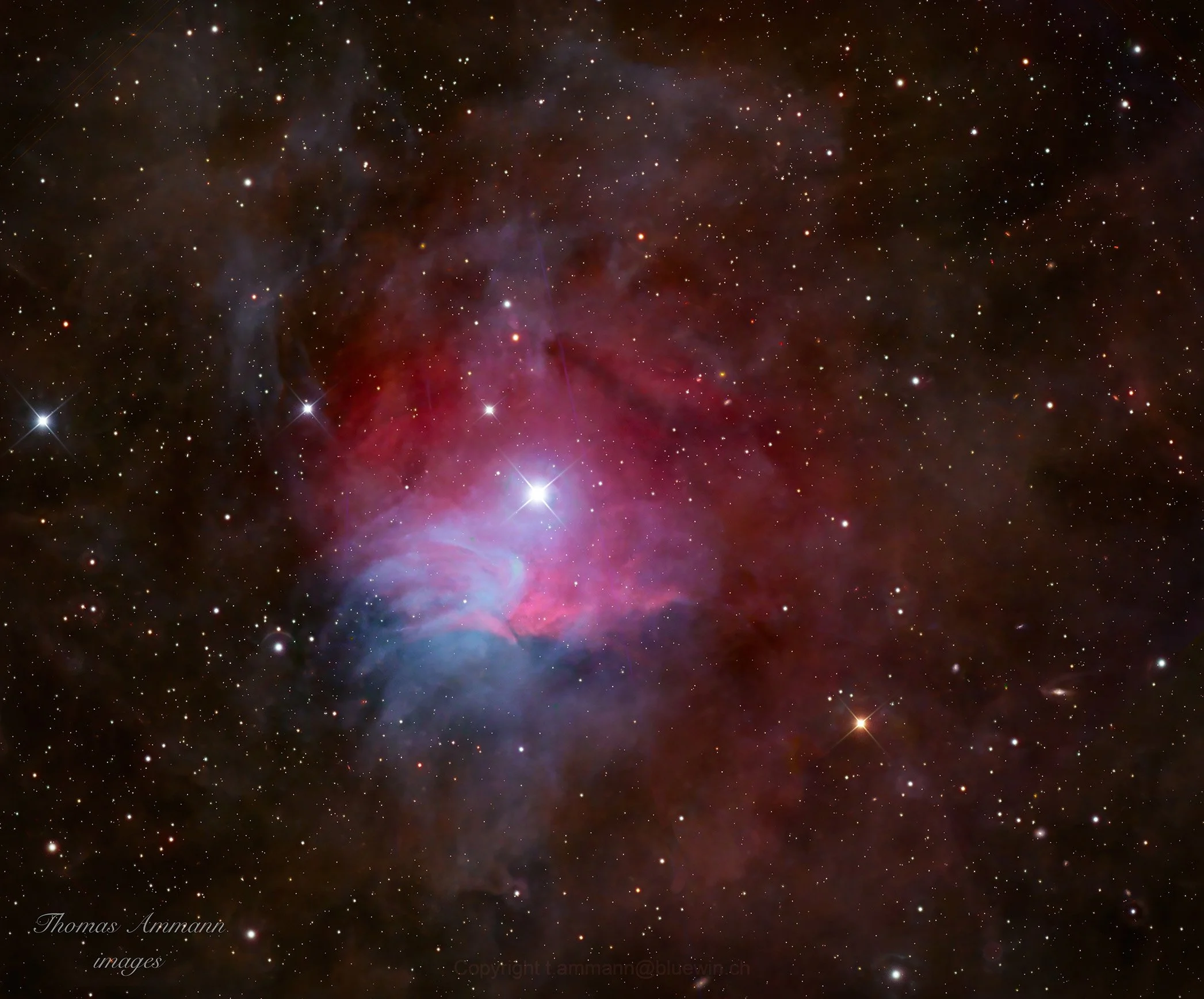
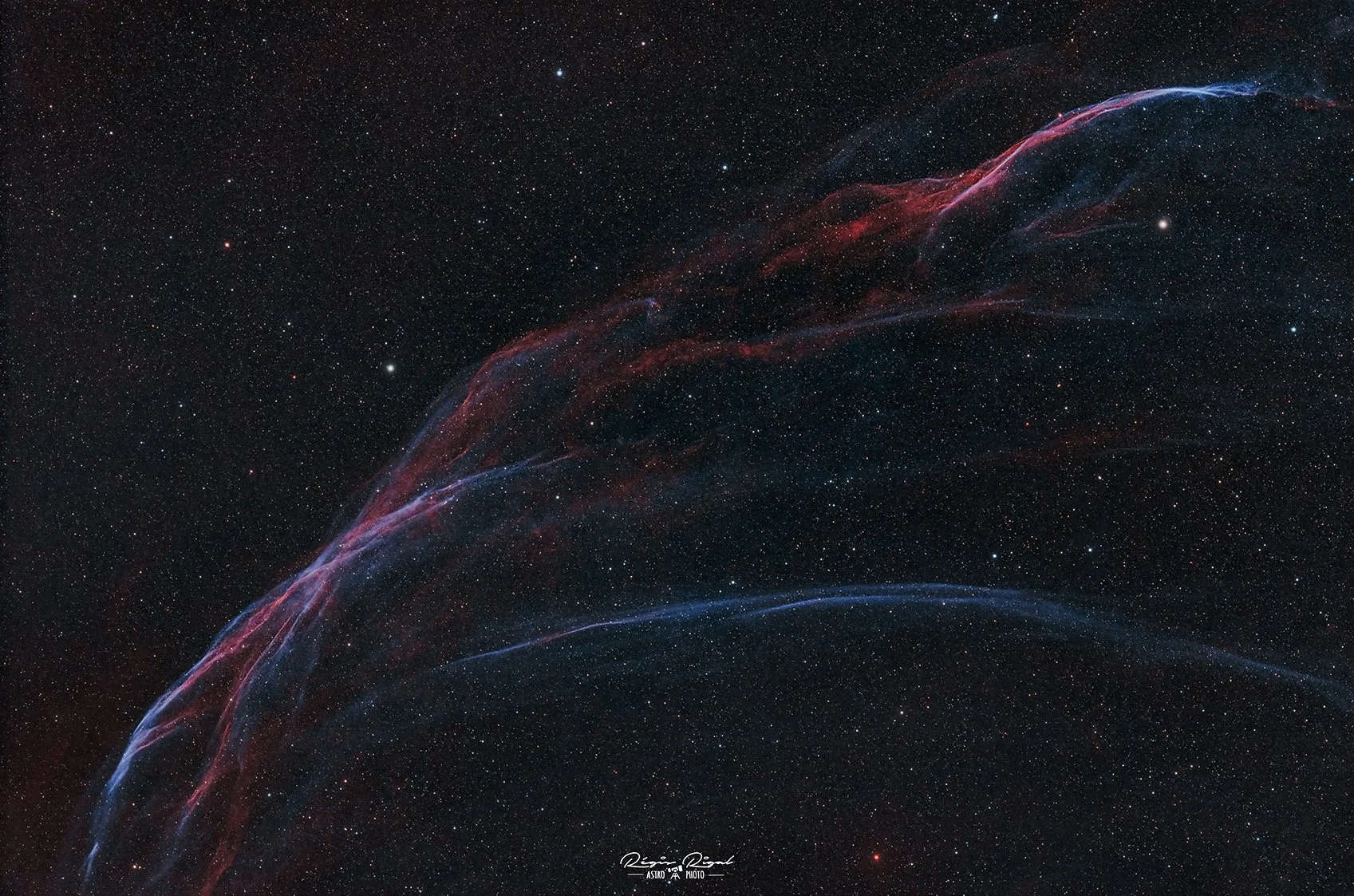
These photos were all captured with the ZWO ASI6200MCPro camera.
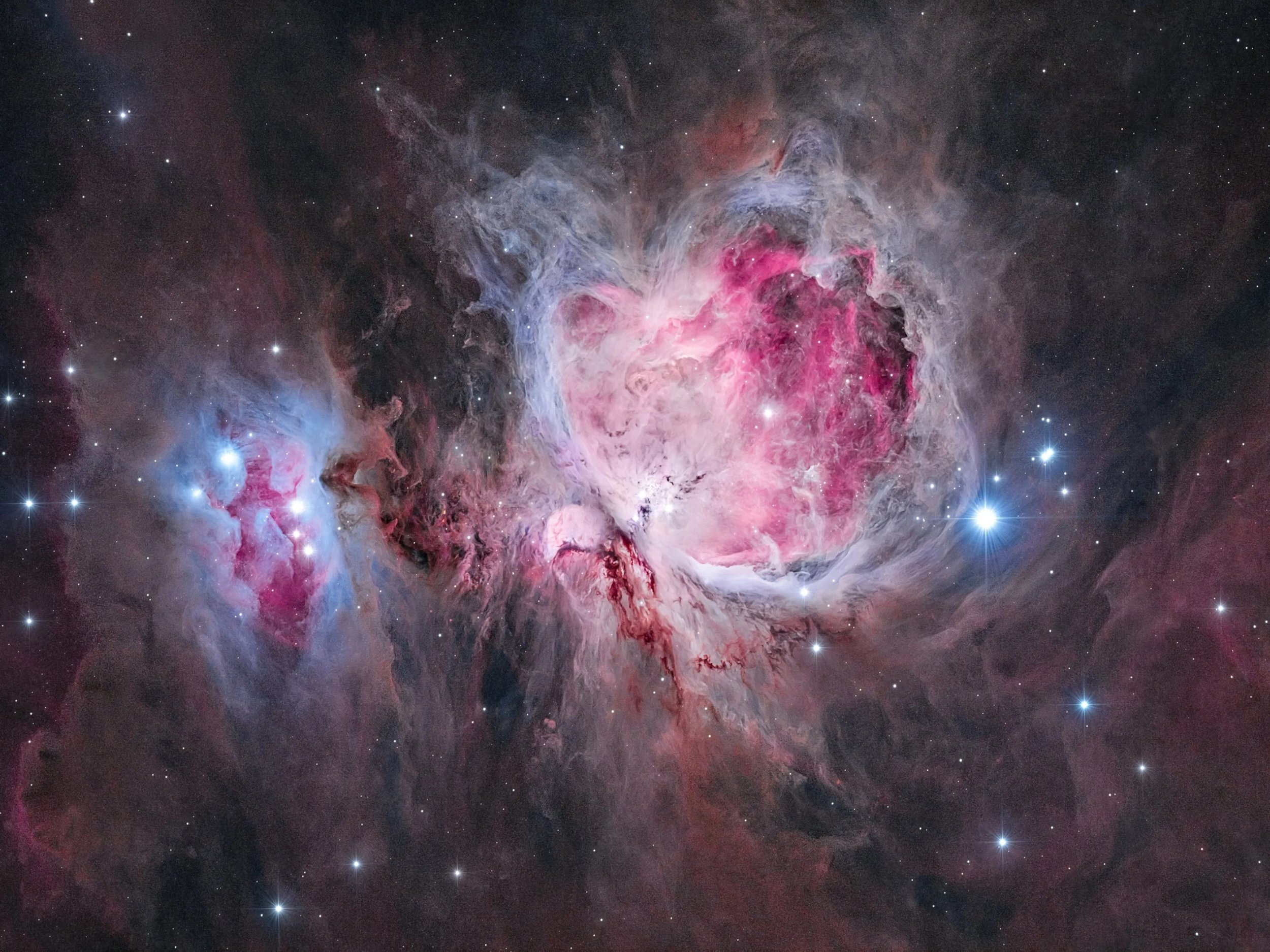
Things We Loved About ZWO ASI 6200MC Pro
The field of view is genuinely impressive. The 61.2MP resolution gives extraordinary details.
Low noise, high sensitivity, native 16-bit dynamic range and overall stability is lovely to work with.
Zero amp glow simplifies long-exposure imaging and makes calibration less frustrating.
It works perfectly within the ZWO ecosystem, especially with ASIAIR.
Things That Could Be Improved
The dew heater is not adjustable.
The camera doesn’t come with a dedicated 12V DC power adapter.
Verdict
The ZWO ASI6200MC Pro is a remarkable full-frame cooled colour astronomy camera, but it is not a casual upgrade.
Its strengths are obvious: huge field of view, 61.2MP resolution, low noise, native 16-bit ADC, zero amp glow, strong cooling and seamless integration into the ZWO ecosystem. When paired with the right optics, it can produce expansive, detailed and beautifully clean deep-sky images.

The ASI6200MC/MM camera series works perfectly with ZWO’s ecosystem.
But full-frame astrophotography comes with a cost beyond money. It demands better optics, better spacing, better tilt control, better calibration, larger filters, stronger mechanics, more storage and more patience. It will not make a weak imaging train better. It will make its weaknesses impossible to ignore.
That is the honest truth.
The ASI6200MC Pro is not the best camera for many astrophotographers. The APS-C size ASI2600MC Pro will be more practical for many. But if your setup is ready and your ambitions are genuinely full-frame, the ASI6200MC Pro is one of the most powerful one-shot-colour deep-sky cameras currently available to amateur astrophotographers, made by a company with a great track record in designing and manufacturing astrophotography equipment. For instance, ZWO’s AM5N Harmonic Equatorial Mount is incredibly popular and performs formidably. Just make sure the rest of your system is worthy of it.
You can purchase the ZWO ASI6200MC Pro from our affiliate partner here.